Hi palaniappan, I hope you are subscribed to this topic. I have replied to you before but you did not seem to see it. To subscribe, so you receive an email whenever someone replies to the topic, use the link above a topic called 'Topic Subscription', or when you are using the 'Reply To Topic' then check the box below the editor window to subscribe.
OK. I agree with Rod that this would be labour intensive and thus time consuming, but I also appreciate that lots of people have good skills at making things (I do not) and feel better when making something to their own specifications.
Also, the glues to be used or types of paper or cardboard or even plastic, should be considered with an eye towards what possible chemical effects these will have on your stamps over the years, especially if you intend to use these for long term storage and not upgrade to more expensive archival-safe plastic pages.
White glue can be soaked off of stamps in water (and a rinse or two) but with extremes in temperature or humidity, which you may encounter in India, you may find that any adverse (bad) things will happen faster there.
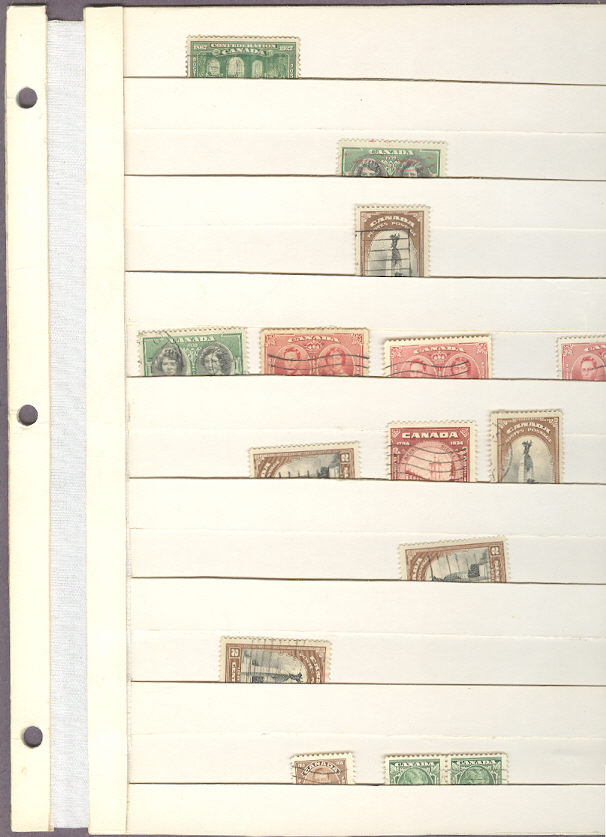
The two examples I have to show are both based on a piece of cardboard as the page, with either strips of cardboard or poster-board added on the make the strips needed to hold the stamps or strips of glassine (a waxy type of paper, translucent, almost see-through).
The first is home-made by an older collector. I do not know what the fabric strip is that provides extra flexibility when turning pages, nor do I know what glue or adhesive was used. The glue would be of concern over a long period of time for staining of stamps or not drying in a hot climate and sticking the stamps to the stock page. These are problems each collector will have to experiment with in their on climates and conditions.
To me, it seems that a white flue has been used as I see residue of it below the attached strips. Stamps seem to slide into the pockets with ease but are held by the friction with the cardboard better than with plastic (slippery for stamps) that lets stamps fall out if pages are turned upside-down. The ease of putting a stamp into a pocket could be from an added strip of paper glued under the cardboard strip. Not sure, can not tell. Just wondered.
The page itself, with strips, is 8-1/2 inches (217 mm) wide with the extra attached bit of left (punched for a 3-ole binder) extending an extra one inch (25mm). This strip makes it easy, when in use, to turn a page without actually having to struggle with the cardboard binding and holding on the rings.
The side strips are the same cardboard material. This seems to be dull or matte on one side (the back) and shiny or reflective on the front. All strips are nicely cut with straight edges, probably with a press or shear type paper cutter,
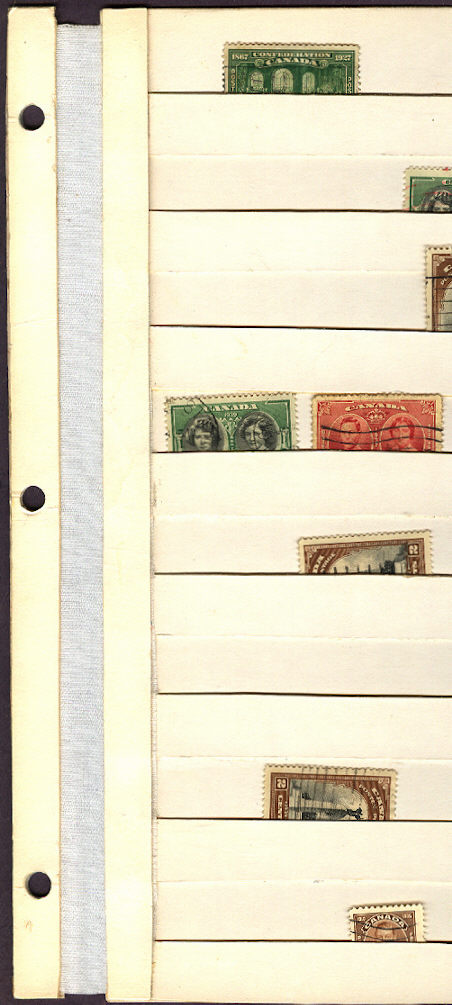

I have darkened the images so that the attached strips stand out more. They are actually quite clean. Note these are one-sided, with strips only on the front side.

The second type I have is a store-bought one. A small sized stockbook with some kind of white tape keeping the galssine strips in place on the cardboard pages. It has a cover and back. Each page is 5-1/4 inches by 7-1/2 inches (probably to fit within a type of mailing envelope we have here.) It is good to carry around to shows or meetings, although I have seen people use the plastic Vario pages a lot now also.
Ahain I have darken the photos to show the strips and joinings better. The book is nice and clean appearing.
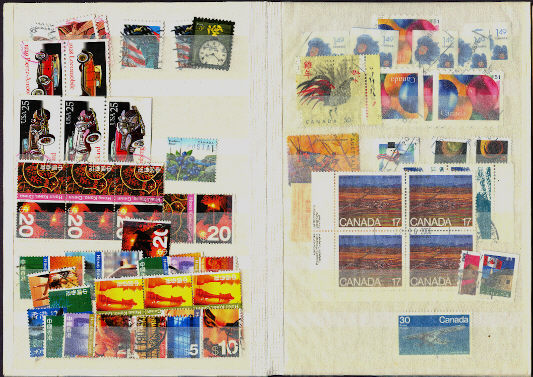
keep in mind that glassine looks good but tears easily and turns somewhat yellowish and brittle after 20-30 years.





 Posted 04/27/2011 7:43 pm


