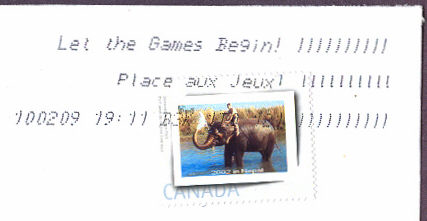
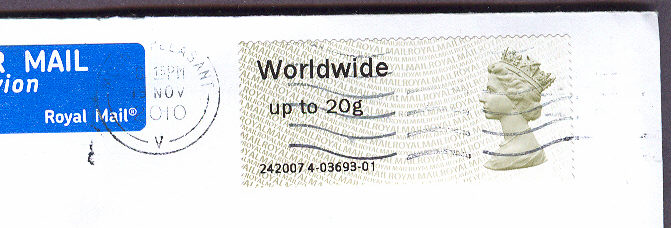
Whew, that's a long title.
When you mail a parcel or envelope (cover) or letter/lettre there are ways to protect the stamps you use to pay the postage so they arrive in good condition at the receiving end.
One is to place the stamps away from the edges of the parcel or envelope. Edges are where things get bumped into or grabbed or crushed or bent.
Beautiful, worthwhile (isn't everything worthwhile?) and valuable stamps (and cancels) can be ruined or partially destroyed just by being placed too close to the edge.
Example:
Years ago I bought a stockbook with some stamps off
ebay from a fellow in France. The stockbook and stamps arrived in good condition but the stamps used to mail the item in the padded protective envelope were placed too close to the corner and edges. They were not right on the edge or right in the corner but a bit away. Even so look at what I received (see below):
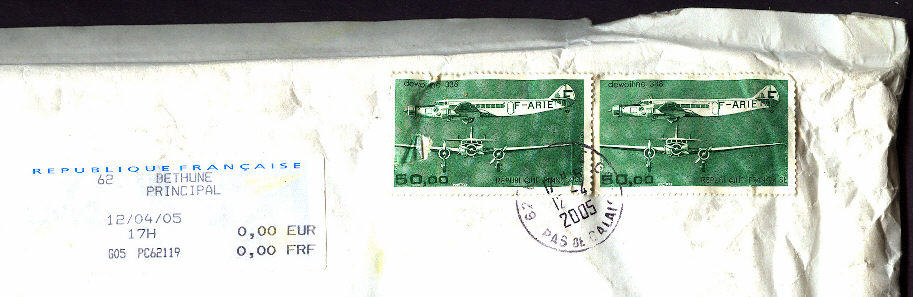
The only things salvageable out of this are the FRAMA ATM label and the Pas de Calais cancel on the stamps. A nice bit of postal history.
Part of the problem was that the stockbook was smaller than the envelope used and so could slide around inside the envelope, sometimes leaving the area with the stamps on with a solid backing and other times with just the padded bubbles as backing. The corner could be crumpled and crushed, which it was, and no stamps could survive that kind of treatment. If the stamps had been placed another inch or 2-3 centimetres inwards they would have been hopefully safer.
I know most postal administrations like to have stamps placed up within a certain limited area close to the edge and in the upper right-hand corner so that when the piece goes through the sorting and cancelling machines the stamps have a better chance of getting hit by the cannceller. The above piece was hand cancelled so the stamps could have been placed almost anywhere and been OK really.
The thing to remember is that however carefully and gently you hand over your piece to be posted / mailed, once it leaves your sight and is initiated into the postal sorting centres it is a different story. The idea is to get this piece from point A to point B efficiently and quickly, trying not to run over it too many times with the forklift or drop it out the airplanes or dip it in too many harbours before it reaches its destination.
Your mission, should you choose to accept it, is to place your stamps in the best way possible to protect them on their journey. How can we do that you ask?





 Posted 05/02/2011 12:25 pm