| Author |
 Replies: 26 / Views: 4,197 Replies: 26 / Views: 4,197 |
|
Valued Member
United States
338 Posts |
|
|
A little trivia test for all of you. Because the A25 series and in particular the Sc#64 is always causing a good debate. I have come up with a trivia question. Two are quite easy, the third *******?????? Maybe not so easy.  In order of value starting with the most expensive stamp based on rarity of the 1861 3c Sc#64 issue who can list the top three?  |
|
Send note to Staff
|
|
|
|
|
Valued Member
146 Posts |
|
|
The order is 64a pigen blood, 64 pink,64b rose pink is the order I think and if your including grills I think it's 82,64a,85c I think that is the order I know the b grill is top dog |
Send note to Staff 
|
|
|
Valued Member
United States
338 Posts |
|
|
All are in the Sc#64 series and issued in after Aug 1861 and before Jan 1862.  Good start you have the easy ones nailed the Sc#64a Pigeon blood pink is the first.  The second you have partially correct. Actually the second and third are equally as rare and wood sell for roughly the same amount. One being the Sc#64 pink. |
|
Send note to Staff
|
|
|
Pillar Of The Community
United States
6668 Posts |
|
|
The #82 trumps all @ $240,000.00
I see you changed the parameters from the first go around
|
|
Send note to Staff
|
| Edited by stallzer - 05/16/2011 8:49 pm |
|
|
Valued Member
146 Posts |
|
|
So because this is trivia let me set a question.....
What is the most valuable coil stamp between the years 1900-1925?
I might even have this one wrong lol |
|
Send note to Staff
|
|
|
Pillar Of The Community
United States
527 Posts |
|
|
I am not sure of the Scott#, but I'm positive it would be one of the stamps I do not have. |
|
Send note to Staff
|
|
|
Pillar Of The Community
United States
2963 Posts |
|
|
There are a couple of ways to define this, so I'll take my best shot.
#389 (3c Washington) is listed by Scott as the rarest of all the coils. It lists at $150,000 for MNH
#316 (1c Franklin) surprised me. It is not listed in used. Mint catalogues for $50,000.
#314a (4c Grant) is privately perfed, Schermack type III, catalogues for $40,000 used and $70,000 mint. This is the one I had assumed was the rarest and most expensive of the 20th century coils. Turns out I was wrong. |
|
Send note to Staff
|
| Edited by Rileysan - 05/17/2011 11:45 am |
|
|
Valued Member
146 Posts |
|
|
Not having a uptodate book I thought it was between the 321 and 389 oberge coil it's called something like that, out of interest what is the 321 |
|
Send note to Staff
|
|
|
Pillar Of The Community
United States
527 Posts |
|
|
Quote:
389 oberge coil it's called something like that That would be Orangeburg  |
|
Send note to Staff
|
|
|
Valued Member
146 Posts |
|
|
i dont think that was bad from memory I remembered the number and it had a silly name begining with O and being 50miles from home lol |
|
Send note to Staff
|
|
|
Pillar Of The Community
United States
2963 Posts |
|
|
I totally missed the 321! (Edit: a 321 is a 2c Washington, perforated horizontally)
Scott lists a mint pair at $360,000 and there are two, known used examples on cover listed at $200,000 ea. No other used examples are known.
I should have noted that I am using the 2004 edition of Scott specialized catalogue that I keep in my office and these values may have changed. |
|
Send note to Staff
|
| Edited by Rileysan - 05/17/2011 2:53 pm |
|
|
Valued Member
United States
338 Posts |
|
|
Valued Member
United States
338 Posts |
|
|
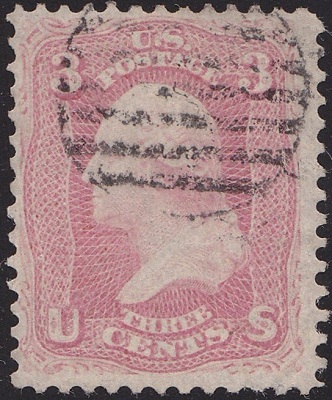
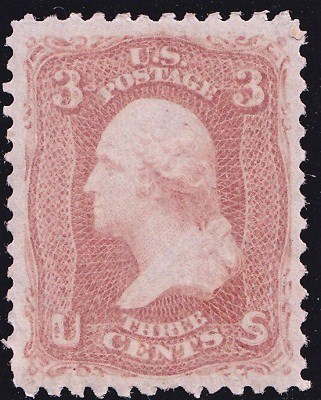
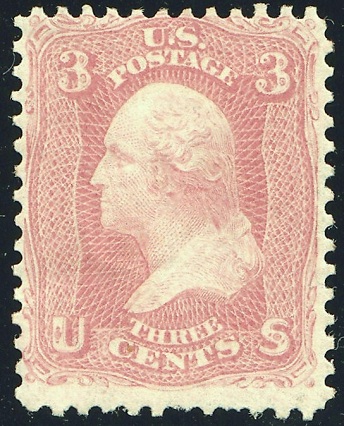
As you may know the pigeon blood has a rarity factor of 9, the pink has a rarity factor 7. Now here is part of one of the wildest things that I have seen in stamp collecting. There are two other colors that hold a rarity factor of 7 they are the Carmine pink (shown as second stamp) and the Lavender pink. Nether is listed in the Scott catalog as a sub number, but both of these colors have been certified as pigeon blood pink. So the question now becomes, is the rarity factor a 7 like the pink or 9 like the pigeon blood pink? Just to add weight to the question, we are talking $30,000.00 difference in Scv. All comment welcome |
|
Send note to Staff
|
|
|
Moderator

United States
4788 Posts |
|
|
Here's my comment: You have a gift for asking four questions in one and none of them clearly defined Here's my question: Are "Rarity Factors" documented somewhere in a catalog or reference book? I am unfamiliar with the term. I have the Scott Specialized Catalogue, but none of the advanced reference books/catalogs. Are you saying that you own the bottom two stamps, which aren't listed in Scott, with certs that say they are Pigeon Blood? If so, on what basis (book/reference/catalog) do you believe them to be the non-existent colors of Carmine and Lavender? This is all interesting, but perhaps a bit over my head... KirkS |
|
Send note to Staff
|
|
|
Valued Member
United States
338 Posts |
|
|
To answer your last question first. The bottom stamp is a certified #64 m og pink, which I recently sold. The middle stamp is a carmine pink m og (no Scott sub-number) that sits proudly in my collection. The top one is a certified 64a pigeon blood (lavender pink) that I currently have listed for sale.
Now to your first question about my resources. For the rarity factors I reference the Scott specialized color guides for US stamps which lists most of the colors used for the A25 series and rates they by rarity. Additionally, to add depth to my research I use the Roy H. White encyclopedia of the colors of united states postage stamps. I find the Whites much easier to use because you have the actual stamp to compare to and not just a color chip.
I hope I have clarified my; an answered your questions.
Ron
|
|
Send note to Staff
|
|
|
Moderator
United States
4788 Posts |
|
|
Cool. I've seen but don't have the Scott Color Guide -- I've never even heard of Roy White.
Thanks,
KS |
|
Send note to Staff
|
|
|
Replies: 26 / Views: 4,197 |
|




 Posted 05/16/2011 12:29 pm