Sorry it's taken me so long to get back to you on this, working 12 hour shifts with an hour each way travel doesn't leave much time for stamps or SCF

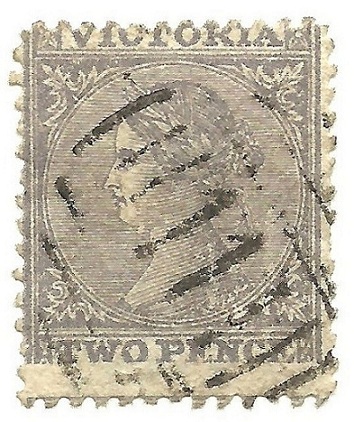
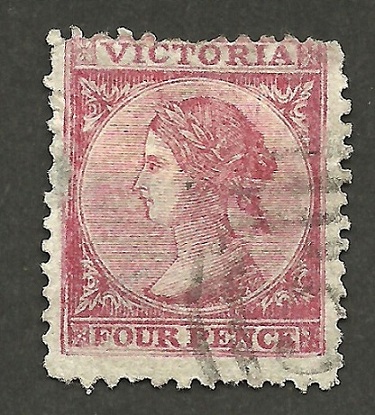
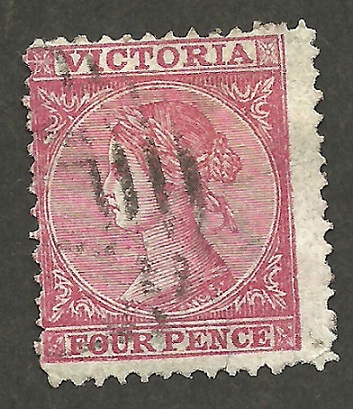
The answer is a bit simpler than most suggestions - this is actually a plateable variety that would have occurred in the same position on each sheet. You may be thinking surely they wouldn't leave such a poorly made electro in place... but the answer is yes they did!

One of the reasons Victoria has never become popular with philatelists is its complexity, and the laureate series is perhaps the most complex of all, mainly due to the poor production quality of the time. Not to mention their inability to estimate how many stamps would be needed and constantly running out of paper, resulting in emergency printings on all kinds of paper, either from stock that was for another denomination or borrowed from Tasmania. So watermarks are a nightmare.
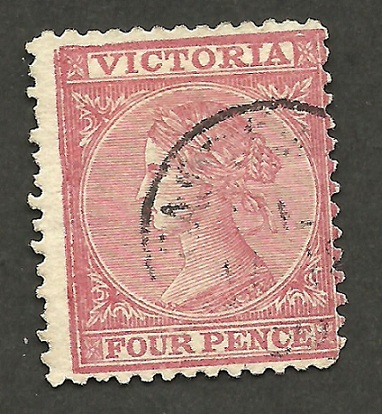
The laureate series are so named due to the laureated head of the queen in the design. The plates for the laureate series (and the preceding beaded oval designs they replaced) were prepared using very crude techniques by the stamp printer of the time, F.W. Robinson. He prepared the plates for the 4 pence stamp first, followed by the 2 pence, and these two plates show many more flaws than those produced later, as he did get better (well slightly
) with practice.
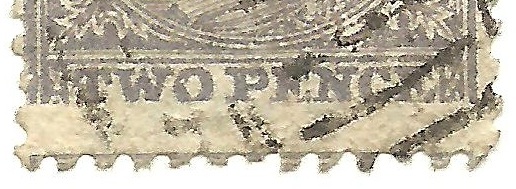
The die was engraved by a Mr Frederick Grosse and supplied to Robinson. However no steel collar to fit the die was supplied, and it seems that Robinson proceeded to stamp his moulds by hand using a hammer & punch. Without a restraining collar and stamping press, the results were poor. He stamped 120 moulds plus some spares for each denomination. There are two most prevalent varieties caused by this method -- the double strike & the partial strike. On the early plates, up to 50% of the stamps show prominent double strikes.
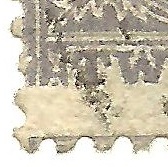
Your stamp is an example of a partial strike. I've noticed that most partial strikes seem to effect the bottom frame, it seems far more prevalent for the bottom frame to be missing in part or wholly than the top. That's just my own observation though - perhaps it was the way he stamped them that led to less pressure at the bottom. There is one 4d variety with the whole of Victoria missing. They did correct that one after one printing, so it's very rare.
After stamping the moulds in soft lead, they were placed in an electrolytic bath and coated with copper. The copper shell was detached and backed with metal, then clamped together to form the plate. The plate was made of 8 groups of 15 electros - 5 rows of 3 in each group. They were separated by a gutter with a wooden strip called a reglet. The reglet was below type height, but would sometimes move down during the printing process and lead to another type of flaw. If the reglet reached type height, it would result in a solid bar of colour being printed in the gutter next to the outer frame of the stamp. They would then hammer the reglet back down, leading to yet another flaw!

They'd use a chisel to hammer it back down, but it seems they were none too careful, and would often hit the electro in the process, damaging the frame - these are called dentation flaws.
The varieties in the Laureate series are many and varied. Almost no 2 stamps are the same from the earlier printings. You can see in your previous Vic cancel thread you have another 2d laureate that also has a damaged bottom frame. That doesn't look like a partial strike, more likely it was damaged. It does have the gutter (or bottom margin) below it, so possibly the frame was squashed in when they hammered back the reglet sometime. Just a guess. The 1d green between the 2 shows how the bottom frame should look. In 1869, 5 years after Robinson made plate 1, two new plates were produced by Atkinson, and these were much better. Even though they were only in use for one year till the 2d laureate was replaced, the fact that they were double the size (240 stamps per plate) and improved printing presses meant that this is the most common stamp pre 1870.
I must say yours is a great example of a partial strike. I'd like to know the watermark and perforation if it's not too much to ask. It's a great stamp.
Balf





 Posted 06/11/2011 11:38 am