| Author |
 Replies: 23 / Views: 3,668 Replies: 23 / Views: 3,668 |
|
Pillar Of The Community
United States
866 Posts |
|
|
When designing a FDC, does the size of the envelope matter? I'm worried that the cancel is going to interfere with the design if I use letter size (3 5/8 x 6 1/2in) envelopes. Here is the cancel: 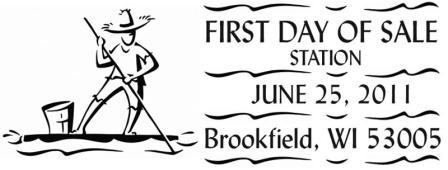 And here are a couple of the covers I'm playing around with: 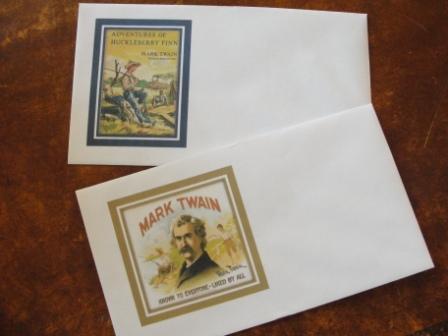 Any suggestions would be most welcome. This is the first time I have done something like this.  Thank you!! |
|
Send note to Staff
|
|
|
|
|
Bedrock Of The Community
United States
12128 Posts |
|
|
I do them exactly the opposite. I get the pictorial cancels applied to an uncacheted cover and then print up the cachets after the fact, thereby being able to exactly measure the cachet to fit around the cancel. It may take a bit more work and a couple of sample tries (on blank envelopes) to get it exactly right, but it looks a lot better than creating good cachets for a cancellation that may or may not be proportioned correctly on the cover, as often times the end result will vary.
There's no right or wrong way of doing it, that's just my way for which I have had good results. |
Send note to Staff 
|
|
|
Pillar Of The Community
United States
866 Posts |
|
|
wt, I never thought of doing it that way. I might take some blanks with me just in case the others get messed up.
Is there a limit to the number of covers you can get cancelled? |
|
Send note to Staff
|
|
|
Bedrock Of The Community
United States
12128 Posts |
|
|
I seem to recall that under 100 or 200 covers are free (just first class postage stamp value). Above that number, there is a small fee. |
|
Send note to Staff
|
|
|
Pillar Of The Community
United States
2972 Posts |
|
|
Spanishmoss,
Those cachets look great! At the event they may limit you on how many covers or items you can get cancelled at 1 time and make you get back in line for your next batch. What wt1 is referring to is the amount you can send in for cancellation to the FDOS or FDOI mailing address to get serviced at no cost. Also, keep in mind that you can request the FDOS postmark for upto 30 days after the event and the FDOI postmark for 60 days. |
|
Send note to Staff
|
|
|
Pillar Of The Community
United States
866 Posts |
|
|
Thanks Stamperdude and wt1 for the info.
What do ya'll think about the size of the envelope? Does it matter? |
|
Send note to Staff
|
|
|
Bedrock Of The Community
United States
12128 Posts |
|
|
Most US collectors prefer the smaller sized 6-3/4" envelopes as storage becomes a factor on the larger pieces. Also, if you're looking at oversized pieces, do keep in mind that the cover will have to bear the correct postage for the size, or in some cases you could be looking at more than one stamp to cover the required postage, as even if it's a philatelic keepsake, it will have to cover current postage for the size of the piece. |
|
Send note to Staff
|
|
|
Pillar Of The Community
United States
2972 Posts |
|
|
Sorry, I forgot to answer your primary question. I usually prefer the 6 3/4" envelopes. They are easier to stor and you can send them off inside a #10 and can be returned inside a glassine "under protective cover". However, for some multi stamp issues or combo covers I will use a #10 envelope to help "balance" out the cachet and stamps plus postmark. It really comes down to a personal choice. |
|
Send note to Staff
|
|
|
Bedrock Of The Community
United States
12128 Posts |
|
|
Granted this cover is from an unrelated topic, but just provides you an example as to how some pictorial cancellations can be very large to the point that there is little to no room left for a cachet. In this example, you'd either need to service #10 envelopes or rework the cachet so it would fit the lower half of the envelope. If a cachet were applied to this cover in the traditional way, it would be partially obliterated by the oversized cancellation: 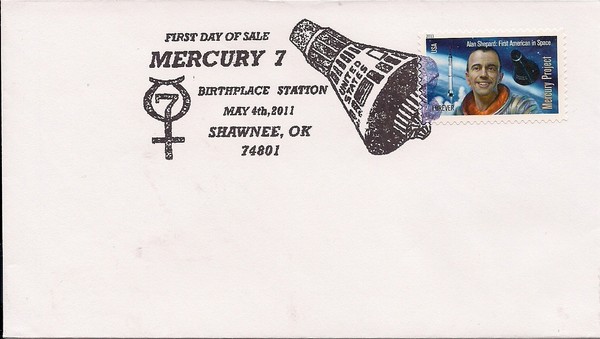 |
|
Send note to Staff
|
|
|
Pillar Of The Community
United States
866 Posts |
|
|
Quote:
If a cachet were applied to this cover in the traditional way, it would be partially obliterated by the oversized cancellation:
That is what I'm afraid is going to happen with the Mark Twain cancel. I'm thinking I need to use business envelopes. Plus, for some of them, I was going to use the Tom Sawyer and Huck Finn stamps in addition to the Twain stamp. |
|
Send note to Staff
|
|
|
Pillar Of The Community
Australia
687 Posts |
|
|
Quote:
I do them exactly the opposite. I get the pictorial cancels applied to an uncacheted cover and then print up the cachets after the fact, thereby being able to exactly measure the cachet to fit around the cancel. That's a very good suggestion wt1; I guess that the stamps go through the printer with no visible markings. Do you use a laser printer to avoid inkjet printer's inks susceptibility to moisture? thanks alex |
|
Send note to Staff
|
|
|
Bedrock Of The Community
United States
12128 Posts |
|
|
If I had the luxury of a color laser printer, I would do just that. But for my personal collection (I don't make cachets intended for sale to others), I just use an inkjet printer. In fact, I buy some cheap dollar store envelopes to use as samples to make absolutely certain everything is aligned just perfect before I send the cancelled cover through the printer.
One thing I have observed is that if you use self adhesive address labels on your returned covers (I use Scotch removable tape) you have to be certain to get all of the tacky residue off of the cover (a pink eraser works well for this) or you can find that the occasional cover will run through the printer a bit crooked. It all has to do with the rubber rollers that feeds the envelopes through the printer--they can be very tricky at times.
On my ink jet printer, the envelopes run out of the same tray as the standard paper, so it's important that you not keep that tray more than half full when running the envelopes through or you could also wind up with misaligned cachets.
One other thing as I think of it: I've made occasional mistakes (as everyone does) and have put a cover in backwards and not just ruin the cover but the stamp, too. I've found that if you immediately take the stamp and soak it in warm water, the ink jet print (which is water soluable) magically disappears and even if you ruin a cover, the stamp can be salvaged for your used collection and/or to add to your stock book! |
|
Send note to Staff
|
|
|
Pillar Of The Community
Australia
687 Posts |
|
|
Thanks for that, wt1. I also find printing envelopes a minefield of possible mishaps, either mine or the printer's or both.
So now I have resorted to making my own - that way I can print on them just like on an ordinary piece of paper, in addition I can choose slightly heavier, acid-free, archival quality paper. But because of paper size limitations (A4) the envelopes don't come out in a 'standard' size.
:) |
|
Send note to Staff
|
|
|
Pillar Of The Community
United States
2972 Posts |
|
|
I also use an inkjet, but because of misfeeding,color errors, ink smears, splotches, etc. I print my cachets in advance and hope they looked balanced to the stamp & postmark. I don't mind an overlap of the postmark on the cachet occasionally, plus you know it wasn't an add on cachet years later. I also keep my mistake covers and use them for correspondance, you just never know what you may receive from me. |
|
Send note to Staff
|
|
|
Pillar Of The Community
United States
2972 Posts |
|
|
Pillar Of The Community
United States
866 Posts |
|
|
Replies: 23 / Views: 3,668 |
|




 Posted 06/19/2011 8:40 pm


