I don't believe it is anything significant, probably from the early third printing, worn plate, before it got really worn. Look at the "E" in the example I just purchased below, definitely from the worn plate, also a dot in the "S" example.
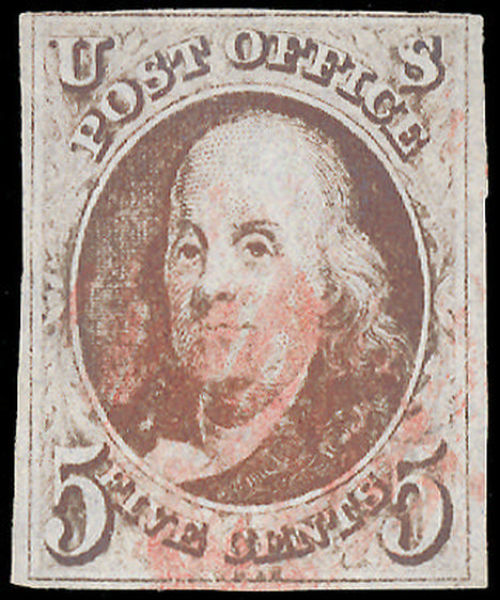
Also oxidation of the ink will distort the image of the printing, your example does not look oxidized in the picture, mine may have oxidation but I'm still awaiting delivery.
Below is a example of the plate extremely worn before it was cleaned. Look at the face it's very fuzzy. This is NOT surface wear on the face of the stamp itself but worn plate. I bought this example for this reason. Most people don't see the beauty in it.
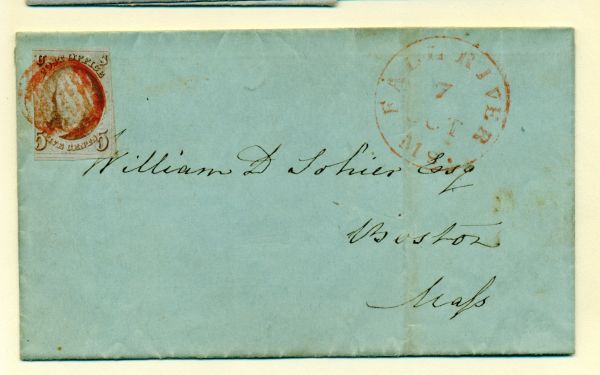
Here is some more info about printings: Printings - There were five printings of the 1847 issue; the first four involved both 5¢ and 10¢ stamps; the last was of the 5¢ value only. The 10¢ stamps have not been distinguished by printing, although the first printing had razor-sharp impressions. Even the last 10¢ fourth printing has distinct, clear impressions as plate wear from the non-abrasive black ink was non-existent and less than 25% of the quantity of the 5¢ value were printing. The 10¢ color variations are the result of lighter or heavier inking.
Not only were far more 5¢ stamps printed to generate wear, the brown ink contained abrasive elements such as Albertite from New Brunswick or Gilsonite (used for the later brown Garfields) so plate wear did occur.
The first printing of the 5¢ is notable for clear, proof-like impressions as well as the presence of dark brown and black brown hues, including the rare, almost black 'seal brown', known on the very early July 9, 1847 Ishakawa cover. The second printing was ordered on May 13, 1848 and was the printing distributed to route agents on the rail lines. Typical colors are brown and pale brown. Impressions are less crisp than the first printing but still very good. The third printing was ordered March 19, 1849. It is well-known for its worn, dirty impressions. Colors include the grayish browns and worn red browns.
The fourth 5¢ printing was ordered February 14, 1850. It was made after the plate had been cleaned by an acid bath so that impressions are softer and fuzzy but clear. The 5¢ ink formulation was also changed to include chrome orange. Both the fourth and the fifth printing yield brown orange stamps which will 'dip' orange. The fifth and last printing was ordered December 7, 1850. This printing includes the very rare orange and the rare red orange hues.
This is from this link:
http://www.nystamp.org/1847issue.html





 Posted 07/31/2011 05:44 am


