Stamp Community Family of Web Sites
Thousands of stamps, consistently graded, competitively priced and hundreds of in-depth blog posts to read


Stamp Community Forum
 
Username:
Password:
Save Password
Forgot your Password?

This page may contain links that result in small commissions to keep this free site up and running.

Welcome Guest! Registering and/or logging in will remove the anchor (bottom) ads. It's Free!

How Can You Tell The Difference?

 
To participate in the forum you must log in or register.
Author Previous TopicReplies: 4 / Views: 2,920Next Topic  
Valued Member
16 Posts
Posted 08/10/2011   12:44 am  Show Profile Bookmark this topic Add boygenius39 to your friends list Get a Link to this Message
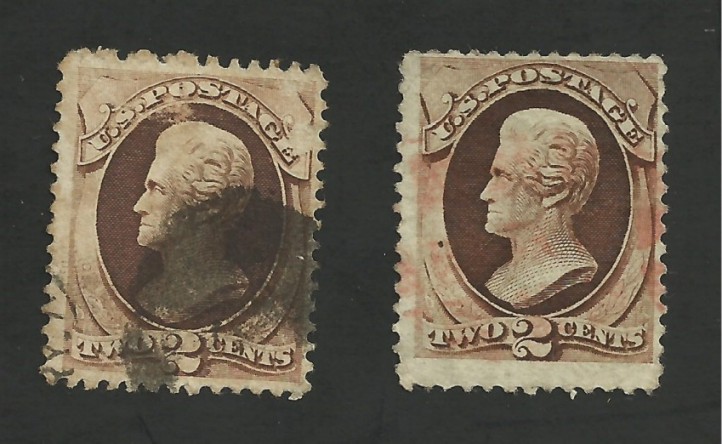
How can you tell the difference between a common stamp, and a rare #193, or any of the american bank special printings (#192-#204) circa 1880.


Send note to Staff

Pillar Of The Community
United States
6661 Posts
Posted 08/10/2011   8:16 pm  Show Profile Bookmark this reply Add stallzer to your friends list  Get a Link to this Reply
They were all printed on soft porous paper. The 2¢ Jackson lists as only 416 being sold, so I'd say the odds are slim, to none.
Send note to Staff  Go to Top of Page
Valued Member
United States
338 Posts
Posted 08/10/2011   8:27 pm  Show Profile Bookmark this reply Add TheSeal619 to your friends list  Get a Link to this Reply
Hey Stallzer

Also, the 1880 American Bank note special printing was issued as NGAI and I think not postally used.
Ron
Send note to Staff  Go to Top of Page
Valued Member
United States
338 Posts
Posted 08/10/2011   8:51 pm  Show Profile Bookmark this reply Add TheSeal619 to your friends list  Get a Link to this Reply
To answer your question, paraphrasing Bookman, the first thing you need to learn when collecting bank notes is the ability to tell within 95% the difference in the papers. There are three easy ways of doing this and after a little practice you will note the difference. The first is the light test, look through the stamp into a bright light. If the stamp paper looks slightly translucent and even then it is "hard paper". If it look thicker and appears coarse then it is soft. Next, is the snap test. Hold the stamp between your thumb and index finger and snap the edge back and forth. The hard paper will make a crisper sound. Lastly by far the easiest, look at the perforation tips, soft paper stamps will look fuzzy with paper fibers going all over the place, hard paper gives a cleaner tear.
Hope this helps
Ron
Send note to Staff  Go to Top of Page
Valued Member
United States
19 Posts
Posted 10/21/2011   10:36 am  Show Profile Bookmark this reply Add Bundespostal to your friends list  Get a Link to this Reply
Ron, that was a gorgeous post! Thank you! I was not the one who originated the post, but just reading your instructions made me feel a little more confident about identifying my stamps!

Thanks again,

Lynn
Send note to Staff  Go to Top of Page
  Previous TopicReplies: 4 / Views: 2,920Next Topic  
 
To participate in the forum you must log in or register.

Go to Top of Page

Disclaimer: While a tremendous amount of effort goes into ensuring the accuracy of the information contained in this site, Stamp Community assumes no liability for errors. Copyright 2005 - 2026 Stamp Community Family - All rights reserved worldwide. Use of any images or content on this website without prior written permission of Stamp Community or the original lender is strictly prohibited.
Privacy Policy / Terms of Use    Advertise Here
Stamp Community Forum © 2007 - 2026 Stamp Community Forums
It took 0.3 seconds to lick this stamp. Powered By: Snitz Forums 2000 Version 3.4.05