| Author |
 Replies: 22 / Views: 6,843 Replies: 22 / Views: 6,843 |
|
Pillar Of The Community
United States
2547 Posts |
|
|
|
|
Rest in Peace
United States
7097 Posts |
|
|
This is a really neat post! I was always curious about some of them. Now I know! |
Send note to Staff 
|
|
|
Moderator

United States
4788 Posts |
|
|
Rest in Peace
United States
1806 Posts |
|
|
Other than the $2 dollar which for obvious reasons there must be a story behind the 5 cent one. All for the most part are replicas of the model but the 5 cent one the artist choose to interpret his own view. Would anyone have the back story on this? Just interested for the full story. |
|
Send note to Staff
|
|
|
Pillar Of The Community
Canada
617 Posts |
|
|
Pillar Of The Community
United States
2547 Posts |
|
|
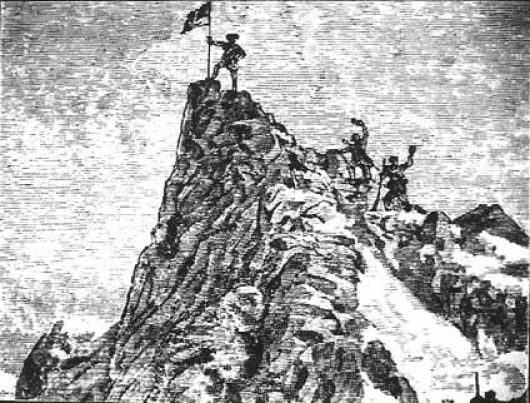
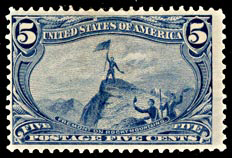
The 5 cent was from an old engraving "Fremont on the Rocky Mountains". Fremont survey much of the west starting about 1842. The original old engraving was from a sketch made by one of the artist on the Fremont expedition an is reported to be Fremont of the summit of Long's Peak in what is now Rocky Mountain National Park in northern Colorado.
The BEP artists took great liberties in producing a more aesthetically appealing image.
The images were:
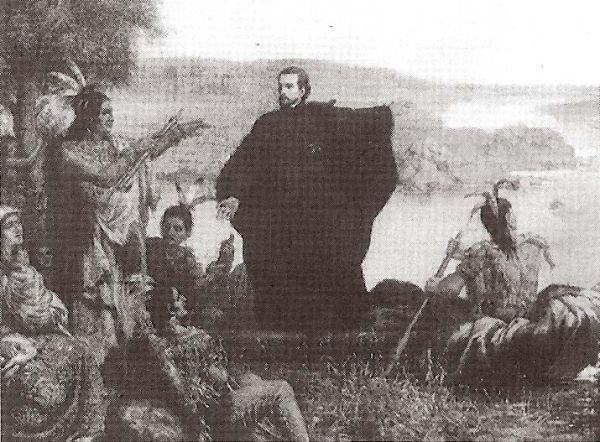
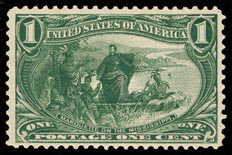
1 cent "Marquette" a painting by Lamprecht
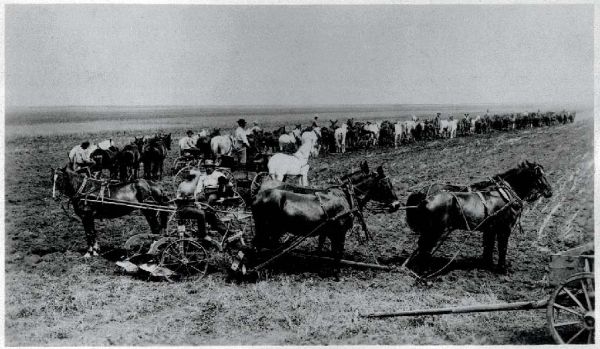
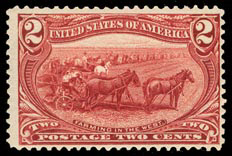
2 cents "Farming in th West" a photograph from Nebraska
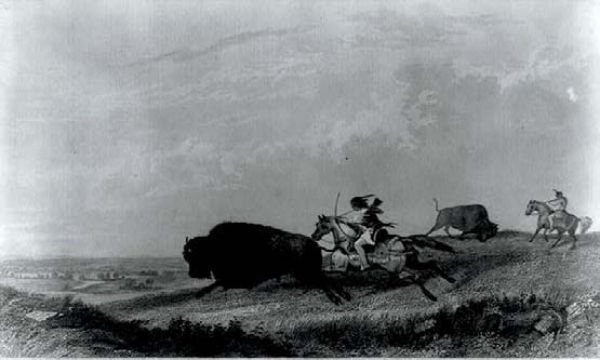
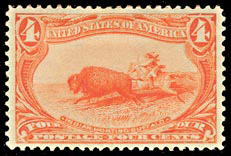
4 cents "Indian Hunting Buffalo" an engraving in Schoolcraft's History of the Indian Tribes.
5 cent "Fremont on the Rocky Mountains" unknown engraving
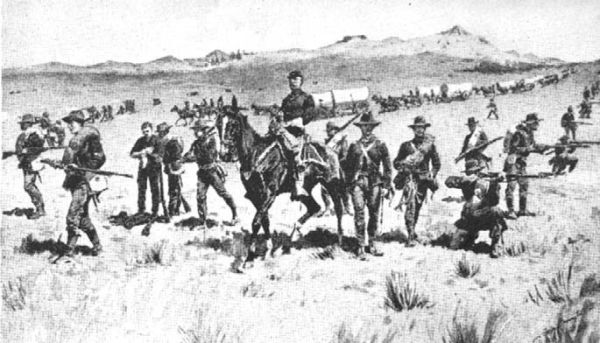
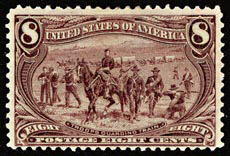
8 cents "Troops Gaurding Train" a drawing by Frederick Remington
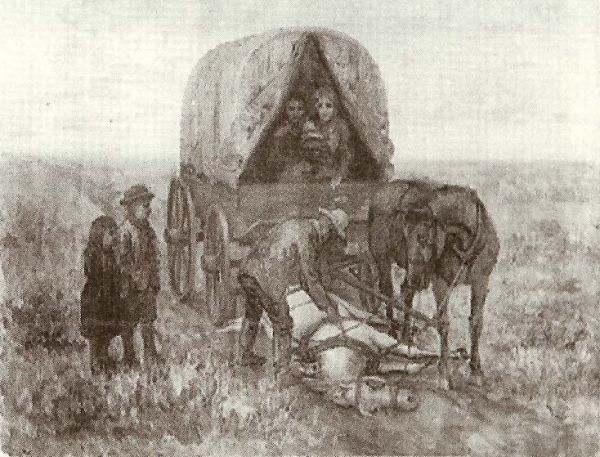
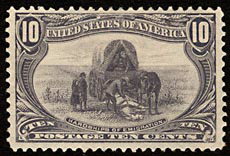
10 cents "Hardships of Emigration" painting by A. G. Heaton
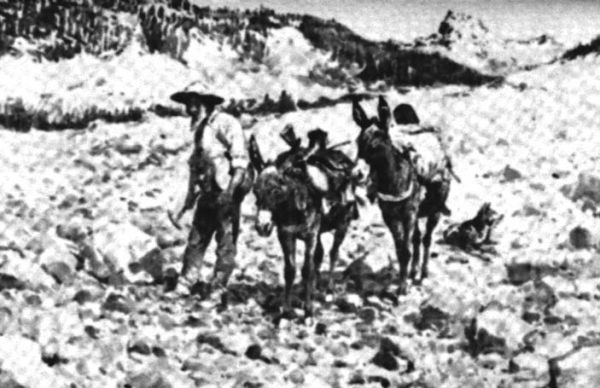
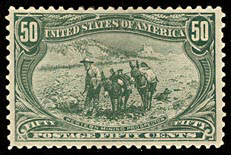
50 cents "Mining Prospector" a drawing by Frederick Remington
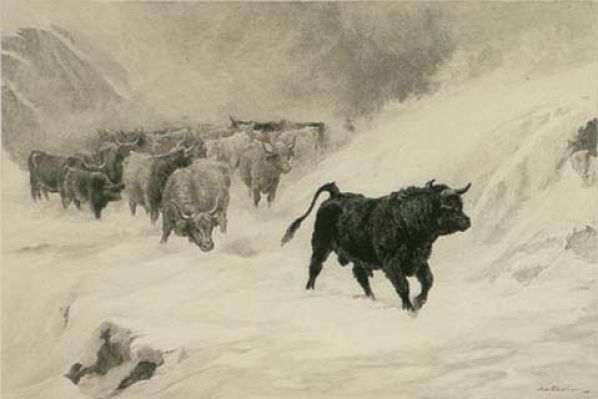
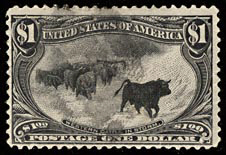
$1.00 "Cattle in a Storm" by J. MacWhirter
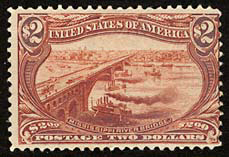
$2.00 "Mississippi River Bridge at St. Louis" unknown photograph
Edit- typos |
|
Send note to Staff
|
| Edited by Russ - 09/28/2011 10:57 am |
|
|
Pillar Of The Community
United States
6668 Posts |
|
|
Interesting side note on the 1$ western Cattle in a Storm.
The breed of cattle used in the issue were meant to represent the ruggedness of the American West, but actually derive from the West Highlands of Scotland. That's because the design replicated a James McWhirter painting depicting cattle in a winter storm in the West Highlands of Scotland. This painting was copied, without the permission of the owner, Lord Blythswood, by an American cattle company as a trademark of sorts.
"McWhirter, however, was a Scot, and his painting, entitled The Vanguard, was soon discovered to have been a depiction of Scottish cattle in a storm in Scotland," "It was actually painted in a small farmhouse near the Scottish highland town of Calendar. The scene did not depict an event west of the Mississippi, but it might have been, and few really cared about this detail, for cattle were an important part of the western U.S. economy." |
|
Send note to Staff
|
|
|
Pillar Of The Community
United States
2547 Posts |
|
|
The Post Office department originally intended to issue this series as bi-color stamps. They also had the vignette of the 2 cent and 2 dollor switched on their essays. 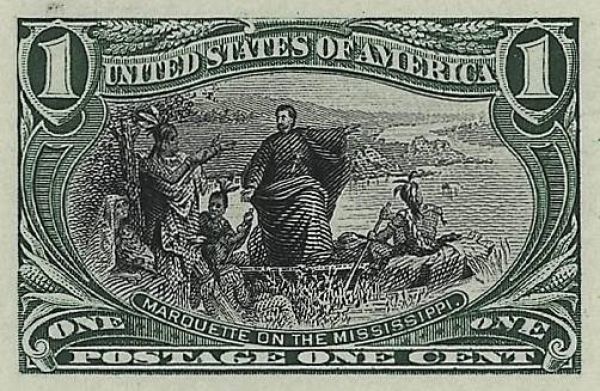 1 cent bi-color essay 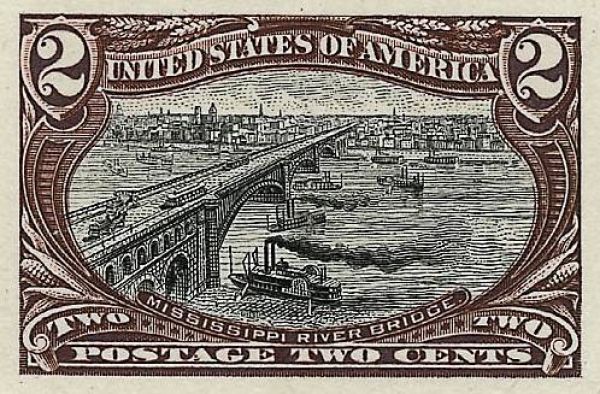 2 cent bi-color essay originally proposed with the vignette that was released on the $2.00 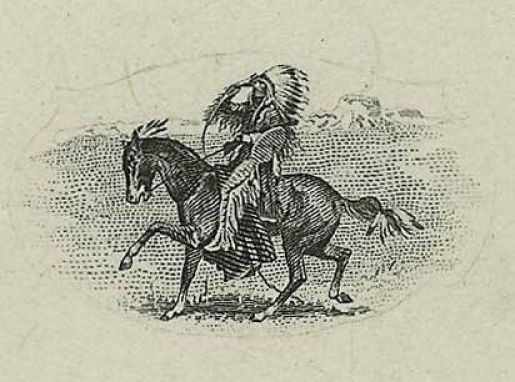 This the the "Cheyenne Warrior" vignette for the original proposal for the 8 cent stamp. 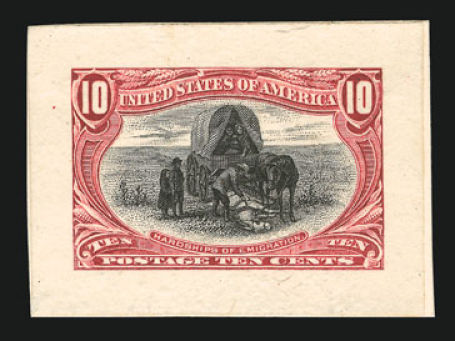 10 cent bi-color essay 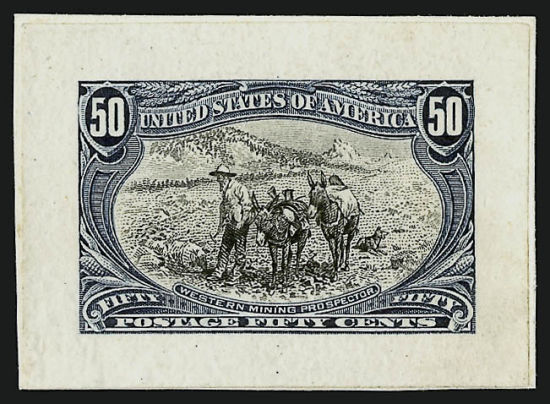 50 cent bi-color essay 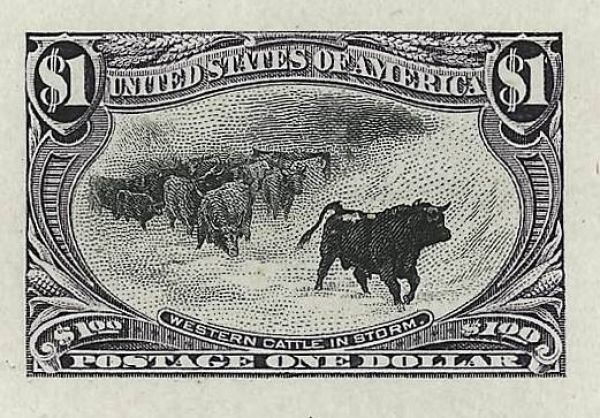 $1.00 bi-color essay 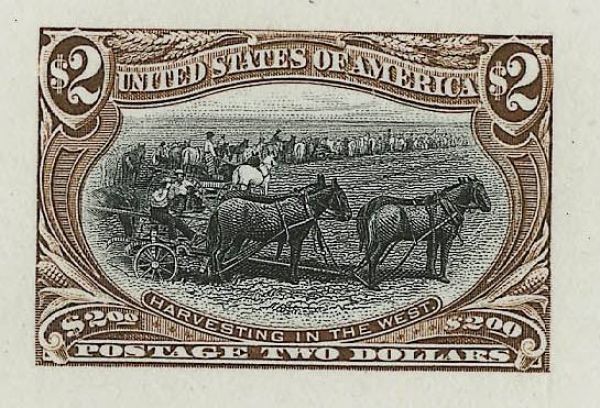 $2.00 bi-color essay with the vignette that was released on the 2 cent. The title was also change from "Harvesting in the West" to "Farming in the West". |
|
Send note to Staff
|
|
|
Pillar Of The Community
United States
3568 Posts |
|
|
Rest in Peace
United States
1806 Posts |
|
|
Great information Russ, I would have leaned towards the bi-color set my self. Biased I guess because the Pan Americans are one of my favorite sets. |
|
Send note to Staff
|
|
|
Rest in Peace
United States
7097 Posts |
|
|
Rest in Peace
United States
7097 Posts |
|
|
I just noticed the Dead horse on the 10¢ denomination! What an odd subject for a postage stamp. |
|
Send note to Staff
|
|
|
Pillar Of The Community
United States
6668 Posts |
|
|
A little more information on that Stamp courtesy of the Smithsonian. In contrast to the triumphant images which adorn previous denominations of the Trans-Mississippi Exposition Issue, the 10-cent stamp portrays the hardships of the expansion and emigration westward. The stamp depicts the pain of a dying horse with its desperate owners on their way westward. Augustus Goodyear Heaton did the painting that inspired the image for the 10-cent stamp. Several years earlier in 1892, the Bureau of Engraving and Printing used another one of Heaton's paintings for the 50-cent Columbian Exposition Issue stamp. The image used for the Trans-Mississippi Exposition Issue 10-cent stamp was painted by Heaton around the same time his Recall of Columbus Painting was adopted by the Bureau for the Columbian Issue.  |
|
Send note to Staff
|
|
|
Pillar Of The Community
United States
527 Posts |
|
|
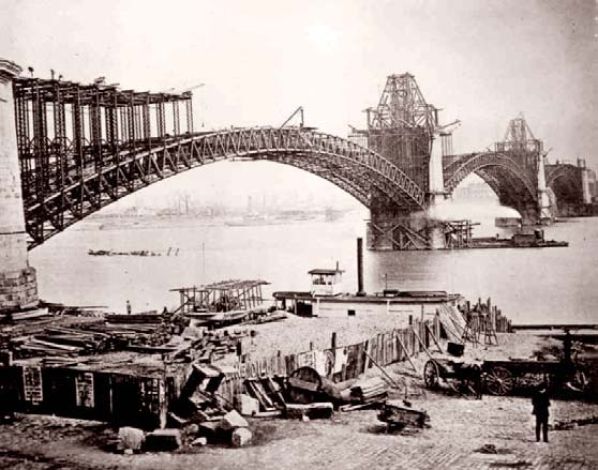
For those of you who haven't been to St. Louis, the Eads Bridge there is the one depicted on the $2 stamp. Completed in 1874, it was for some time the longest arched bridge in the world. It is still in use and was the major landmark of St. Louis before the construction of the Gateway Arch. There is a very nice view of the bridge from the top. |
|
Send note to Staff
|
|
|
Rest in Peace
United States
7097 Posts |
|
|
I really wish they would have made them bi-color like intended. They would have been even more beautiful than they already are! Thanks again for the post Russ! |
|
Send note to Staff
|
|
|
Pillar Of The Community
United States
1946 Posts |
|
|
Was stallzer really quoting the Smithsonian? It's hard to believe they would have made a gaffe like that, by attributing the Columbians to the BEP. The Columbians were produced by the American Bank Note Co. The Trans-Mississippi stamps were the first Bureau commemoratives. |
|
Send note to Staff
|
|
|
Replies: 22 / Views: 6,843 |
|




 Posted 09/28/2011 12:28 am