| Author |
 Replies: 27 / Views: 3,994 Replies: 27 / Views: 3,994 |
|
|
|
Valued Member
United States
12 Posts |
|
|
Puzzler, This is the best I can do tonight. I will try to get that scanned tomorrow as well. 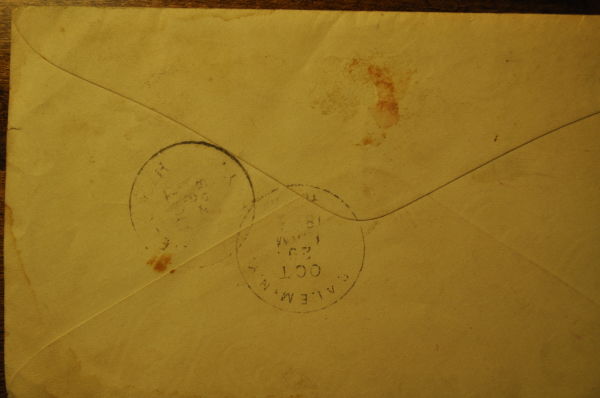 |
Send note to Staff 
|
|
|
Pillar Of The Community
United States
6756 Posts |
|
|
Looks like one of the dates on the backside postmarks says Oct 29. Thanks for posting the backside pic.
Sometimes the library has the Scott catalog available for general circulation, sometimes they have them in the Reference section. If both, then often the Reference section has the newest editions. |
|
Send note to Staff
|
|
|
Bedrock Of The Community
United States
12128 Posts |
|
|
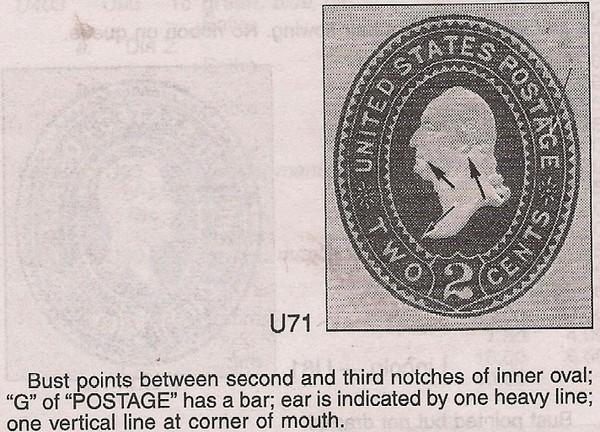
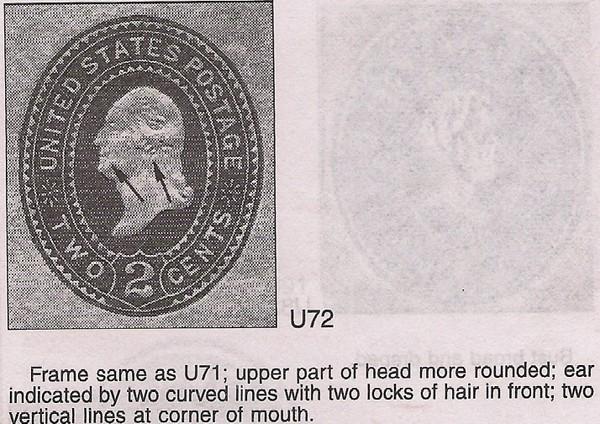
I discounted the U70 type as the "G" in the word "POSTAGE" is not correct as in your example. That leaves types U71 and U72 to look at (Scott Nos. U311 to U323). Once you identify the correct detail of the indicia, you then have the challenge of determining what type of paper the envelope is printed on. It could be on amber, manila, amber manila or oriental buff paper, and the difference could range from a low value of $0.40 to a high value of $160.00 (based on my 2002 catalog). |
|
Send note to Staff
|
|
|
Valued Member
United States
12 Posts |
|
|
Bedrock Of The Community
United States
12128 Posts |
|
|
It can be a challenge to identify different paper colors, as some are very subtle and the very nature of paper that yellows over time would also need to be considered.
|
|
Send note to Staff
|
|
|
Bedrock Of The Community
United States
12128 Posts |
|
|
Valued Member
United States
12 Posts |
|
|
Wow, that is extremely hard to tell apart from U71 and U72. I'm leaning towards U72 because it does not point inbetween the second and third notch but it was honestly too close for my unexperienced eyes. |
|
Send note to Staff
|
|
|
Rest in Peace
United States
7097 Posts |
|
|
These guys & gals are smart huh? I'm constantly in awe of some the expertise on here! It takes a real talent to spot the minute details on a small piece of paper and they make it look so easy!  to S.C.F. and I hope you stay on board and share your finds with all of us! -Jay |
|
Send note to Staff
|
|
|
Valued Member
United States
12 Posts |
|
|
Yes, some top notch people in this forum. A great welcome to me was appreciated. Thanks everybody. So I just got home from 2 hours at the library and I left there, more confused than when I got to the library. Here's what I learned, The Watermark is #12, made between 1894-1898 and that impression was made between 1887-1894. So, the envelope/impression must have been made in 1894, 6 years after 1888. I could not tell the difference between U71 and U72, although i'm leaning towards U72. Also, I am still unsure how to tell the type of paper. If anybody has a suggestion, I would appreciate hearing it. Thanks again everybody. |
|
Send note to Staff
|
| Edited by bryanbjt223 - 10/11/2011 5:08 pm |
|
|
Bedrock Of The Community
United States
12128 Posts |
|
|
It's not out of the question that the postmark could be 18 98, which could partially explain your findings. As for paper type, that is one of the more difficult aspects of postal stationery identification in the early years. There are some web sites that sell so-called paper "samples" to confirm color, however, I have not used them so I can't say how accurate they are. Here's one (although as a pdf file, it's not at all accurate as compared to what the actual sample papers would be): 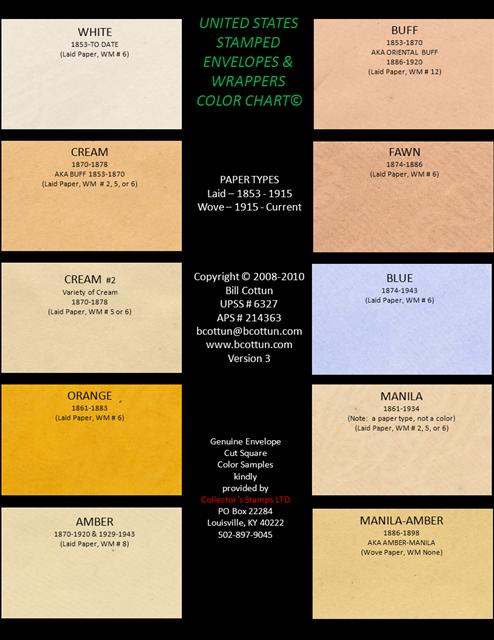 Also remember you have to take into account the natural aging of the envelope which could sometimes skew the choice of a correct color. |
|
Send note to Staff
|
| Edited by wt1 - 10/11/2011 5:25 pm |
|
|
Valued Member
United States
12 Posts |
|
|
Pillar Of The Community
United States
2963 Posts |
|
|
Replies: 27 / Views: 3,994 |
|




 Posted 10/10/2011 9:44 pm