| Author |
 Replies: 9 / Views: 1,799 Replies: 9 / Views: 1,799 |
|
|
Valued Member
United States
65 Posts |
|
|
Hey all--sorry I've been away for awhile. My laptop decided to crash and I actually (hopefully) just got it up and running today. I was having SCF withdrawals..... Anyhow, these are my recent purchases which I mentioned I might get a while back. I finally decided to get these, but not the Sales Tax stamps which I thought were interesting, but from talking to some of you, didn't really think they fit into a stamp collecting category. Anyhow, these are the 2 I bought for 5 bucks apiece: 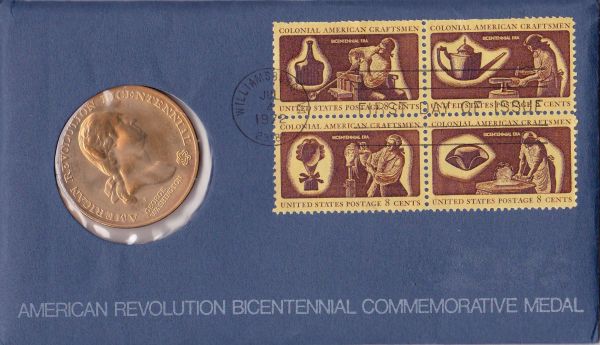 And this one: 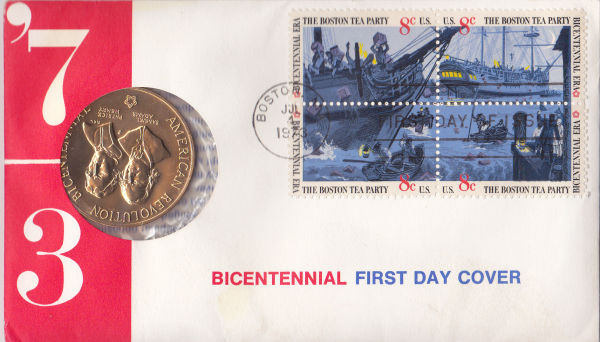 Also, while we were roaming the flea market separately, the wife decided to surprise me with this little gem.... 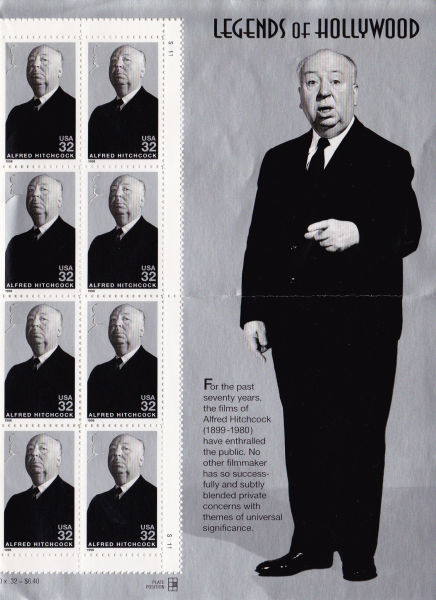 Notice anything missing? I did, but reassured my darling wife that it was a great find and thanked her immensely for finding it. One thing I thought was neat about the Hitchcocks are the die-cut silhouettes on them. Anyhow, I was pretty happy when I left there and can't wait for the next treasure hunt. Peace, Chad |
|
Send note to Staff
|
|
|
|
|
Pillar Of The Community
Guatemala
1500 Posts |
|
|
Did you notice that the stamps have a star shaped perforation on each corner? That was a feature of Legends of Hollywood until the USPS switched to self adhesive stamps for this series. |
Send note to Staff 
|
|
|
Valued Member
United States
65 Posts |
|
|
yes quigngt, I did--fancy stamps, I guess. I wonder if non-collectors notice these things, or if they just (eek) rip them off and slap them on a letter and mail them off in a hurry not even noticing. What a shame if they do.
Peace,
Chad |
|
Send note to Staff
|
|
|
Pillar Of The Community
Canada
2574 Posts |
|
|
hello to you and your wife Nice findings. The bicentennial I like very much. One of my collection is tall ships. I order stamps from a dealer and he put this block on the cover.  |
|
Send note to Staff
|
| Edited by timbres667 - 06/27/2012 05:19 am |
|
|
Valued Member
57 Posts |
|
|
Pillar Of The Community
Canada
1401 Posts |
|
|
A flea market or swap meet is a type of bazaar that rents space to people who want to sell or barter merchandise ranging from low quality items to bargain priced items of the highest quality or used goods.
Many markets offer fresh produce and plants from local farms. Renters of the flea market are vendors. It may be indoors, such as in a warehouse or school gymnasium; or it may be outdoors, such as in a field or under a tent. Flea markets can be held annually or semiannually, others may be conducted monthly, on weekends, or daily. Flea-market vendors may range from a family that is renting a table for the first time to sell a few unwanted household items to scouts who rove the region buying items for sale from garage sales and other flea markets, and several staff watching the stalls. |
|
Send note to Staff
|
|
|
Valued Member
United States
65 Posts |
|
|
Couldn't have said it better myself, BlackJag. The one I found these at is year-round indoors. There's another one that's about 20 minutes away that's only open during the summer and only on weekends and outside, but much bigger. I'm hoping to find a vendor there that doesn't really know what they have.  It's not a big place to find stamps, but once in awhile someone will put some out. I think it's all about the thrill of the hunt. Peace, Chad |
|
Send note to Staff
|
|
|
Valued Member
57 Posts |
|
|
Why is it called flea market, was it once infested, or are fleas for sale at some. I am just wondering why the name? |
|
Send note to Staff
|
|
|
Bedrock Of The Community
United States
12128 Posts |
|
|
Here's Wiki's explanation on how a "Flea Market" got its name: Quote:
The origins of the term "flea market" are disputed. According to one theory, the Fly Market in 18th century New York City began the association. The Dutch word Vlaie, or vlie (In the Dutch Language, 'v' is pronounced as an English 'f'), meaning a swamp or valley, was located at Maiden Lane near the East River in Manhattan. The land on which the market stood was originally a salt marsh with a brook. By the early 1800s the "Fly Market" was the principal market in New York City.
Another theory maintains that "flea market" is a common English phrase calque from the French "marché aux puces", literally translating to ("market where one acquires fleas").[17] The first reference to this term appeared in two conflicting stories about a location in Paris, France in the 1860s which was known as the marché aux puces (flea market).
The traditional and most publicized story is in the article "What Is A Flea Market?" by Albert LaFarge in the 1998 winter edition of Today's Flea Market magazine. In his article LaFarge says, "There is a general agreement that the term "Flea Market" is a literal translation of the French marché aux puces, an outdoor bazaar in Paris, France, named after those pesky little parasites of the order Siphonaptera (or "wingless bloodsucker") that infested the upholstery of old furniture brought out for sale."
The second story appeared in the book Flea Markets, published in Europe by Chartwell Books. The introduction states:
In the time of the Emperor Napoleon III, the imperial architect Haussmann made plans for the broad, straight boulevards with rows of square houses in the center of Paris, along which army divisions could march with much pompous noise. The plans forced many dealers in second-hand goods to flee their old dwellings; the alleys and slums were demolished. These dislodged merchants were, however, allowed to continue selling their wares undisturbed right in the north of Paris, just outside of the former fort, in front of the gate Porte de Clignancourt. The first stalls were erected in about 1860. The gathering together of all these exiles from the slums of Paris was soon given the name "marché aux puces", meaning "flee market", later translation. |
|
Send note to Staff
|
| Edited by wt1 - 06/28/2012 08:45 am |
|
|
Valued Member
57 Posts |
|
| |
Replies: 9 / Views: 1,799 |
|




 Posted 06/26/2012 11:49 pm


