|
This page may contain links that result in small commissions to keep this free site up and running.

Welcome Guest! Registering and/or logging in will remove the anchor (bottom) ads. It's Free!
To participate in the forum you must log in or register.
| Author |
 Replies: 91 / Views: 23,234 Replies: 91 / Views: 23,234 |
|
Valued Member
42 Posts |
|
|
|
This is a follow-up to Essayk's post on 8/8/13 under the #65-E15h thread. As personal disclosure, I have studied Casilear for about a decade. His contributions to line engraving in fine art and bank note pieces and in oil landscape painting in this country are well known and highly regarded (today much less than when he was active though he is still eminently collectible). However, little research has been done trying to pinpoint his contributions to stamp design/engraving. He had joined Toppan, Carpenter Co. (TC) as a partner January 1, 1850 - after many prior years working directly and indirectly with all the other partners - with the expressed purpose of leveraging his name and talents to secure additional patronage for the firm. This was made clear in a beautifully engraved broadside announcement that was sent out to clients and other interested parties the date of his joining the firm: "will we trust secure to our new firm an increase of the patronage which has been herebefore bestowed upon us by Banking Institutions, Government, State Governments and Corporations".
In his post of 8/8/13, Essayk hints at Casilear's participation by stating "When John Casilear joined the firm and started working on the designs for the 1851 primary denominations (3c and 6c) he originally used both vignettes (refering to the 1840's designs earlier executed by TC). He then goes on to explain how rate restructuring led the firm to go in another direction with the design of the vignette, and Casilear's name drops off.
What needs clarification is what record is there extant that Casilear ever participated directly in any phase of the 1851-57 series design/engraving, including the above comment and beyond this? To date, my research indicates that the foremost authorities on this series (Ashbrook, Chase, Neinken) have never been able to pin this down (mainly because the most TCC firm records were destroyed by fire). Over a century ago, Thomas F. Morris, in the late 1800's, attributed the vignette engraving of the entire 1851 series to Joseph Ives Pease, and all later authorities have accepted this even though there is no corroboration and no other evidence that I am aware of. Morris, I should add, was born in 1852, and to my knowledge, never worked directly with Pease at ABN after he joined the firm around 1869.
So, I open this thread hoping to shed light on this mystery. Casilear certainly had the influence, talent and the reputation to design/execute the vignettes, while the history known of Pease is rather scanty, except that we know he was a long time engraver with several firms.
|
|
Send note to Staff
|
|
|
|
|
Pillar Of The Community
United States
1946 Posts |
|
|
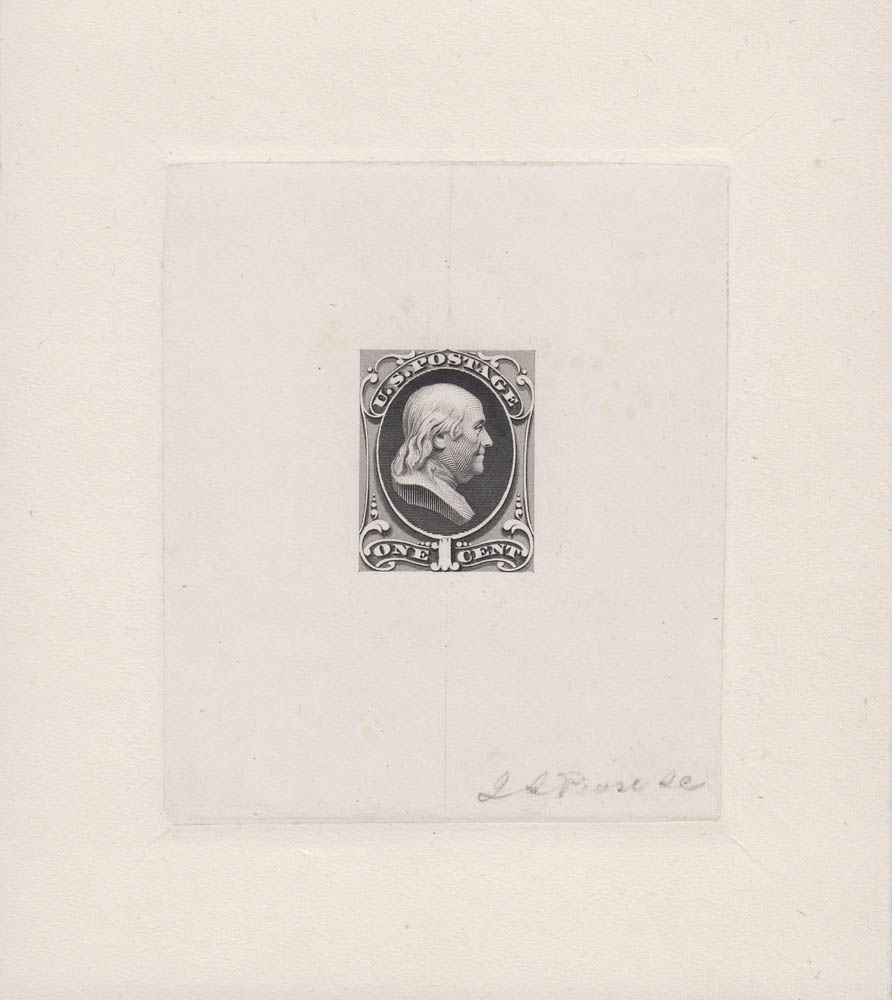
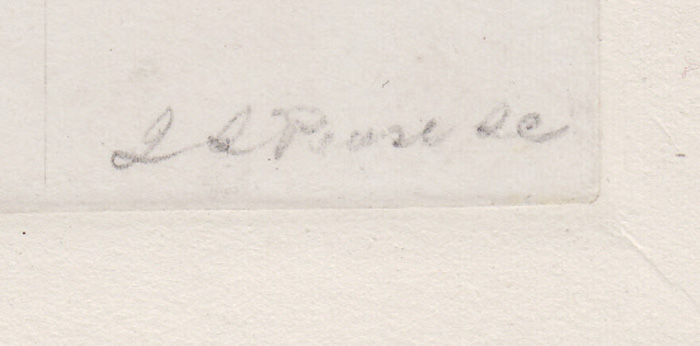
You do not ask small questions, and have done some real homework. I will share what little I have, but it will take a bit of explaining. (The weaker the argument the more verbiage is used to present it.) John Casilear may have been associated with TCCo starting as early as 1848, but not in a partner capacity. According to the research of Clarence Brazer, from 1848-1850 J.H. Casilear listed 29 Wall Street in NY as a business address, but this was at that time the principle business address of TCCo. Precisely what work, if any, he did for TCCo prior to 1850 is unclear. However, it was on the eve of their competition for the postage stamp contract of 1851 that Casilear was made a partner, and it appears from the scant evidence that this was principally as a designer. The Morris testimony that Joseph Ives Pease engraved the vignettes for the entire 1851 series is only part of the story. It is important to keep in mind that since the time of Jacob Perkins security printers had held strongly to the notion that it was harder to counterfeit a note which had been engraved by more than one hand. Therefore different parts of a design were assigned to different people. A designer might engrave one part, but never the whole design. A portrait was usually not engraved by the same person who did a frame, or the lettering. Stock dies would be employed in order to assure variation in the hands of the engraving. The images from stock dies might also be altered, introducing more intentional variation in the design of a new security. And so on. Given all the options, what role might Casilear have played in the creation of any designs for the postage stamp series of 1851? I intend to get at that question by taking an orderly look at the surviving material. The "proof" of the matter will hardly be seen to be rigorous, inasmuch as official documentary evidence is lacking. Nonetheless, the stamp material is not altogether mute, and it is worth pursuing for what it has to offer. We begin with a pair of vignettes. Recall that at the beginning of 1851 the stamp contract was in the hands of Rawdon, Wright, Hatch, and Edson, for whom James Parsons Major was chief modeler and head of the engraving department. It was he who had designed the first U.S. postage stamps. 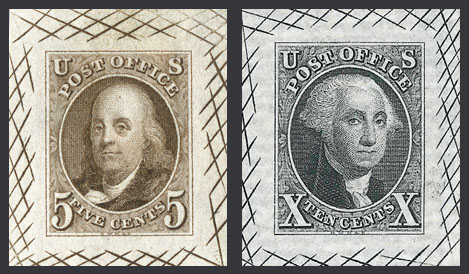 Stamps in two denominations were required, consisting of a primary denomination and its double, representing the postal rates for the two main classes of mail. For the two stamps, Major elected to use a vignette of Franklin on the lower value primary rate of 5c, and Washington adorned the 10c double. The drop mail rate at the time was 2c, but no stamp was required for that. Because the prepayment of postage was not obligatory at the time, postage stamp use up to 1852 represented less than 25% of all mail. With the postage reform act of 1851 the primary postage rate was dropped to 3c with a double at 6c, and Toppan, Carpenter, Casilear and Co. initially prepared designs for this combination. Following the lead of the predecessor company, TCCCo elected to use vignettes of Franklin and Washington for their proposals. Stock dies for these two vignettes had been used in the creation of some of their Bank Notes as early as 1845, and these were employed in the designing of the new stamps. 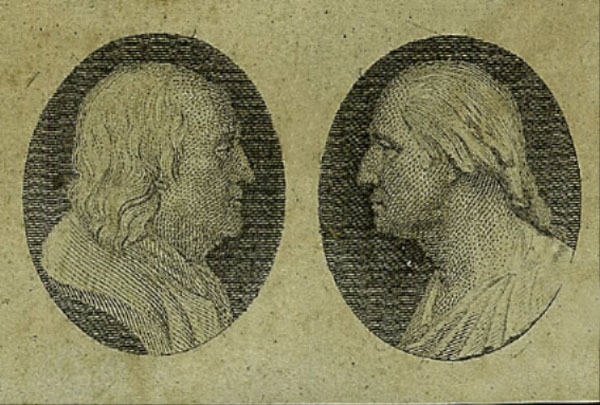 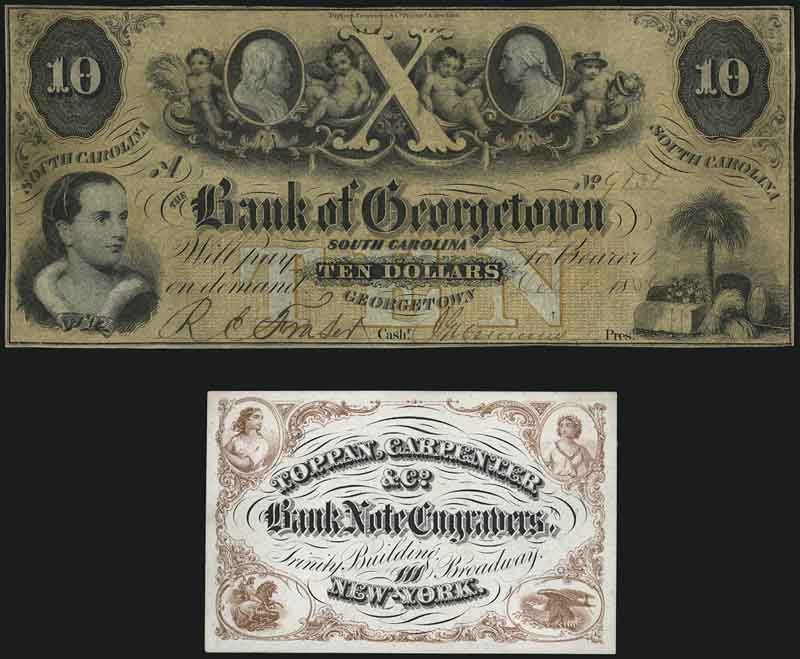 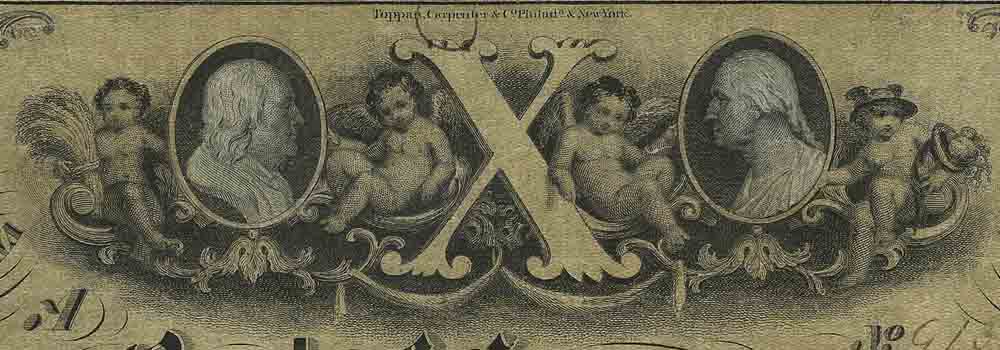 The designer for the primary stamp elected to use the portrait of Washington for that rate. He designed an ornate frame with characteristic acanthus ornamentation and scrollwork. This was to be used around the original Washington vignette from the Bank Note, after it was reduced by the removal of some of its design details at the bottom. 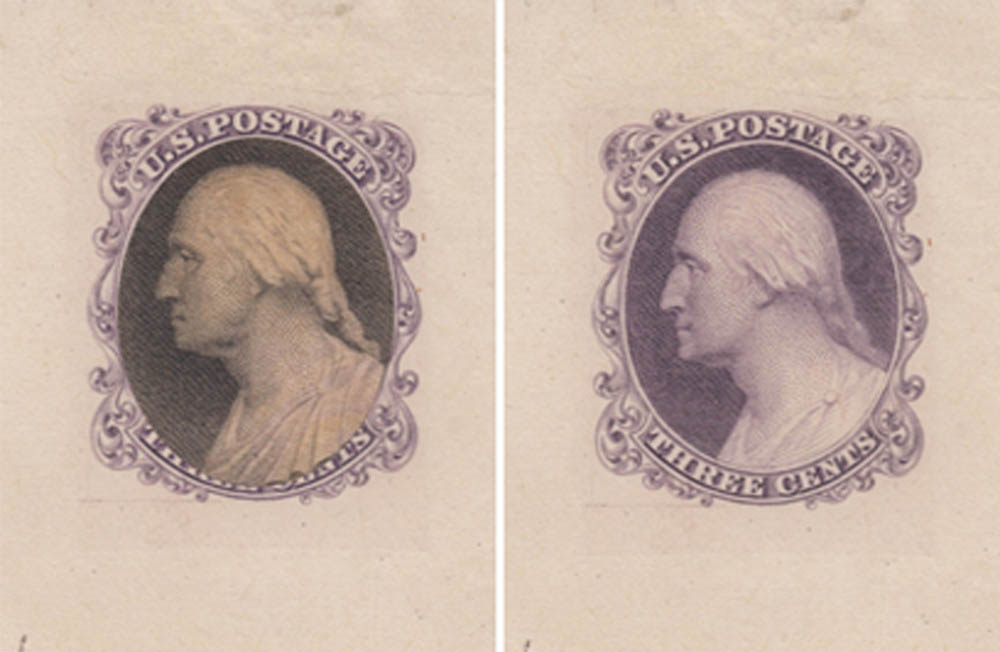 The image on the left is a scale composite of the original vignette placed over an essay of the new design, which is pictured in its final form on the right. This next image shows that by means of a notation on an original unreduced die essay of this new design, this design is attributed to John Casilear. If this were an artists signature it would be definitive for this attribution, but it is not certain that this is in Casilear's hand. If not, then it is not certain how it came to appear on this die print nor who put it there. Nevertheless, this is the closest thing we have so far to a specific attribution of this design to Casilear, and barring evidence to the contrary we must consider the possibility, albeit with a caveat. 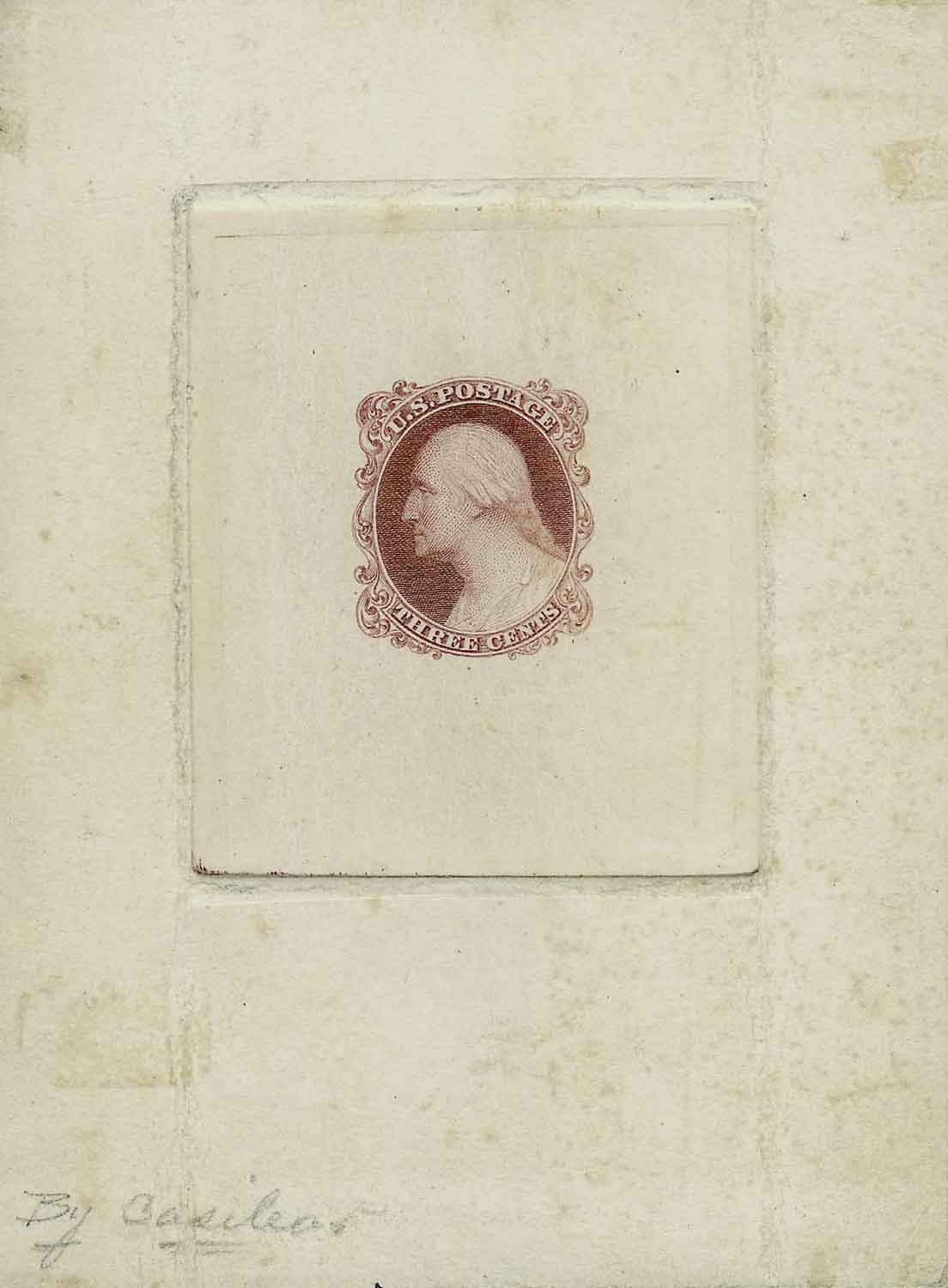 The next image shows the original design intent for the primary rate and its double for the new series. Franklin was intended to adorn the double rate stamp, and the two designs are stylistically linked by the use of acanthus ornament and the pair of vignettes from the old bank note master dies. As in the case of the three cent, the vignette of Franklin on the six cent is slightly reduced from its original size, but is the same image as on the stock die. 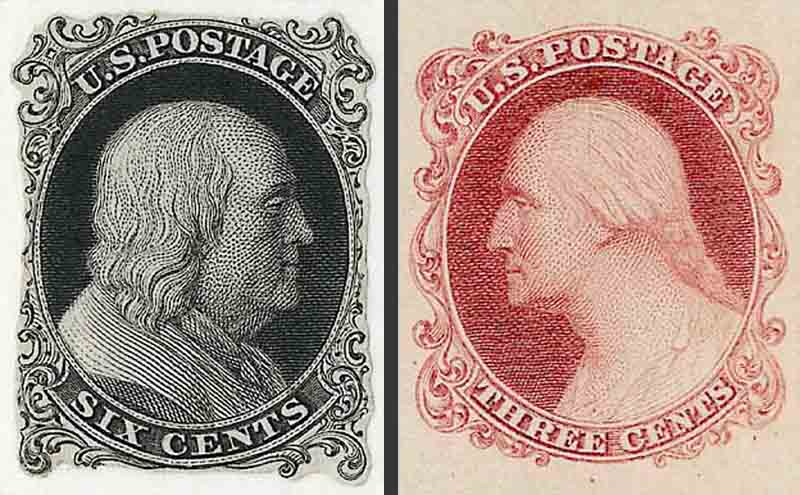 However, the postal reforms being introduced called into question the wisdom of creating a double for the primary three cent rate. Instead the government preferred to introduce a whole series of new denominations, and in the end did not produce a six cent stamp at all. So the design of the Franklin six cent was given to the one cent stamp, which specifically covered the new drop letter rate. 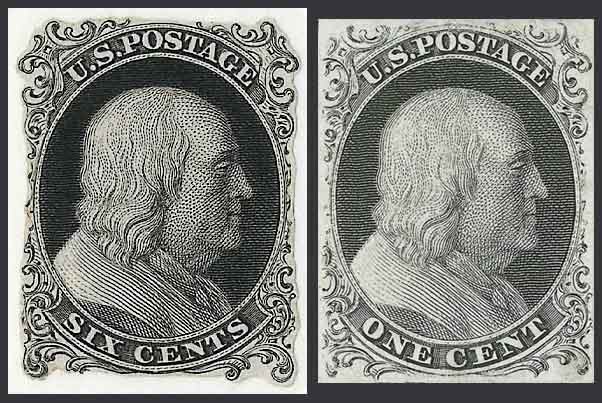 Now that the relative value relation of the three cent stamps to the Franklin design was broken, the stamp producers reconsidered the design of the three cent which had harmonized in style. Calilear's original design with its acanthus ornament was replaced with a frame of lathework and rosettes. The original vignette was also replaced with a smaller scale rendering of the earlier design, but as a new engraving and not as a further reduction from the stock die. 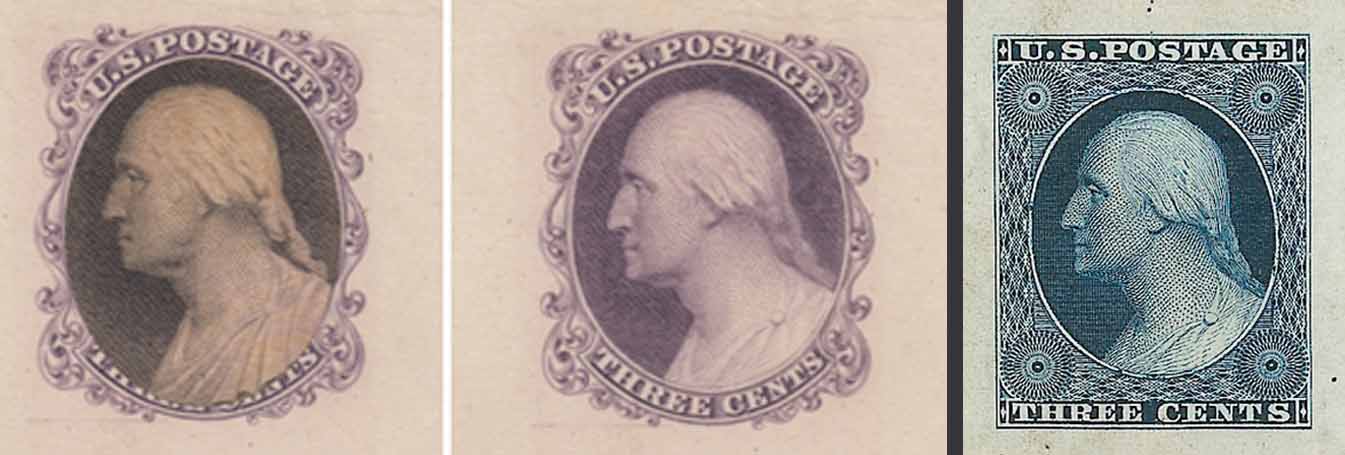 When we consider the designs of the essays and stamps as a whole, an interesting pattern emerges. Portrait vignettes are featured throughout the series. Five of those are images of Washington (3,10, 12, 24, 90); two are of Franklin (1, 30) and one is of Jefferson (5). Four feature frames with lathework (3,5,12,24) two of which also feature rosettes (3,12); three feature frames with acanthus ornament (1,10) including the rejected Casilear 3c design, one makes use of tightly scrolled ornament (90), and one makes a subdued use of arabesques in place of the more florid acanthus ornament (30). I am inclined on stylistic grounds alone to identify the designs with the acanthus ornamentation with the hand of John Casilear, following the attribution found on the 3c die print. If this be so, then the engraving of the vignettes for the 1c and 3c essay is not of his hand, although he may have modified the existing models for this use. Instead I am ready to allow the attribution of the protrait engraving as Thomas Morris has reported it, based on his familiarity with the ABNCo files as he would have accessed them. [Aside: on the question of Morris and Pease ever working together it is unlikely. Pease did work for the ABNCo in the first year or so of the amalgamation in 1858-59, but by 1861 he had gone to work for the National Bank Note Company, and stayed with them until the very early 1870's. Morris started with American in 1869 at the age of 16 as an apprentice, and for the first ten years worked under J.P. Major and William M. Smillie almost exclusively. I have no record that Pease was associated with American during this time, and by 1884 he had died.] I wish the case could be more compelling and less circumstantial, but for now until something more definitive surfaces (perhaps in the Travers Papers for this period) this is about as much as I think we have to go on. |
Send note to Staff 
|
| Edited by essayk - 08/27/2013 7:20 pm |
|
|
Pillar Of The Community
United States
2547 Posts |
|
|
John Casilear's younger brother was also an accomplished engraver. George Casilear was the first chief engraver for the Bureau of Engraving and Printing. He also held several patents for reuse prevention processes related to stamps. |
|
Send note to Staff
|
|
|
Valued Member
42 Posts |
|
|
Very interesting and thorough Essayk, thanks. The signature on the original unreduced die essay is not Casilear's hand, but it is nice to at last see something that he might have done viz. stamps. I really appreciate the presentation of the visuals and the explanation behind them.
As to Joseph Ives Pease, the Morris attribution remains troubling. Per the short bio. on Pease appearing in the multi-volume "Who was Who in American Art 1564-1975", Vol. III, p.2555, Pease was said to have lived in Philadelphia to 1850, then moved to Stockbridge, MA. I have to run down and check the multiple sources listed for his two sentence biography, but I suspect Anna Welles Rutledge, as she was the guru of Pennsylvania art and artists. If this is the case, then how does that square with the estimated times of vignette engraving for the series?
Thanks, Russ, for the input on George Casilear. I have spent time looking at him as well as many other Casilear relatives. Many contemporary sources make the mistake of listing him as J.W. Casilear's brother, especially the fine art community, all based on erronerous information put out by that group over 100 years ago. One thing I have discovered in my Casilear research is that while he crossed over rather easily from the engraving to painting disciplines, today, those groups (i.e. bank note/stamp/print collectors and fine art (drawing/watercolor/oils pencil/wash/paint collectors) don't seem to think the other group has much to offer, hence the "wall" separate information. |
|
Send note to Staff
|
|
|
Valued Member
42 Posts |
|
|
Follow-up on Essayk post: The relationship between Thomas Morris and William C. Smillie intrigues me because it is possible that Smillie was the one who told Morris who did the vignette engravings for the 1851 series. Smillie - according to the old James Willcox recollections - indicates that he worked at Casilear, Durand, Burton & Edmonds around 1835-36, then, of course, spent many years as a partner and letter engraver at TC & Co. and TCC & Co.. Thus, he would have had first hand knowledge of Casilear's activities, although it was not the subject of Willcox's inquiries. |
|
Send note to Staff
|
|
|
Pillar Of The Community
United States
1946 Posts |
|
|
Slight correction. The Smillie that headed up the Engraving Department at American when Morris started there was William Main Smillie (Wm M.) not William Cumming Smillie (Wm. C.). The latter did engrave the script announcement for the start of TCCCo in 1850, but was mainly involved with Canadian Bank Note Companies for much of his career. However, he did work for ABNCo from 1859-1863, so was also in their employ when Morris started.
Is this the Wm C Smillie you had in mind? |
|
Send note to Staff
|
|
|
Valued Member
42 Posts |
|
|
It would have been W.C. Smillie, as W.M. wouldn't have been born at the time of employment with CDBE. Well, that lead evaporated quickly. Re: Casilear employment with TC & Co. before his formal hiring as a partner, 1/1/1850, I want you to see a die plate image that JWC engraved as an independent in the late 1840's, but was acquired/used by TC (actually TCC) in the mid-1850's for a Rhode Island Bank Note, and one other Penn. bank that I know of (latter unissued). Note the "TC Co" engraving at the bottom right. This is the only plate I have seen in which JWC actually engraved his copyright into the die, at the bottom of the vignette. If you blow up the image you can read it clearly (if not, I'll send along the inscription). I acquired this plate (and an issued note on the bank with this image) in two separate auctions over a three year period. This gives you some idea of his talent in engraving on a 3 x 2 inch bed piece, actually done in reverse. 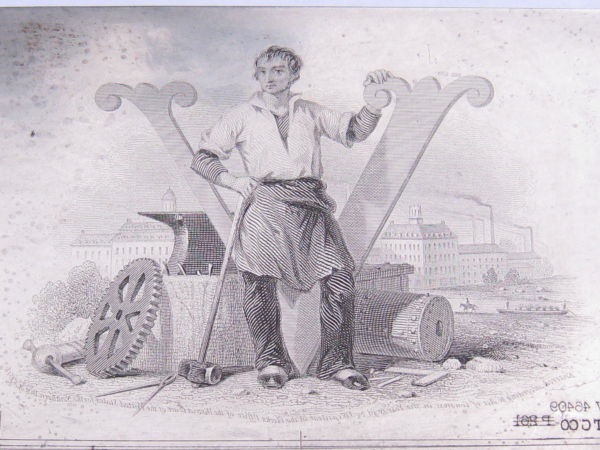 |
|
Send note to Staff
|
|
|
Pillar Of The Community
United States
1946 Posts |
|
|
A grab bag of thoughts.
1. the res on the photo was not high enough for a clear look at the stream of lettering that runs at the base of the main image. I can't read it.
2. I see the V46409 renumbering which is characteristic of the ABNCo stock die numbers from stuff in their archives. Did this come from them? Did you say you have the metal plate/die for this?
3. I am intrigued by your observation about J.I. Pease. Here is a quote from a contemporary biographer about him from 1875:
"About the year 1835 he went to Philadelphia, where he was kept constantly employed by the different publishers of that city. In 1848 he went to Stockbridge, Mass., and finally settled on a farm, "Twin Lakes," Salisbury, Conn.
Of late years Mr. Pease has been entirely engaged on Bank Note work." Clarence Brazer gives the note that Pease was still at Salisbury at the time of his death in 1883.
I am not at all clear about the actual chronology from 1848-1883, but somewhere in there Pease did work for the National Ban Note Co. Given the bio notes, and omissions, it is beginning to look as if Pease did the work he did for National from his home and not while living in New York. If that was a pattern for him, then it is entirely possible he made acquaintance with TCCo during his days in Philadelphia, and offered them his services from a distance too. What do you think?
|
|
Send note to Staff
|
|
|
Valued Member
42 Posts |
|
|
To respond to the points raised:
"Entered according to Act of Congress in the Year 1849 by J W Casilear in the Clerks Office of the District Court of the United States for the Southern Dist. of N York" is what is written below the vignette. I had to use the image optimizer to be able to upload it.
Yes, the steel vignette plate is right from the ABN Co. archives, and it is what I acquired in the auction. ABN, as you well know, shut its doors some years hence, and all of its inventory, including dies and printing plates, cylinder dies, etc. that were produced by firms precedent to the formation of ABN were still part of its inventory, and included in the sales. ABN took great care of this material, covering the steel in paraffin wax and wrapping individually in strong paper and cardboard sleeves, to prevent tarnish, etc. Are you familiar with all the auction sales that have taken place selling the ABN archives? They have been - as the auction catalogue put it - like opening up Ali Baba's cave, for the bank note collecting fraternity in particular. I wish I had the financial wherewithal of some of the people I was up against bidding!
Your 1875 source on Pease differs from mine in the date of transfer from Philadelphia to Stockbridge by two years. The best way to check if someone was in New York during a period in question is to go through the city directories of that era. Of course, Pease easily could have taken the train to NYC from CT and spent time engraving at the NBN offices while lodging nearby. Engraving a steel die is a fairly complex process, as you well know; one slip-up can ruin the whole production, so I wonder if NBN would have been comfortable with a "work from home" arrangement. Hardly common back then as it is today. Pease was good, no doubt but hardly a James Smillie (father or son). My two cents. . . |
|
Send note to Staff
|
|
|
Valued Member
42 Posts |
|
|
I reread Essayk's original post replying to my inquiry on Casilear. One of the questions I should have asked in response to this is when, if known, was the attribution of the die essay given to Casilear? Although I can't seem to locate the source at present, it is my distinct recollection that the Morris attribution of the 1851 series vignette engravings to Pease was done in the same way: i.e. by a written notation on the essay print. Is is possible that someone out there has access to these notations and can produce those of the 1851 1c and 3c?
If this is not possible, then maybe Essayk's response on who did what on stylistic grounds is a good way to approach the Pease attribution. Who is aware of any other stamp vignettes - particularly portraits - that Pease has been credited with? Can any of these be used to go back to the 1851 series and say, yes, on stylistic grounds, he probably did do the vignette engravings of these? |
|
Send note to Staff
|
|
|
Pillar Of The Community
United States
1946 Posts |
|
|
Valued Member
42 Posts |
|
|
This is very enlightening, but I need to know first if the any of the Franklin images in your post of 8/27 show an issued stamp, or are they all still preliminary essays leading towards the final accepted design and engraving?
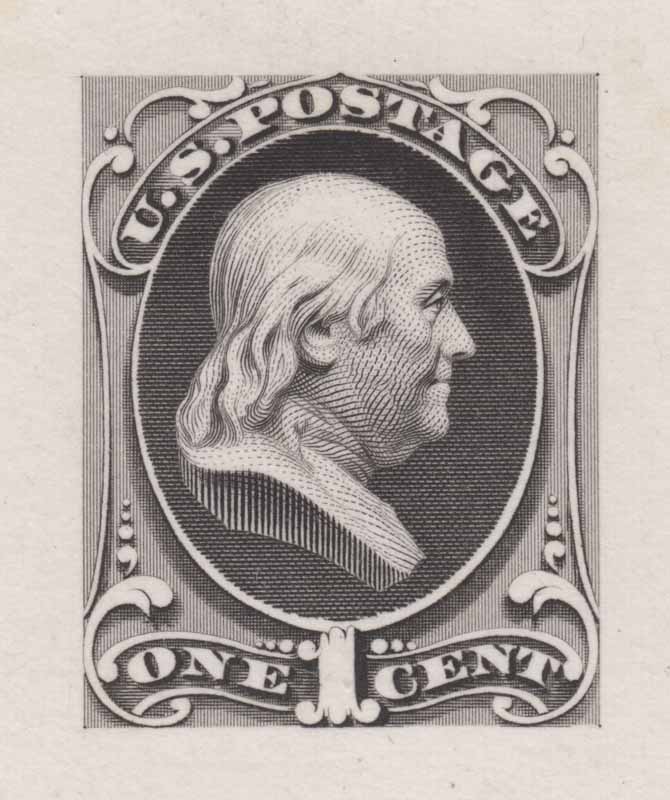
At first glance, the Franklin images of 1851 and 1869 appear to employ substantially different engraving styles. The cuts made by the burin are quite different, cross-hatching is used along the jawline area in 1869 and generally the cuts are more sparse, separate and lines spaced further apart, while the 1851 issue has extensive short cuts in the hairline and face, almost as a stippling technique was used. I am no expert (actually a rank amateur) on engraving technique, but if you put the two Franklin vignettes in front of me and asked if they were by the same hand, I would have had to say "no".
I'd like to hear what you or any others in the forum think about the engraving style of these vignette images, as you all probably have a much better eye than do I for these. |
|
Send note to Staff
|
|
|
Pillar Of The Community
United States
1946 Posts |
|
|
In the earlier post the one cent design in black is a trial color proof of the finally accepted design, and the three cent in blue is a TC for the final three cent. However, I now see that I failed to note my thoughts on the origin of the stock die designs. Those designs go back nearly to the beginning of Toppan, Carpenter and Co. in 1845, and at that stage Charles Toppan himself was active in the company as principle engraver. I am of the opinion that he created those two dies, and that Casilear used them in his design work. If that is correct then the primary alteration to the original vignette was in the nature of cropping the size of the design and maybe touching up a bit here and there. Who did this touchup depends somewhat on who did the frame engraving for the stamps, since the vignettes and frames were supposed to be by different hands. Casilear did the design work, I am sure, and may have done the frames. If Pease did anything to them he may have done the touchup on the vignettes. The alternative is to suggest that the original stock vignettes were done entirely by Pease.
As you have pointed out, the engraving of the original stock vignette of Franklin uses much more of a stipple technique than what Pease used for the Franklin vignette in 1869. At first I thought this would be mostly observed in the hair, but actually it is in the distinctive cutting of the facial shading itself. What the earlier engraving does entirely with dots and short cuts, the later does primarily with lines on the lower part of the design. Certainly the styles are different, but whether or not that precludes Pease as the engraver for the Franklin stamp vignette in both cases is not laid to rest since the stock vignette was only slightly altered for the stamp. Who got credited with the stamp vignette in that case is hard for me to judge. But I don't think that Pease did the stock vignette.
That said, a truer test is a comparison of the style for the final three cent vignette and that of the Franklin vignettes, early and late. I will work on giving a better blow up of that.
|
|
Send note to Staff
|
|
|
Valued Member
42 Posts |
|
|
Sounds good. It sounds like you might be leaning to Toppan as the principal engraver of the stock vignettes based on his earlier work. Hessler in "The Engraver's Line" lists Henry Earle and Asa Spencer as the frame engravers of the 1c and 3c, and Earle also gets credit as the Letter engraver for both (not much division of labor there).
When and how do you think JWC used the ca1845 Toppan dies in his design work? Do you think you can also blow up the Casilear attributed die essay for comparison?
BTW, I have discovered that Pease was working on an elaborate fine art vignette engraving for the American Art-Union sometime during the early to mid-1851 period. The engraving, which I believe was on the order of 5" by 7", but need to confirm, recreates a painting the AAU had purchased in 1850 from the artist Richard Caton Woodville. You can key in the title "Old '76 and Young '48" in Google images to see what I am referring to, imaging the greyscale product if one doesn't show. This was a major, well paying commission for any engraver, and I don't have the documentation behind it (that exists in the archives of the New York Historical Society in the city), but can tell you from the time it took Casilear to do a similar, but somewhat larger work that it was likely a good several month job (JWC was paid $1000 for his 1847 Sibyl by the AAU), and that the AAU would have commissioned the work probably close to a year before the engraving was distributed to its subscribers in December, 1851. How all this squares with his vignette engraving work of the 1851 series with TCC is uncertain, but it would have been a Herculean effort, in my opinion, for Pease to be able to pull off both tasks in the same time frame. |
|
Send note to Staff
|
|
|
Valued Member
42 Posts |
|
|
Essayk, how are you progressing with the blow up of the early and late 1851 Franklin and Washington vignettes, to compare these and help determine who may be most, or entirely, credited with the vignette engraving of the finals on stylistic grounds? Your contribution to date has been most valuable, and, would really appreciate if it could be brought along as far as possible before turning to other options. I ask a lot of questions - all aimed at discovering facts (or at least uncovering credible evidence) that the historical record appears to have obscured/misled for one reason or another. Wherever the inquiry leads is fine with me, but let it continue. |
|
Send note to Staff
|
|
|
Pillar Of The Community
United States
1946 Posts |
|
|
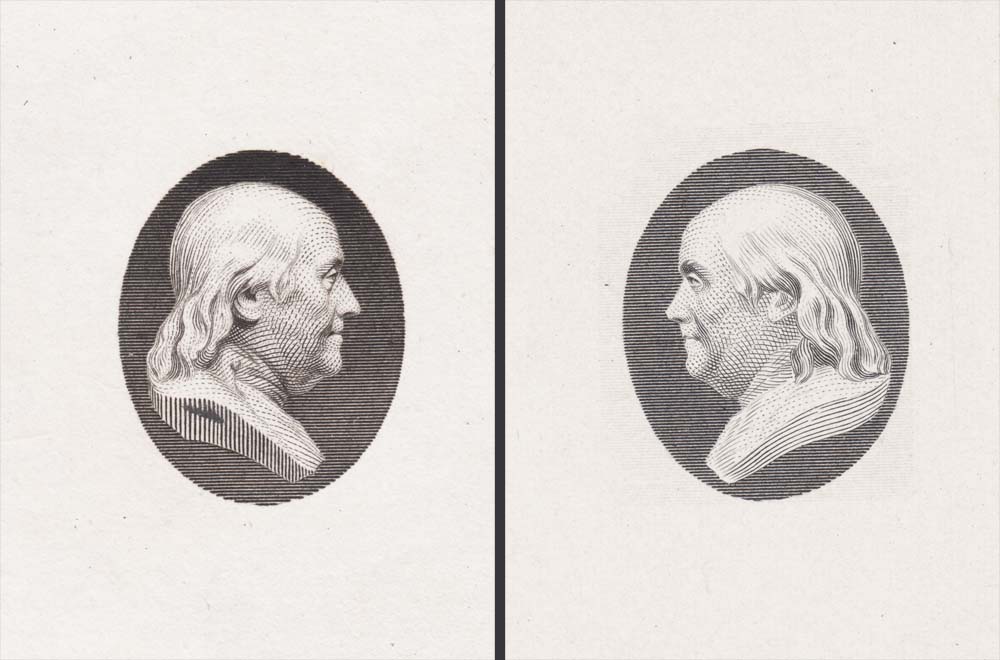
Not ignoring you, I ran into some life obligations for the last couple of days. Still not resolved, but wanted to get back. I ran into an unexpected but interesting surprise in working up the images. Because of its nature, I need to say something about my procedure. The first image below features the vignettes of the original Casilear design on the left and a trial color of the finally issued three cent of 1851. I measured the stamp designs and determined that they have the same center height for the full designs. In Photoshop I brought both full designs to a center height of 1000 pixels so the images would correspond to a size match at original scale. Then I cropped both images to the their vignette frames at the point on each side where the cropping line is first contiguous with the tangent on that side. Keeping the two cropped images in scale I placed them side by side in the new image here. This image shows the true size relation of the two, and makes it clear that the smaller is not merely a cropped version of the larger. 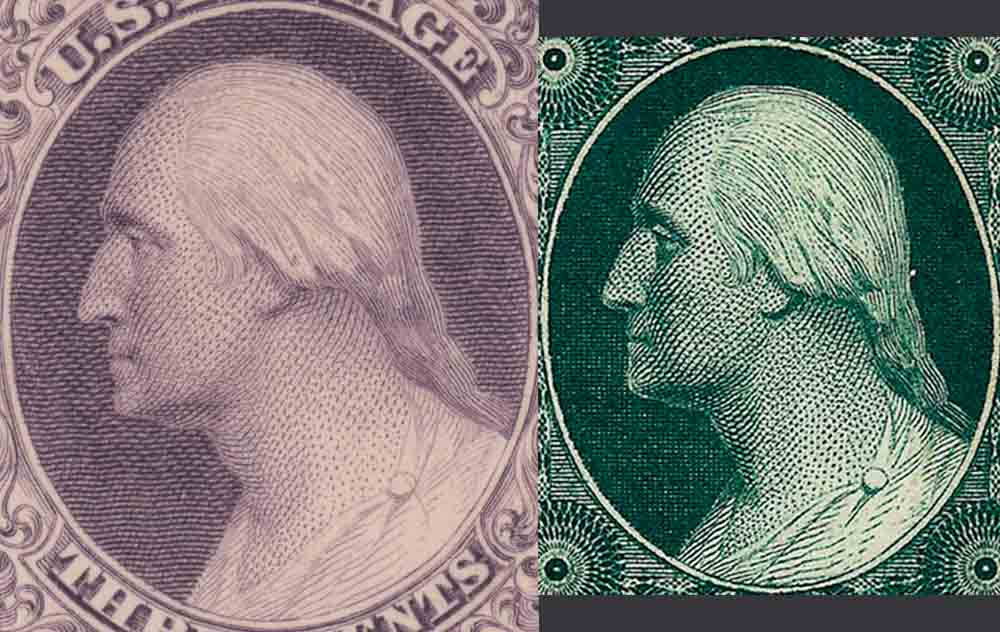 For this next image I resized the smaller oval so it is the same height as the larger. This produced a most unexpected result. As you can see, there is a very close correspondence between the lines of engraving in every respect between the two images, except that the lines of shading in the smaller vignette are deeper. There are some slight differences between the shading of the eye and the depth of shadow on the neck, on the earlobe, and just below it. There are some additional fine lines between the "original" lines for the cheek and neck, but all of the lines on the original engraving on left have been preserved. Correspondence this close is not possible in my estimation by a freehand copying of the one design to another die, let alone as a reduction. But based on what I think I am seeing here, I am beginning to think that the vignette for the final design is a pantograph reduction of the original. If a pantograph was used to redo the vignette, then that might explain the radical shift to a lathework frame. There is one engraver from the period who stands out as a candidate for doing that sort of thing, and the use of lathework in the frame design is another clue. By 1851 Cyrus Durand had perfected his inventive work with tools of the kind necessary to do both the lathework and a pantographic reduction. Take a good look at this and tell me what you think. 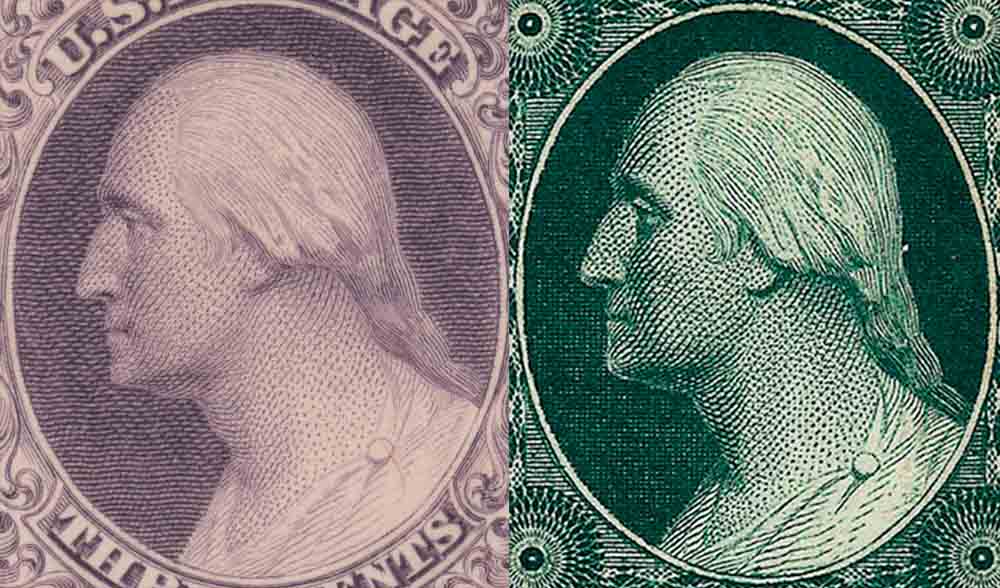 I would like to have students of the 3c of 1851 weigh in on this too. If there seems to be enough merit to my thoughts here, I will submit this to Jim Lee at the USPCS Chronicle. |
|
Send note to Staff
|
|
|
Replies: 91 / Views: 23,234 |
|
|
To participate in the forum you must log in or register. | |
 Help With A 1 Cent Franklin From The Philippines Show Your US 1851-57 Imperforate Stamps Stamps On Stamps Optical Instruments: Microscopes, Binoculars, Sextans, Theodolits, Hand Scopes Cover Calendar For Month And Day -Pics Pushing 330,000 All Different Worldwide Stamps In One Collection . Postmarks.day By Day Experimenting With A Phone As Attached Scanner Turn On The Light! Candles, Lamps, Torches, Candelights, Bedside Lamps. Fan, Éventail, Abanico, Fächer, Leque Linn's To Return To Printed Issues Minkus Supreme Global Albums (The Big Red Thread) Soviet Union Stamp Engravers Czech Stamp Engravers Collecting By Engraver 1851-57 12c Washington Canada 742 Color Shift Error? Stamps Made Of Cloth, Polymer, Metal, Wood Etc Art & Paintings On Stamps Need Help With Swedish Stamp And Postmark Living Persons Portrayed On Stamps If You Have A Design You Like, Might As Well Stick With It! Newfoundland 82 Imperf Cover Please Identify - USSR Stamps US Half Cent Postage Dues On Cover Help With A 1 Cent Franklin From The Philippines Show Your US 1851-57 Imperforate Stamps Stamps On Stamps Optical Instruments: Microscopes, Binoculars, Sextans, Theodolits, Hand Scopes Cover Calendar For Month And Day -Pics Pushing 330,000 All Different Worldwide Stamps In One Collection . Postmarks.day By Day Experimenting With A Phone As Attached Scanner Turn On The Light! Candles, Lamps, Torches, Candelights, Bedside Lamps. Fan, Éventail, Abanico, Fächer, Leque Linn's To Return To Printed Issues Minkus Supreme Global Albums (The Big Red Thread) Soviet Union Stamp Engravers Czech Stamp Engravers Collecting By Engraver 1851-57 12c Washington Canada 742 Color Shift Error? Stamps Made Of Cloth, Polymer, Metal, Wood Etc Art & Paintings On Stamps Need Help With Swedish Stamp And Postmark Living Persons Portrayed On Stamps If You Have A Design You Like, Might As Well Stick With It! Newfoundland 82 Imperf Cover Please Identify - USSR Stamps US Half Cent Postage Dues On Cover
Disclaimer: While a tremendous amount of effort goes into ensuring the accuracy of the information contained in this site, Stamp Community assumes no liability for errors. Copyright 2005 - 2026 Stamp Community Family - All rights reserved worldwide. Use of any images or content on this website without prior written permission of Stamp Community or the original lender is strictly prohibited.
Privacy Policy / Terms of Use Advertise Here |
| Stamp Community Forum |
© 2007 - 2026 Stamp Community Forums |
| It took 0.41 seconds to lick this stamp. |
 |
|
|
|


 Posted 08/27/2013 09:25 am