| Author |
 Replies: 10 / Views: 9,863 Replies: 10 / Views: 9,863 |
|
|
Pillar Of The Community
United States
2963 Posts |
|
|
Thank you Bill Weiss for the photograph of the type III 129 to add to this discussion. The Scott catalogue offers no illustration on the Type III, 129 so I needed this clarification. I needed Bill's commentary about the horizontal shading lines through the vignette in order to see it. From the previous thread: https://www.stampcommunity.org/topi...14150#301074Here is Type I (Scott 118) courtesy of theswedishtiger.com  Type II (Scott 119) from my own collection 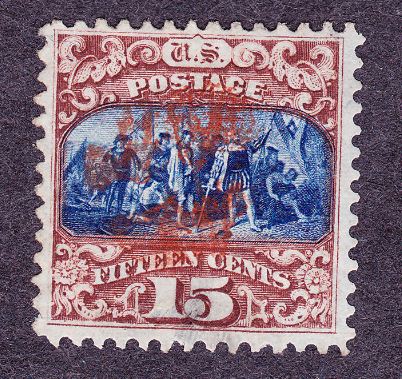 And Type III (Scott 129) courtesy of Bill Weiss 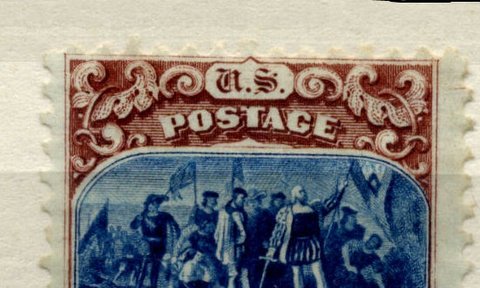 |
|
Send note to Staff
|
| Edited by Rileysan - 01/02/2014 12:22 pm |
|
|
|
|
Pillar Of The Community
United States
2963 Posts |
|
|
I'm not able to see the photos I posted, just broken links. Is anyone else having this issue?
Edit: It appears the issue was related to my link to theswedishtiger.com. Once I removed the link, the images uploaded.
Brian |
Send note to Staff 
|
| Edited by Rileysan - 01/02/2014 12:24 pm |
|
|
Valued Member
United States
9 Posts |
|
|
Rest in Peace
United States
763 Posts |
|
|
And the value of knowing there are 3 types and being able to identify them is important. For example, I recently was sent the item shown identified as #118a - the regular 1869 15c Type I without a grill - which is a very valuable stamp - but I immediately saw that this was Type III so can't be anything else but an 1875 re-issue stamp, OR a plate proof made into a fake stamp. But since the gum on it was original typical re-issue gum (which differs from regular 1869 Issue gum), it could not be anything but a #129. And worth a heck of a lot less than #118a! In fact, many of the unused 1869 re-issues are worth much less than the regular 1869s. Check out the differences in value. Many folks are surprised to learn how much LESS the re-issue 1869s are worth than the regular issue. |
|
Send note to Staff
|
|
|
Bedrock Of The Community
United States
10839 Posts |
|
|
The 1869 re-issues are usually worth more than the stamps when USED, but worth less when mint(often far less). Still there are lots of fake re-issues made from proofs out there. |
|
Send note to Staff
|
|
|
Rest in Peace
United States
7097 Posts |
|
|
Quote:
And the value of knowing there are 3 types and being able to identify them is important. For example, I recently was sent the item shown identified as #118a - the regular 1869 15c Type I without a grill - which is a very valuable stamp - but I immediately saw that this was Type III so can't be anything else but an 1875 re-issue stamp, OR a plate proof made into a fake stamp. But since the gum on it was original typical re-issue gum (which differs from regular 1869 Issue gum), it could not be anything but a #129. And worth a heck of a lot less than #118a! In fact, many of the unused 1869 re-issues are worth much less than the regular 1869s. Check out the differences in value. Many folks are surprised to learn how much LESS the re-issue 1869s are worth than the regular issue.
I would have the exact opposite. I guess that's why you are the expert! Thank you for the information Mr.Weiss. -Jeff |
|
Send note to Staff
|
|
|
Valued Member
United States
44 Posts |
|
|
Here's an interesting chart demonstrating what Bill Weiss said above: Prices are Scott 2012.
1869 Pictorials and 1875/1880 Reissues. Reissues denoted with (*)
One Cent:
112 $700 $150
123* 550 400
133* 325 400
Two Cent:
113 600 90
124* 650 875
Three Cent:
114 250 17.50
125* 5000 27500.
Six Cent:
115 2750 225
126* 1650 3250
Ten Cent:
116 2000 140
127* 1650 2000
Twelve Cent:
117 2000 140
128* 2250 3250
Fifteen Cent:
118 (I) 9500 800
119 (II) 3250 250
129*(III)3200 250
Twenty-four Cent:
120 8000 700
130* 2100 1750
Thirty Cent:
121 6000 500
131* 2500 3000
Ninety Cents:
122 12000 2100
132 3750 6500 |
|
Send note to Staff
|
|
|
Pillar Of The Community
United States
1947 Posts |
|
|
Is the type III identified by the more uniform shading of the sky behind the foreground figures? |
|
Send note to Staff
|
|
|
Pillar Of The Community
United States
2963 Posts |
|
|
Quote:
Is the type III identified by the more uniform shading of the sky behind the foreground figures? Type III is similar to type I but does not have the red horizontal shading lines behind the blue vingette. |
|
Send note to Staff
|
|
|
Pillar Of The Community
United States
644 Posts |
|
|
Both 1861 and 1869 reissues are worth more used than unused as a general rule. That's because that, while valid for postage, they were basically sold as collectibles/curiosities and not for regular postage. Some of them are extremely rare genuinely used. |
|
Send note to Staff
|
| Edited by billw2 - 03/30/2014 11:48 am |
|
|
Bedrock Of The Community
United States
10839 Posts |
|
|
No one thought much of special printings way back when; most of the used examples came from dealers using them. I don't think anyone really started caring until the 30's; even in 1926 the 15 cent and above values of the 1869 reissues often had equal, lower, or much lower cat values than the issued stamps. The 1-12 cent were still cheap enough that the reissues were a bit higher but it was still pretty close. The other reissues were also relatively inexpensive at the time. Not cheap, but generally not significantly higher and in some cases lower than the issued stamps and definitely lower than some grills.
The Bank Note special printings were already good items then, collectors were much more interested in them at that time. |
|
Send note to Staff
|
| Edited by revcollector - 03/30/2014 12:33 pm |
|
| |
Replies: 10 / Views: 9,863 |
|




 Posted 01/02/2014 11:59 am


