| Author |
 Replies: 37 / Views: 12,340 Replies: 37 / Views: 12,340 |
|
|
|
Pillar Of The Community

United States
1273 Posts |
|
|
The post Bill is referring to with Ken Srail's scan of a Continental Vertical Ribbed stamp is "Attn: Bill Weiss...Re: #164" posted by disi123 on 6/24/2014.  |
Send note to Staff 
|
|
|
Pillar Of The Community
United States
2948 Posts |
|
|
Quote:
despite the fact that I am probably the only reader of this board who has actually examined the only certified 24c Continental stamp on multiple occasions. I also was involved for many years, along with Scott Trepel and Ken Lawrence in the study of ribbed paper. I also have personally examined at least several thousand 24c Banknote stamps trying to find another one on ribbed paper And Bill wonders why I refer to him as Mr. Weiss........... |
|
Send note to Staff
|
|
|
Pillar Of The Community
United States
1946 Posts |
|
|
Petert4522 and Geleoptix Gentlemen, please stop intimating that we don't know what we are talking about in our references to "ribbed" paper. We do. And we know the difference between the lines of mesh and the lines of ribbing. When we speak of ribbed paper in conjunction with the Bank Note issues, we are talking about something that has no counterpart in twentieth century US stamps. The ribbing is not the same as the paper mesh. The striations for the ribbing are independent of the mesh, and measure a rather coarse 40 lines per inch. I am sure you would like that in metric, but American industry in the 1870s used the English standard for measures. The paper itself is somewhat heavier than the usual paper Continental used, and as Bill mentioned it is rather more opaque. Ribbed paper is not typical for that period or any other. It is a distinctive variety, and has been recognized and studied by US specialists for more than a century. John Luff devotes nearly a full page to them in his monumental reference book on US stamps, published in 1902. How these lines were applied is not known, nor the reason why, but the paper manufacturer supplied it to the Continental Bank Note Co. in this condition, so the ribbing precedes the printing process. As to photographs here, it was not my intent in posting the image of the 15c ribbed to illustrate the paper, but rather to show you why it is so difficult to get a good image of the vertical ribbing. Please do not use my photo as a reference for the appearance of ribbing, even though traces of it may be seen. As Bill pointed out Ken Srail was able to get a reasonable photograph which is in the thread at this link: https://goscf.com/t/38148&whichpage=2Rest assured that despite your misgivings and incredulity, the phenomenon is not paper mesh. |
|
Send note to Staff
|
|
|
Rest in Peace
United States
763 Posts |
|
|
.........adding to my earlier post;
Essayk also rightly points out "it takes a trained eye to see ribbed paper". I'm not sure that the eye must be "trained" but a lot of people simply can't see ribbed paper, no matter how hard they try. In fact, lots of 'experts" can't see it! And to perfectly illustrate that point, a few months back I discovered a newspaper stamp that had ribbed paper that had not previously been reported. So I quickly showed it to a newspaper stamp specialist who also easily saw the ribbing, which perfectly matches the ribbing found on the other Scott-listed ribbed paper newspaper stamps (Scott PR32-33-34). So I reported the find to the Scott catalog editors, then proceeded to send it to the Philatelic Foundation for certification by them. Guess what? They have now had the stamp for several months and showed it to multiple experts on their staff and outside the on-site staff and to date NONE can see the ribbing! That should prove conclusively how difficult it can be!
Another aspect of this is the paper mesh. Sometimes folks with really excellent vision can actually see the direction of the paper mesh, and sometimes this gives the illusion of being "ribbed", but it is not. Weak-appearing ribbed-like mesh is just that, mesh. True ribbing is stronger and much larger than mesh.
Another aspect is common sense-based. If we have observed ribbed paper on every value of the regular-issue 1873 Banknote stamps, and on many of the listed 1873 Officials (also printed by Continental) and also on some 1875 Newspaper stamps, isn't it logical that we MIGHT find it on ANY stamp printed by CBNCo between 1873-1879? Certainly. And further, the fact that we record ONE copy of the 24c on ribbed paper, doesn't that prove two things; that Continental DID print 24c stamps (which we do have proof from the Bill book records) and that indeed, it likely does exist on any other CBNCo-printed stamp.
And last, if it wasn't for the fact that the only certified #164 is on ribbed paper, I can't help but wonder how many people (me included!) would even give a hoot about ribbed paper? But the truth is that because of the connection to the 24c, it *IS* fascinating to lots of collectors. Very few people get excited about (for example) silk paper, straw paper, gray paper, and other catalog-listed varieties, so why is that? |
|
Send note to Staff
|
|
|
Rest in Peace
Netherlands
963 Posts |
|
|
Essayk,
I do not intend to intimidate!
There are just simple questions I made, and by now some have been answered satisfactorily!
As for some values there exist a horizontal ribbing as well, it intriges me if the relation between ribbing and mesh is there? Do the ribbed lines run parallel to the direction of paper or are they perpendicular.
No one here gives the direction of paper, suggesting it is something that is not possible to tell for sure. In my experience I can see the direction of paper in ALL stamps I looked at so far.... machine-made of course :)
groetjes, Rein |
|
Send note to Staff
|
|
|
Rest in Peace
Netherlands
963 Posts |
|
|
I can imagine the wire structure that goes with it :)  Thanks to K. Sralin |
|
Send note to Staff
|
|
|
Pillar Of The Community
United States
1946 Posts |
|
|
Quote:
And last, if it wasn't for the fact that the only certified #164 is on ribbed paper, I can't help but wonder how many people (me included!) would even give a hoot about ribbed paper? But the truth is that because of the connection to the 24c, it *IS* fascinating to lots of collectors. Very few people get excited about (for example) silk paper, straw paper, gray paper, and other catalog-listed varieties, so why is that? I beg your pardon! (tongue in cheek, though not in check) Here are some pages I did for the World Columbian Court of Honor display in 1992. There were quite a few of us "cranks" back then, and I'm finding there seem to be as many if not more today with better knowledge. 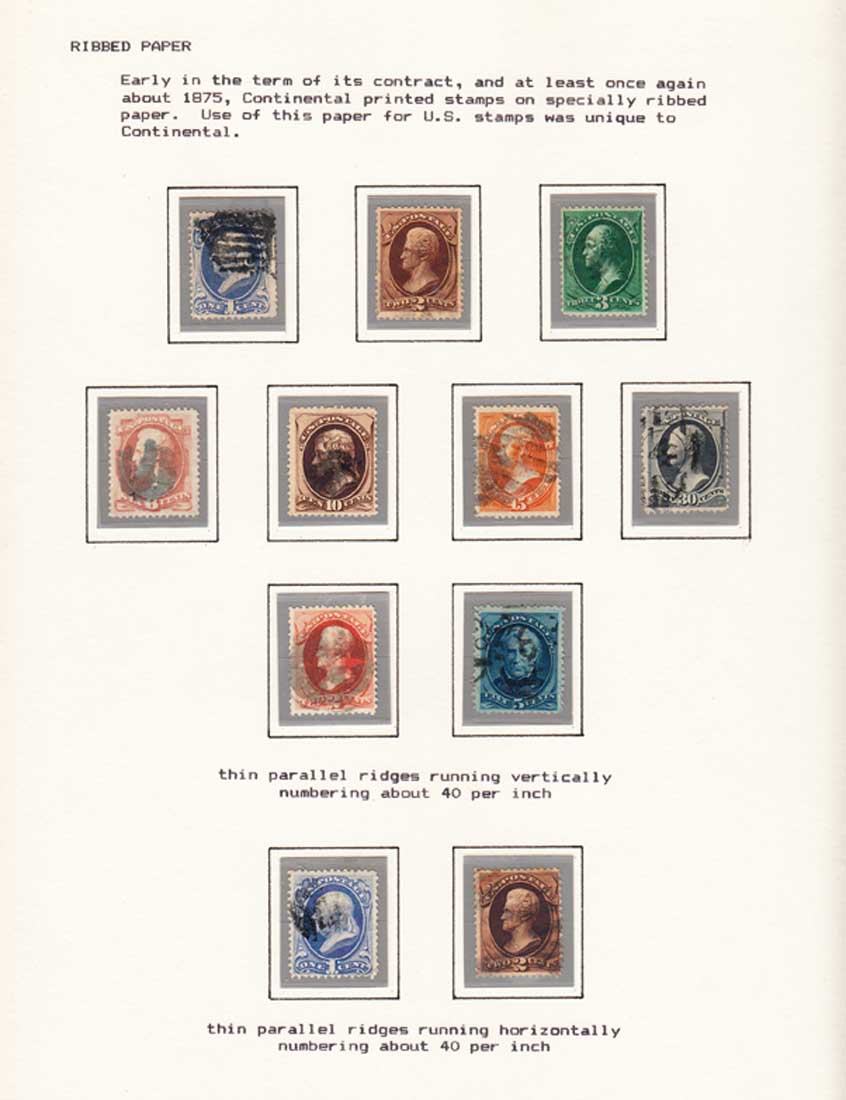 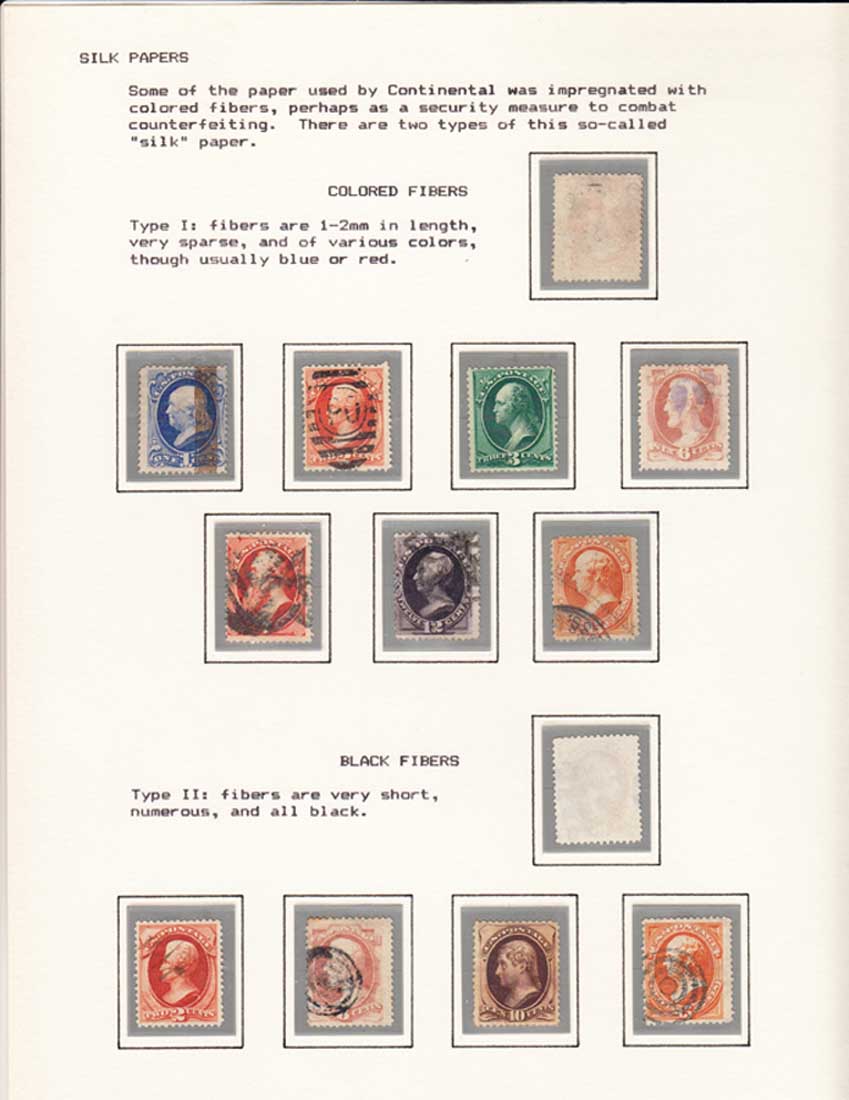 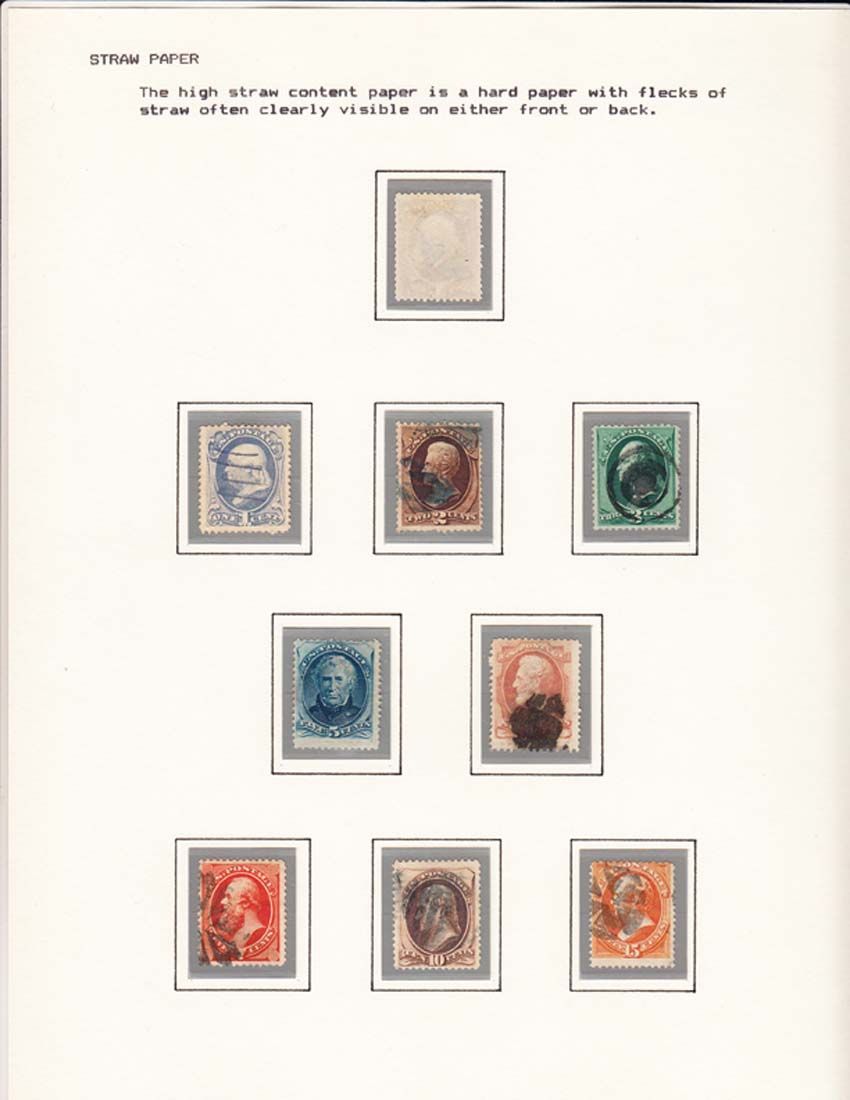 |
|
Send note to Staff
|
|
|
Pillar Of The Community
United States
2948 Posts |
|
|
Great thread *no pun intended*. These types of posts are why I joined this forum. Thanks to everyone involved. |
|
Send note to Staff
|
|
|
Rest in Peace
Netherlands
963 Posts |
|
|
Essayk,
the 1c and 2c have both the vertical AND horizontal ribbing!? What about their direction of paper?????
40 lines per inch = 16 lines per cm :)
groetjes, Rein |
|
Send note to Staff
|
|
|
Pillar Of The Community
United States
2555 Posts |
|
|
"There were quite a few of us "cranks" back then, and I'm finding there seem to be as many if not more today with better knowledge."
I must confess that I am one of those "cranks". I honestly don't know the Continental ribbed papers very well because I don't have much material to study. I will say that if you are going to put a nice 3c #158 in your collection you should consider one on ribbed paper. The colors are amazing! |
|
Send note to Staff
|
|
|
Rest in Peace
United States
763 Posts |
|
|
The color if the 15c on ribbed paper is also very intense. That was actually one of my early theories as to WHY ribbed paper was used, which was because CBNCo discovered that the ribbing held the ink better and the result was a sharper-looking product. That was debunked when Ron Burns demonstrated a timeline of ribbed paper and it was not consecutive. In other words, ribbed was used for a while, then not used, then used. So the current theory is that it was merely happenstance, with no conscious effort on the part of CBNCo to "order" it ribbed. What they got from the mill, they used. If it was ribbed - which they may not even have been aware of - they used it. Others feel it was a definite conscious order on their part. Who knows? |
|
Send note to Staff
|
|
|
Pillar Of The Community
United States
1946 Posts |
|
|
Ron and I have had face to face discussion of this paper, but only in passing and I have no notes written by him on it, so I can't say where he got his information. Bill-books perhaps? However, already in 1902 John Luff had a quote from Crawford Capen that has some bearing on this:
"Mr. Crawford Capen says in the Post Office for February, 1897 (page 151): 'The first use of paper of this kind was made in 1873, the largest use in 1874 and the final use late in 1875 or possibly early in 1876.'" To this note Luff adds the comment, "The number of shades of the different values is comparatively limited and would seem to warrant the conclusion that the stamps represent a few printings but an extended period of distribution."
Luff continued:
"Stamps on this paper are not easy to distinguish, at least not until one has acquired a certain degree of familiarity with their characteristics. [My note: that is the "trained eye."] A notable point is a richness and fullness of color, combined with clearness of impression and a high finish which often gives them a sort of sheen. By this quality and their characteristic shades an expert is frequently able to select stamps on this paper, without having to look for the ribs. By holding the stamps horizontally between the eye and a good light the ribbing may usually be detected."
A couple of other important notes from Luff on the subject:
"As a rule, it [ribbing] is vertical on the stamps of the regular issue and horizontal on the departmental stamps, though there are, of course, exceptions."
"The appearance of the ribbing is usually that of fine corrugations, but occasionally it is more like that of closely laid paper."
"Some of the stamps on the soft porous paper [my note: later than 1876, mostly not from Continental] also present an appearance of ribs, but they are too close together and are only an effect of the wire-wove paper." In this remark he is referring to the appearance of paper mesh, and differentiates it from ribbing. |
|
Send note to Staff
|
|
|
Pillar Of The Community
United States
8956 Posts |
|
|
Essayk, In response to your post of yesterday. I was definitely not telling you that you did not know what you are talking about. I was asking a question!
Peter |
|
Send note to Staff
|
|
|
Pillar Of The Community
United States
1946 Posts |
|
|
Then I owe you an apology for taking it the wrong way, Peter, and I am sorry. Sometimes people ask questions that are really veiled comments, and I misjudged your question that way. In partial atonement, may I respond to your question now? I have not seen the gum side effect on the Transportation series (sheets stamps or coils) so I am not able to respond to their appearance. However, if these lines are anything like the "gum breaker" lines seen on the regular issues from the 1920s, then "no" the appearance of ribbing is quite different. How does their appearance in the pic that Ken has provided compare with what you are seeing in those later stamps? Can you share a picture with us, scanned or whatever? |
|
Send note to Staff
|
|
|
Rest in Peace
United States
763 Posts |
|
|
Luff continued:
"Stamps on this paper are not easy to distinguish, at least not until one has acquired a certain degree of familiarity with their characteristics. [My note: that is the "trained eye."] A notable point is a richness and fullness of color, combined with clearness of impression and a high finish which often gives them a sort of sheen. By this quality and their characteristic shades an expert is frequently able to select stamps on this paper, without having to look for the ribs. By holding the stamps horizontally between the eye and a good light the ribbing may usually be detected."
That is a superb description. And I agree with it completely!
|
|
Send note to Staff
|
|
|
Replies: 37 / Views: 12,340 |
|



 Posted 08/05/2014 6:08 pm


