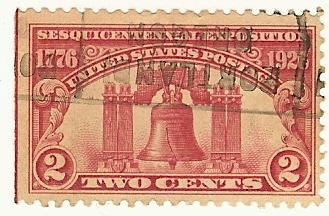
No it's not a separate variety. It's a less desirable, some would say flawed, example of the regular issue.
Natural straight edges are quite common. It may take a bit of reflection on this, but from what people have already posted, you can perhaps grasp that for every sheet of 400 or 200 stamps, quite a number of stamps would have a "natural" straight edge--where the sheets were cut into 2 or 4 panes one or two sides of each pane ended up with no perforations, just a straight edge. So the percentage of straight-edged stamps is actually quite high:
For US flat plate commemoratives, 10 out of 100 had a straight edge. For flat-plate definitives, 19 out of 100. One of the 19 had two sides straight-edged. That's from the Philatelic Foundation article I link to below.
In the general stamp market, you don't see as many examples as actually were produced, because many have been altered by fakers who punched perforations on the "straight" edge side, turning them into (fake) 4-side-perforated stamps. But these are considered "reperfs" and treated as frauds. Natural straight edged stamps have usually been considered less desirable than regular 4-sided perforated stamps. So your example here is worth less than a "normal" example of the same issue. You can see in your scan the red cutting line along which its pane was separated from the other panes on the sheet.
On the other hand, the good news is that yours is not a fraud/reperf. The guideline and straight edge are interesting reminders of how these little bits of colored paper were produced. Not all straight edge stamps have the cutting guideline visible. Still they were/are so common that once you have an illustration or two, you don't need any more.
Well, except that they can be useful as references for detecting reperfs--see the PF article in the link below for that tip.
http://www.philatelicfoundation.org...perforation/





 Posted 09/28/2014 03:58 am