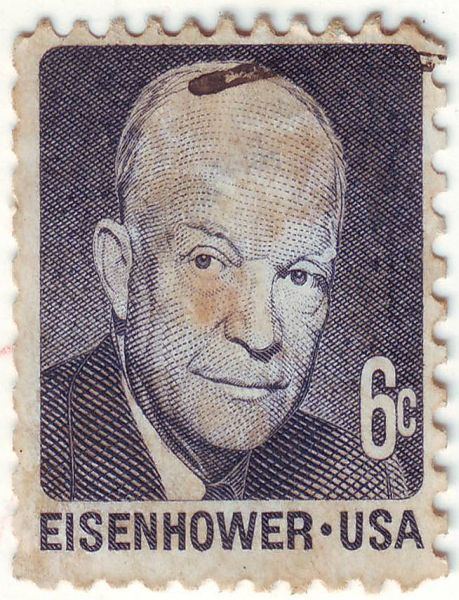
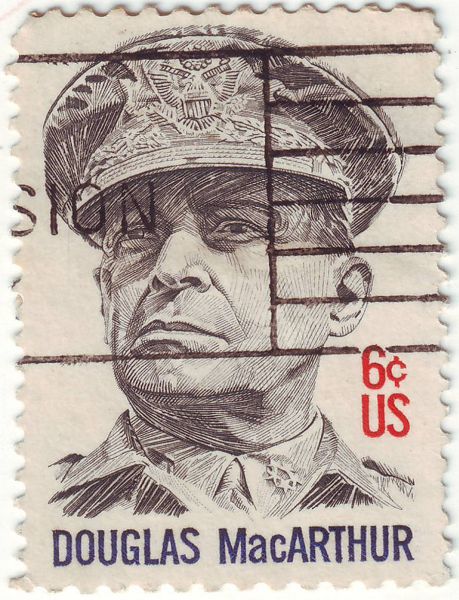
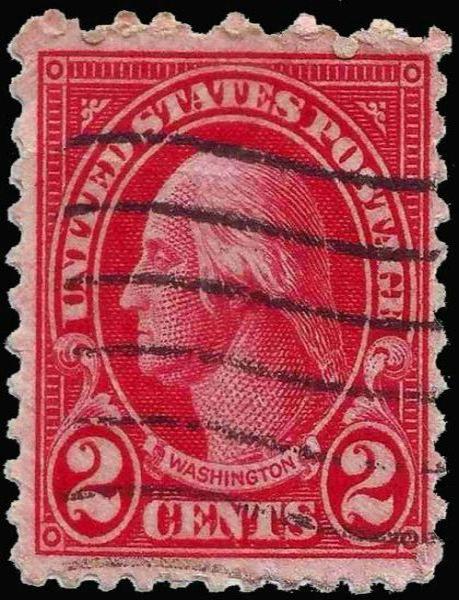
Hi all, 3 days ago friend of mine bring some collection of US used stamps mostly,could any one help identify them fake or real cause I am new to this Philatelic stuff and this is my first post.I attached here 3 of them and pls look at them,on next post I'll scan and attach the rest from the album brought to me ,your opinion would be much helpful ,off course also what are their value would be ? thanks in advance.
Save that file to your computer, then open it to print it.
Here's a video that describes how use a gauge.
6-38SfQQZqQ
It will be a bit different for the printed out gauge. Essentially you will try to find which one matches yours the best. Hint: start at 11 and work your way up.
Your 3 stamps are worth much less than a dollar. However, they are perfectly good for learning.
Hello Hanafi and welcome to SCF. You've shown some pretty common stamps, but there may be others in there somewhere ... keep looking.
I do want to note that your scans and uploads look fantastic. In fact, it appears that your last stamp, the 2c Washington, appears to be stuck to another just behind it. You may want to check.
As Partime said, you may have some rare or collectible stamps in your collection. On the Swedish Tiger site that I linked, value generally increases as you go higher up on that page.
Just a side-note: in the photograph showing how to use a perforation guage, one ought not use bare fingers on the stamp to position it. Use stamp tongs or place a clean piece of paper over the lower part of the stamp and maneuver it through pressure on the slip of paper.
Quote: One of the members here created a perf gauge that you can print.
The perf gauge page is formatted 8.5" by 11".
Only America uses this size of paper, known as A4A. (history below)
Our new member, Hanafi, is in Indonesia which, like ROTW, uses A4 paper.
The difference is that A4A is ~1/4" wider, and ~1/2" shorter.
When printing a PDF document, there are several options.
One option re-dimensions the PDF to the size of the paper you are using.
The result of printing an A4A PDF resized to A4 paper is coupla percent dimensional errors.
In the case of *this* particular PDF document, page scaling appears to be disabled.
But, going forward, do not count on this always being the case.
[HistoryLesson]
Once upon a time, would-be larger-scale American paper publishers approached then-President Andrew Jackson. The whole world was using A4 paper. If the biggest single paper customer in America changed to a slightly different size, all of the other American customers would surely follow. The big European producers would not bother producing a second size of paper just for the distant American market, so the American producers would have their home market to themselves. President Jackson, being a Commie pinko subverter of free markets & free trade, agreed to the 8.5-by-11" plan. Next time our country tells some other country to open their markets to free & fair competition, think 'A4A'.
Ikey, When I made developed printed perf gauge I took this into account and locked the scale for printing (which is why I used a PDF format). Obviously it is not a great solution but it works in a pinch like if you don't have a perf gauge and on-hand and can't get to one quickly. Don
We're changing the subject here, but I'm not sure I buy into the idea that the US paper size 8.5 x 11 dates back to Andrew Jackson's time. In fact, if you go to several websites and blogs there are a whole variety of answers, some dating back to the manual manufacture of paper, the storage and shipping of paper, the optimal appearance of the handwritten word on paper with pen or quill, and more into the 19th and 20th centuries, the size of a typewriter platen and the standard 10pt (pica) or 12pt (elite) typewritten characters that made for the optimal number of letters per line that are most easily read. Of course, fast forward into the late 20th and early 21st century when the word processor and computer allowed for proportionately spaced print and the number of characters per line was increased, which is why many documents use column spacing to make text more readable.
There are even some comments suggesting that it is more environmentally friendly that we in the US use a slightly smaller paper size because it provides for less waste.
No matter what version of an answer one prefers, it doesn't seem as though the US sizes of paper are going to change anytime soon.
My most recent business cards (ante sabbatical) featured a coupla-inch ruler on the bottom of the English side, and a coupla-centimeter ruler on the bottom of the other-language side. At trade shows, I'd ask guys how wide their wedding ring or watch band might be and, when they did not know, offered that, if they kept my card in their wallet, they'd always know.
Dumb salesman's trick, I know, but it always got a smile, especially from a guy who instantly fired-off the answer, and then explained with an enormous grin that he grew up in his father's watch factory back in Argentina, and could size a watchband in his sleep.
Fasting forward (to coin a phrase), I've been promising myself new personal visiting cards with a perf gauge on the back (or around the edges), but have been loathe to explain it all to a graphic artist.
wt1, Greetings:
The difference in area between A4 and A4A is so small that one wastes more environmentally-conscious bandwidth talking about it than will ever benefit the environment.
I will revert to the my authoritative source of the tale, however, as the Brits were apparently using 8-by-13" (not A4) when we were still Brits. But that we would deviate from that standard in the years following the War of 1812 - a war in which President Jackson served and, therefor, might well have taken personally - is an explanation with an enviable chronological advantage over, say, any adaptation to the size of a typewriter platen; it makes much more sense that the typewriter would be designed to work with the paper sizes most commonly in use for some centuries, rather than that the manufacturers of the first typwriters would go out of their way to require a unique or unusual paper.
As to the blogs, see how many of them repeat each other's obvious idiocies - about the wife-beating origins of 'rule-of-thumb', for example, or the invention of the brassiere by Dr Otto Titsling - and apply a critical eye. Did the over-sized Declaration of Independence violate an obvious aesthetic standard for 'the optimal appearance of the handwritten word on paper with pen or quill'?
Quote: Just a side-note: in the photograph showing how to use a perforation guage, one ought not use bare fingers on the stamp to position it. Use stamp tongs or place a clean piece of paper over the lower part of the stamp and maneuver it through pressure on the slip of paper.
Totally agree with the above... and... (IMHO) this video is, by far, the worst I've ever seen on the use of a perf gauge... not (only) given the 'touching' part (big time taboo), but also given these types of gauges also have the most common perfs on the outside edges... enabling the collector to first position the stamp with tongs on a safe surface, then moving only the gauge through each perf position opposite the stamp without ever touching the stamp during perf determination...
ikey, interesting points. I disagree with you in that as little as 1% reduction on resources is considerable in today's economy and the profit margins of any corporation.
As for Dr Otto Titsling, I cannot say that I find many references other than Bette Midler. There are some references to "boulders" that don't make sense to me.
It seems that wt1's argument that the A4A paper size does NOT in fact date back to Andrew Jackson does hold some merit.
Please elaborate on how you come to your conclusion that President Jackson's pinkness effects today's U.S. standard paper size.
Silly sarcasm aside, I look forward to hearing more of your viewpoints.
Do you have a newsletter? If so, I wish to subscribe. I also wish to subscribe to wt1's newsletter if available. Actually, I wish to subscribe to everyone's newsletter.
disi, to be honest I didn't even watch the video before posting it. Do you have one that you prefer? Regardless of technique, it does illustrate the generalities of how to use one.
Disclaimer: While a tremendous amount of effort goes into ensuring the accuracy of the information contained in this site, Stamp Community assumes no liability for errors. Copyright 2005 - 2026 Stamp Community Family - All rights reserved worldwide. Use of any images or content on this website without prior written permission of Stamp Community or the original lender is strictly prohibited. Privacy Policy / Terms of UseAdvertise Here





 Posted 10/16/2014 09:18 am