| Author |
 Replies: 17 / Views: 3,747 Replies: 17 / Views: 3,747 |
|
Valued Member
Bulgaria
216 Posts |
|
|
Hi Hereunder one of my stamps. I cannot find it in the Scott catalogue. It is 2 sides perf. and 2 sides imperf. That means it is between 272 & 273. Do you have some more information for me ? Thank you 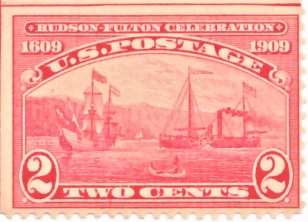 |
|
Send note to Staff
|
|
|
|
|
Pillar Of The Community
1849 Posts |
|
|
It is #372.
It is the UL stamp from the LR pane position
based on the double straight edge. |
Send note to Staff 
|
|
|
Rest in Peace
United States
7097 Posts |
|
|
Valued Member
Bulgaria
216 Posts |
|
|
Thanks for your answers.
But I don't understand why there are no perforations on these sides.
I never saw a sheet of that kind of stamps, but IMO, all the stamps of the sheet have to be perforated, isn't it ?
In my case, it seems that an entire raw and an entire column were note perforated. Can you explain me that fact or giving me an address for seeing it.
Thank you |
|
Send note to Staff
|
|
|
Pillar Of The Community

United States
1498 Posts |
|
|
I think I can explain this. If I get it wrong, someone please correct me. This stamp was printed in plates of 240 stamps ... 4 panes of 60 stamps. Guidelines were printed between the individual panes. The presence of guidelines at both the top & left edges of your stamp indicate that it must have been the uppermost left stamp from the lower right pane in the plate as there would be no guidelines outlining the complete plate. If you have access to a Scott US Specialized Catalogue, you can find a sample plate layout in the introduction.
I'm guessing that the plate of 4 panes was cut apart & then perforated, but I could be wrong. The point is that perforations were not produced along the edges of an individual pane so that stamps in the outer rows & columns would all have at least one straight edge. |
|
Send note to Staff
|
|
|
Valued Member
Bulgaria
216 Posts |
|
|
Thanks
Can somebody confirm that the panes of 60 were cut BEFORE perforating ?
If yes, all is explained ! |
|
Send note to Staff
|
|
|
Pillar Of The Community
United States
526 Posts |
|
|
Pillar Of The Community
United States
1414 Posts |
|
|
Quote:
Can somebody confirm that the panes of 60 were cut BEFORE perforating ? The entire sheet was passed in one direction through the perforator. A cutting wheel or knife instead of perforating pins occupied the center row between the panes to be cut apart. After the first pass, the half sheets were passed through a second perforator to complete the perforating process and cut the half sheet into panes. Cutting before perforating would complicate the perforating process. Cutting after the sheet was perforated would likely result in a large number of damaged sheets. Clark |
|
Send note to Staff
|
|
|
Valued Member
Bulgaria
216 Posts |
|
|
OK, but still I do not understand !
When the roulette is passing for cutting the sheet along the "cut line", these cut lines are already perforated and then you cannot have an straight cut line but a perforated cut line and the stamps on both side of that line are perforated. Am I right?
This will not appear IF the "cut line" is not perforated BEFORE.
And then, my question is: Are the "cut lines" for the future 4 panes perforated with the perforator like the other lines or are not ?
|
|
Send note to Staff
|
|
|
Pillar Of The Community
United States
1498 Posts |
|
|
Reread Clark's explanation carefully. During the perforating process there was no perforating pin at the center ... instead there was a cutting implement that sliced along the guideline. This was done first in one direction, cutting the 4-pane sheets in half. Then the half sheets were run thru the perforating process again (at a 90 degree angle to the first cut). This produced 4 separate panes for each printed sheet of 240 stamps with no perforations along the edges. Note that the cutting & perforating were done simultaneously. |
|
Send note to Staff
|
| Edited by JLLebbert - 11/24/2014 07:53 am |
|
|
Rest in Peace
United States
7097 Posts |
|
|
Valued Member
Bulgaria
216 Posts |
|
|
Rest in Peace
United States
7097 Posts |
|
|
Here you go, I know I posted it before but here it is again. Perhaps a "sticky" or even a thread on the topic is in order?
HOW STAMPS ARE PERFORATED IMAGES:
How the panes of 400 (100X4) are cut to produce the natural straight edge via the cut and the stamp being on one of those margins.


TYPES OF PERFORATIONS:
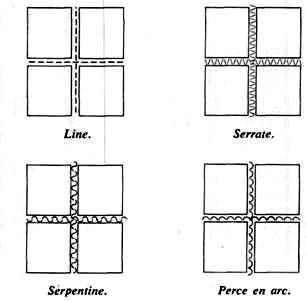
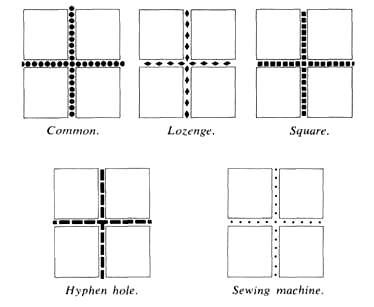
PERFORATION MACHINE:


WOMEN PERFORATING STAMPS: (circ. WWI)
 |
|
Send note to Staff
|
|
|
Valued Member
Bulgaria
216 Posts |
|
|
Valued Member
Bulgaria
216 Posts |
|
|
I come back to the explanations of I_Love_Stamps. Concerning my question about my stamp, it is OK; it is clearly explained. I would like to ask him to explain why in the lower case ( Scott #715), I have all stamps not perforated on 2 sides ( upper & lower ones). Ok, you "ll say because there are no horizontal perforations on the pane. Right ? But Scott shows stamp 715 with perforations on four sides ! If it is a variation of 715 (scott Nr?), my question is WHY ? An user, for extracting a stamp from the pane needs in addition scissors. 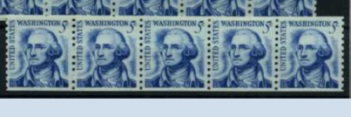 |
|
Send note to Staff
|
|
|
Valued Member
Bulgaria
216 Posts |
|
|
Replies: 17 / Views: 3,747 |
|




 Posted 11/23/2014 06:27 am


