| Author |
 Replies: 13 / Views: 2,456 Replies: 13 / Views: 2,456 |
|
|
Rest in Peace
7742 Posts |
|
|
Hi guys...I am not too good with American stamps.. have a few I am struggling with..This stamp, I think is a Scott # 46a..But those things like grill, no grill are giving me trouble..Can any one help to nail down a Scott number for me..Thanks. Robert 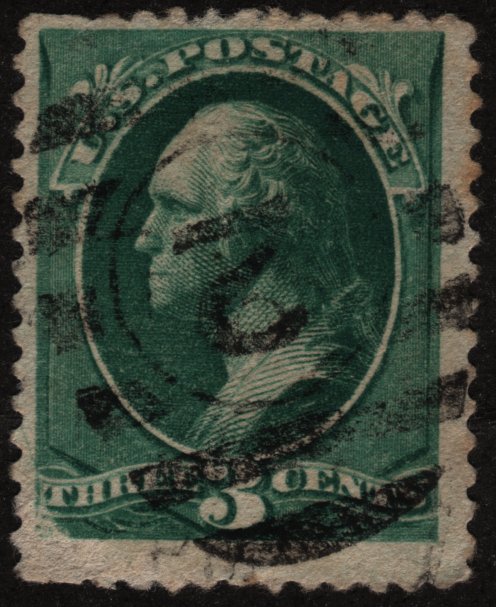 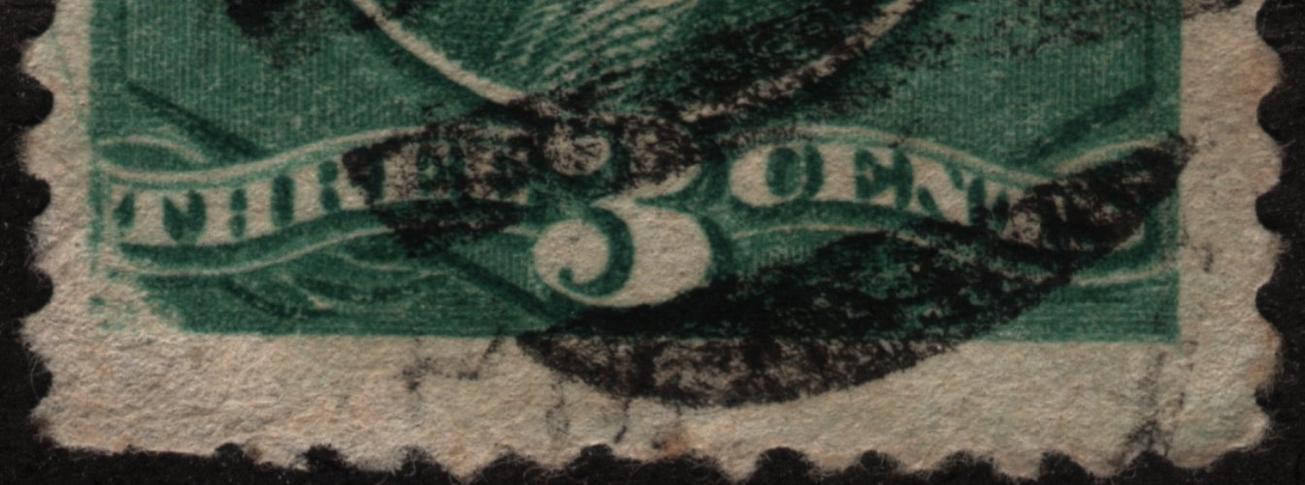 |
|
Send note to Staff
|
|
|
|
|
Pillar Of The Community
United States
1946 Posts |
|
|
It's Scott number 207, the reworked design of 1881. One giveaway is the little line below the "TS" of "CENTS". Another is the narrowed shading on the underside of the vignette frame. |
Send note to Staff 
|
|
|
Rest in Peace
7742 Posts |
|
|
Rest in Peace
United States
7097 Posts |
|
|
Absolutely a #207. These aren't that tricky once you do a little bit of reading and ID a few then you start to see the differences straight off. Paper types and the intermediate issues can get a little bit tricky. These can be fun. |
|
Send note to Staff
|
|
|
Pillar Of The Community
United States
937 Posts |
|
|
Rest in Peace
7742 Posts |
|
|
Pillar Of The Community
United States
937 Posts |
|
|
You're welcome. There are many details that take a long time to learn, so don't be afraid to ask for clarification.
-Edit: Removed stupid idea involving graphite. Point taken. |
|
Send note to Staff
|
| Edited by Historical DNA Collector - 11/28/2014 11:05 am |
|
|
Pillar Of The Community
United States
2555 Posts |
|
|
I would never do it to the front of a stamp. It wouldn't be nearly as effective anyway... |
|
Send note to Staff
|
|
|
Pillar Of The Community
United States
937 Posts |
|
|
Yes, it would not be as effective. However, would it be an irreversible method with a soft gum eraser? Why would you never do so?
By the way, Sinclair, I feel that my previous posts diminished your authority of knowledge of such topics. I did not intend for such to occur. I apologize if any misunderstanding has occurred. |
|
Send note to Staff
|
|
|
Pillar Of The Community
United States
2555 Posts |
|
|
I wouldn't do it because you wouldn't get that nice white and black contrast that you get on the back of the stamp. I'm not really a fan of doing it to the back of the stamp either. I like my stamps to be as clean and as pristine as possible. I don't think it is possible to erase the graphite entirely and you also have the risk of damage while trying to do so.
|
|
Send note to Staff
|
|
|
Valued Member
United States
59 Posts |
|
|
My copy...Scott 184? The white artifactf o nose and in front of nose are on my scanner. The brown spot on the eye is, I am afraid, a part of the stamp. 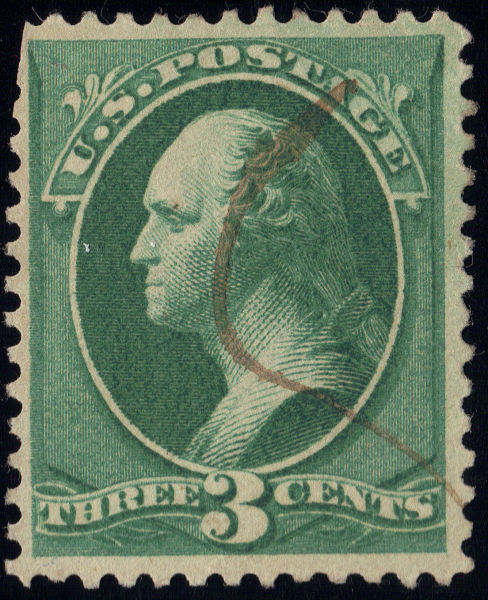 |
|
Send note to Staff
|
|
|
Pillar Of The Community
United States
1946 Posts |
|
|
Historical DNA:
You are not thinking about what it is you are doing when you generate a "puddle" of fine graphite particles and drag a stamp through it.
At the micro level, where your particles are, stamp paper is comparatively porous. On top of this, lines of engraving form ridges and basins. Some of those graphite beasties will fall down into a myriad of tiny crevices and stay there until something drags them out. Dragging a soft rubber, art-gum eraser across will tease some of them out, but others it will drive further into those crevices in the ink and paper. Meanwhile, no matter how gentle you are, at the micro level the eraser will chip and crack the ink ridges and take away some of those pieces. At the macro level the surface will not shine as brightly due to those micro irregularities (let alone due to the addition of graphite). Once embedded in the paper fibers and ink ridges the only way you will get the stubborn graphite beasties out is by scraping them out. And when you have fought the fight, the stamp will be injured.
The purpose of embossing a stamp with a grill was to intentionally break the paper fibers for better penetration of cancellation ink. Those graphite particles are very similar to particles of ink, and even on the reverse will collect around the irregularities of the broken fibers. You won't be getting them out with an eraser once they are in. To get them all out, you must take some paper with them. And where the fibers are broken by the grill, the paper is more fragile and subject to greater destruction than normal when you drag an eraser or other scraping object over them.
Do you really want to recommend doing that to your stamps?
Might not there be a better way to see?
@Ikkoller - yep, it looks like a 184. Your question is...?
|
|
Send note to Staff
|
| Edited by essayk - 11/28/2014 10:50 am |
|
|
Pillar Of The Community
United States
937 Posts |
|
|
essayk, after thinking about it more, it is a stupid idea. After reading your reply, it is a very stupid idea.
I'm working on another method. The offset vs. intaglio printing "aluminum foil test" actually produced a visible pattern from the front of my very weakly grilled stamp. I've got some clear fingernail polish drying on it as we speak. Later I'll experiment with how to make the impression easier to see/scan/photograph.
Gold/silver/copper leaf is pretty cheap and would pick up the impression even better. This could then be turned into a display alongside the stamp.
How do people choose to display their grilled stamps? |
|
Send note to Staff
|
|
|
Pillar Of The Community
United States
1946 Posts |
|
|
Now you're thinking! To increase the efficiency of the leaf, there are two things I can suggest, depending on the tensile strength of the leaf material.
1. Use a fresh unused pencil eraser as a tamp to gently tap the leaf onto the surface of the stamp for an even impression.
or
2. Use a brush with a moderately stiff bristle (but lighter than a toothbrush) against a somewhat stronger leaf to "swirl and sweep" the foil onto the surface or even tap it into the grill. But VERY gently so nothing is left behind when you remove it. If done with a light touch, the malleability of the metal, even as a foil, may let it conform to the shape without breaking.
As for display, I tend to mount mine face side up, but with one example face down so people can see the grill class associated with the stamps I am showing. I try to get face down exemplars for each class, including end rollers, splits, doubles, and states as well as overall grill type (H, I and J for my stuff). Failing that, a nice scan of the reverse cut to stamp size and adjusted for contrast is nice too. This can be mounted next to the stamps, or printed right on the page where you want it. |
|
Send note to Staff
|
|
| |
Replies: 13 / Views: 2,456 |
|




 Posted 11/25/2014 09:40 am


