Stamp Community Family of Web Sites
Thousands of stamps, consistently graded, competitively priced and hundreds of in-depth blog posts to read


Stamp Community Forum
 
Username:
Password:
Save Password
Forgot your Password?

This page may contain links that result in small commissions to keep this free site up and running.

Welcome Guest! Registering and/or logging in will remove the anchor (bottom) ads. It's Free!

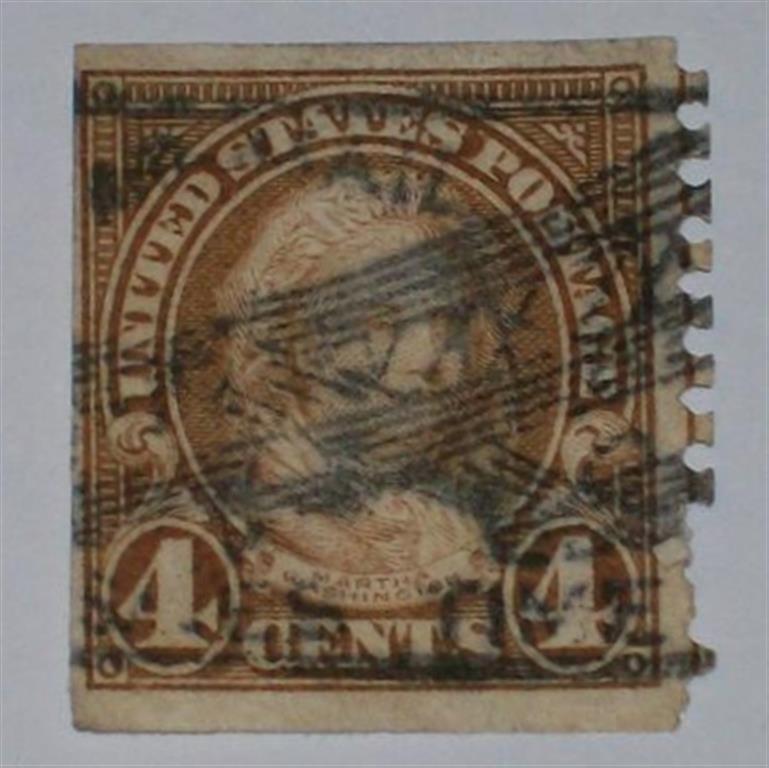
Help Id. 4cent M. Washington 3 Imperf. Sides

 
To participate in the forum you must log in or register.
Author Previous TopicReplies: 8 / Views: 1,851Next Topic  
Valued Member

United States
74 Posts
Posted 11/29/2014   01:46 am  Show Profile Bookmark this topic Add ccholley to your friends list Get a Link to this Message
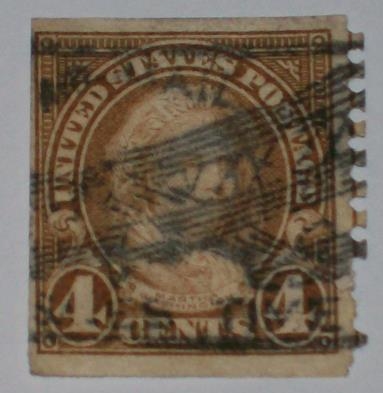
So I found this stamp in with a bunch of other stamps, I have looked in the Scott book and on the 1847 site. Can any one help me, why are 3 sides straight? Is this a private perf? What would the Scott number for this be and what is cat. value? Thanks!


Send note to Staff

Pillar Of The Community
United States
1947 Posts
Posted 11/29/2014   06:14 am  Show Profile Bookmark this reply Add rohumpy to your friends list  Get a Link to this Reply
It is a coil stamp with the perforations on the left trimmed off
Send note to Staff  Go to Top of Page
Pillar Of The Community
United States
692 Posts
Posted 11/29/2014   09:36 am  Show Profile Bookmark this reply Add jarnick to your friends list  Get a Link to this Reply
To me, it looks as if it were applied by an affixing machine that cut the perfs off on the left side and left a generous margin on the right.
Send note to Staff  Go to Top of Page
Valued Member
United States
74 Posts
Posted 11/29/2014   10:14 am  Show Profile Bookmark this reply Add ccholley to your friends list  Get a Link to this Reply
There is a brown line that runs through the perfs. on the right side. I don't see this line on my other 4 cents MW stamps.
Send note to Staff  Go to Top of Page
Bedrock Of The Community
United States
10589 Posts
Posted 11/29/2014   10:39 am  Show Profile Bookmark this reply Add revcollector to your friends list  Get a Link to this Reply
This was originally the left stamp of a line pair. This is a rotary press stamp; rotary presses were made by taking two flat plates, curving them and then welding them together. The line is from the space above the weld, so a line pair is always two stamps from different plates. That is why 599/599A pairs exist.
Send note to Staff  Go to Top of Page
Pillar Of The Community
United States
5894 Posts
Posted 11/29/2014   11:18 am  Show Profile Bookmark this reply Add smauggie to your friends list  Get a Link to this Reply
If I find a line single I usually keep it.
Send note to Staff  Go to Top of Page
Pillar Of The Community
United States
1942 Posts
Posted 11/29/2014   5:45 pm  Show Profile Bookmark this reply Add essayk to your friends list  Get a Link to this Reply
As I recall, the rotary plates are not welded together when they are affixed to the press. They are merely mounted in with special clips behind them holding them down, and they butt up against each other with a straight-line gap between them. This fills up with ink and this "joint line" is printed onto the stamps. Hence, joint line pairs. I saw a setup for this operation as a demo several years ago, and that press was fitted with two plates, which looked huge to me.
Send note to Staff  Go to Top of Page
Valued Member
United States
74 Posts
Posted 11/29/2014   5:52 pm  Show Profile Bookmark this reply Add ccholley to your friends list  Get a Link to this Reply
What great information on this! Thanks so much!
Send note to Staff  Go to Top of Page
Pillar Of The Community
United States
937 Posts
Posted 11/29/2014   6:36 pm  Show Profile Bookmark this reply Add Historical DNA Collector to your friends list  Get a Link to this Reply
The name you're looking for is grippers. They engaged machined out portions of the plate. Stress could result in "Gripper Cracks - cracks that formed over slots cut in the edges of the engraved plates curved to fit the rotary press cylinders at the spot where the clamps held the plates to the cylinders." These cracks are a variety of plate cracks that can appear on stamps and are desirable.

Source for attribution: http://www.1847usa.com/Glossary/G.htm
Send note to Staff  Go to Top of Page
  Previous TopicReplies: 8 / Views: 1,851Next Topic  
 
To participate in the forum you must log in or register.

Go to Top of Page

Disclaimer: While a tremendous amount of effort goes into ensuring the accuracy of the information contained in this site, Stamp Community assumes no liability for errors. Copyright 2005 - 2026 Stamp Community Family - All rights reserved worldwide. Use of any images or content on this website without prior written permission of Stamp Community or the original lender is strictly prohibited.
Privacy Policy / Terms of Use    Advertise Here
Stamp Community Forum © 2007 - 2026 Stamp Community Forums
It took 0.34 seconds to lick this stamp. Powered By: Snitz Forums 2000 Version 3.4.05