Quote:
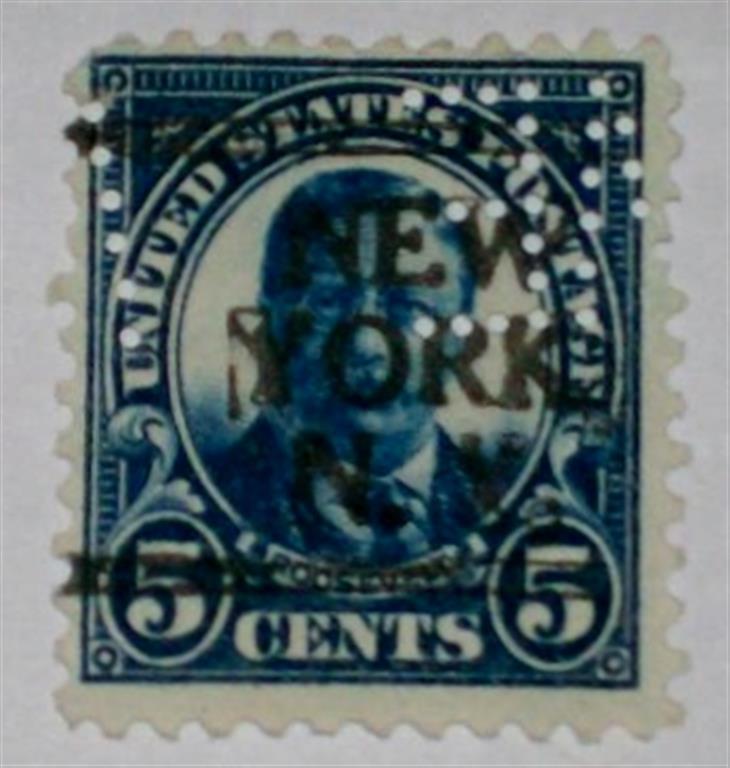
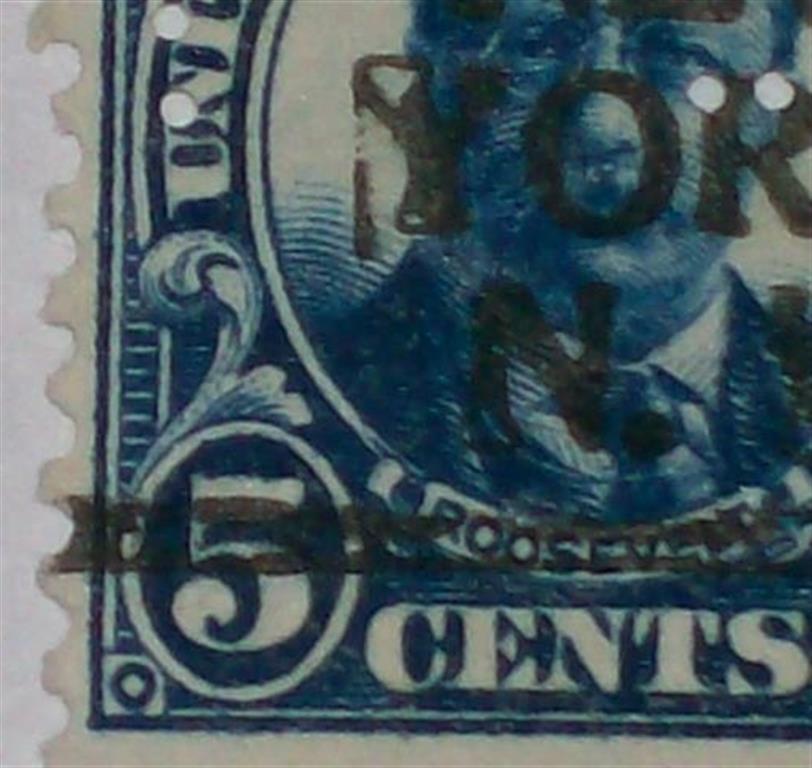
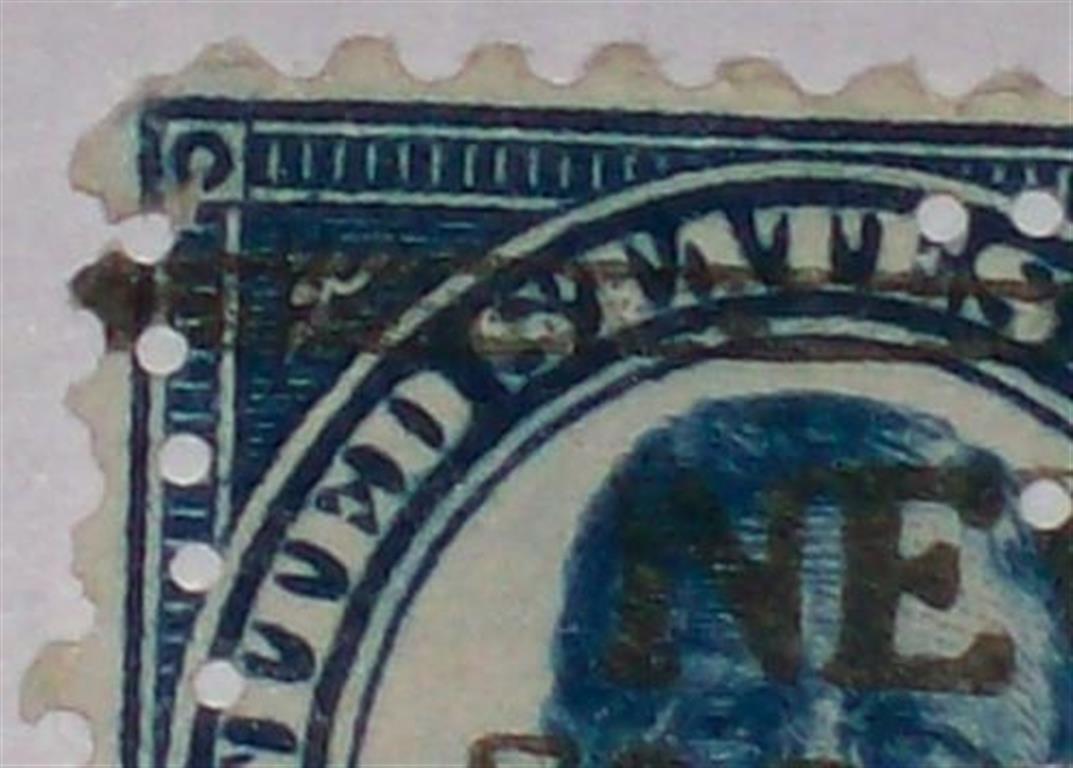
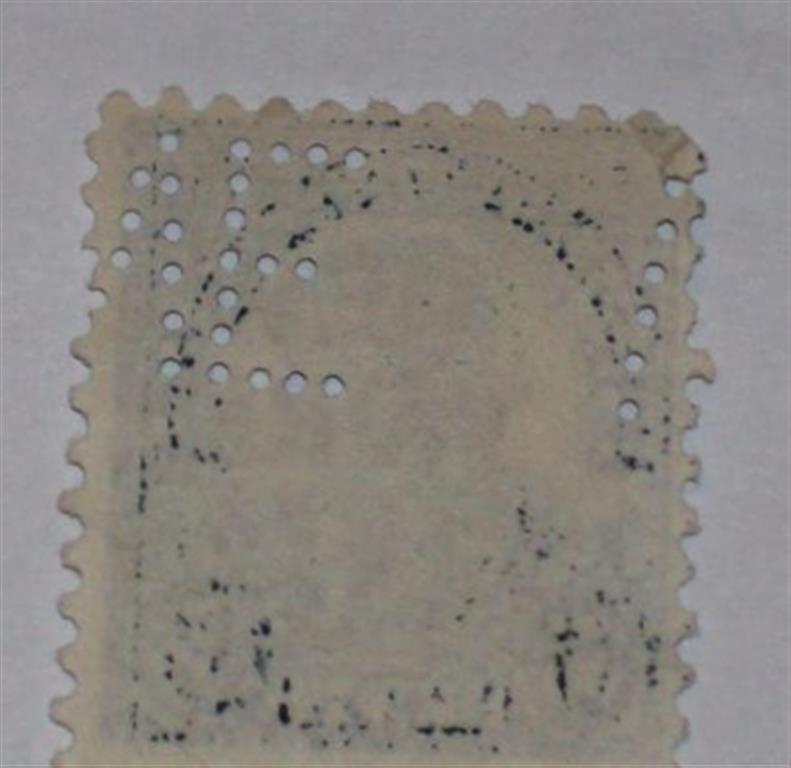
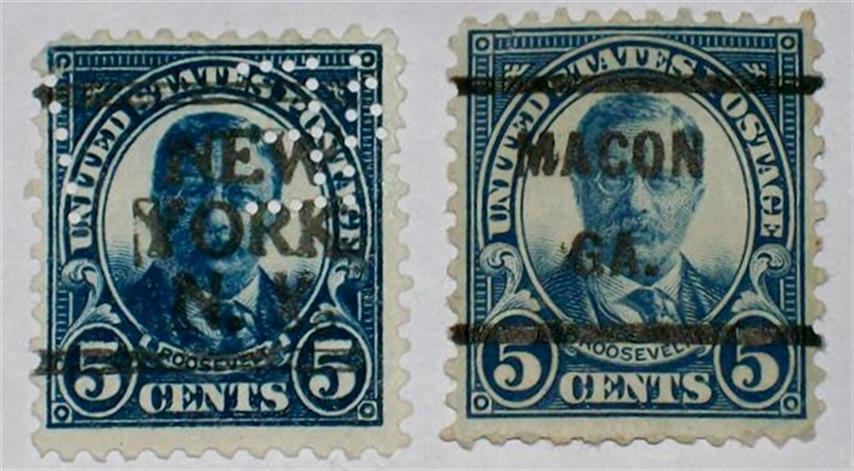
I am wondering if this is a Roosevelt "double transfer"? The ink is very heavy and wondered if it would be a "double transfer"? If not what causes such heavy ink, some of the ink even seems to bleed through to the back of the stamp.
From this I sense there may be a bit of confusion over what is "doubled" in a "double transfer." The quantity of ink has nothing to do with it, since a double transfer will show up in the final print of the stamp, but occurs earlier in the process. Let's review part of the process for intaglio, that is "engraved" printing.
A soft steel roll is rocked under great pressure over the stamp design that has been cut into a hardened steel die. The metal from the roll literally flows into the depressions in the design, resulting in an image of the design which stands out in relief on the roll. When a set of reliefs has been "transferred" to the roll, it too is case hardened. Then the roll is mounted in the transfer press and carefully positioned above a corner spot on a soft steel plate. Great pressure is applied as the roll is rocked onto the plate and the relief cuts into the plate creating an "entry," which is an exact duplicate on the plate of what appears on the die. After all the positions on a new plate have been "entered," that is, transferred in this way, the plate is put into a proofing press and inked in order to "prove" the workmanship with a test print called a "proof." Any of the entries that are incomplete or defective in some other way are burnished out and re-entered; i.e. a second attempt is made to transfer the design to the plate. However, if some of the original entry remains, or the roll has not been realigned for the same registration as the original entry, there may be some doubling of design features because of the two transfers. In the jargon of printers, and the philatelic community, the printed version of a doubly transferred entry is called a "double transfer." But the actual "transfer" was the act of re-entering the plate.
If you have followed that explanation, then you can see that a double transfer does not result from any kind of error in inking, such as inking the plate a second time. A double transfer will print out just fine with a normal inking of the plate. So when a stamp seems to have too much ink, you are looking for some other problem than a double transfer.





 Posted 11/29/2014 01:56 am