| Author |
 Replies: 24 / Views: 5,522 Replies: 24 / Views: 5,522 |
|
|
|
Valued Member
United States
131 Posts |
|
|
Pillar Of The Community
United States
1414 Posts |
|
|
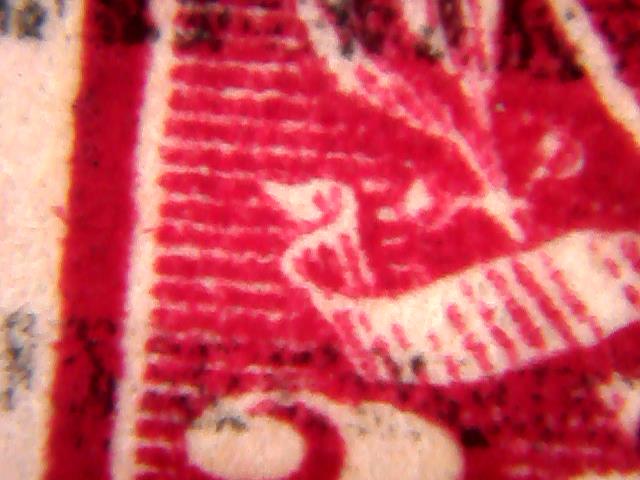
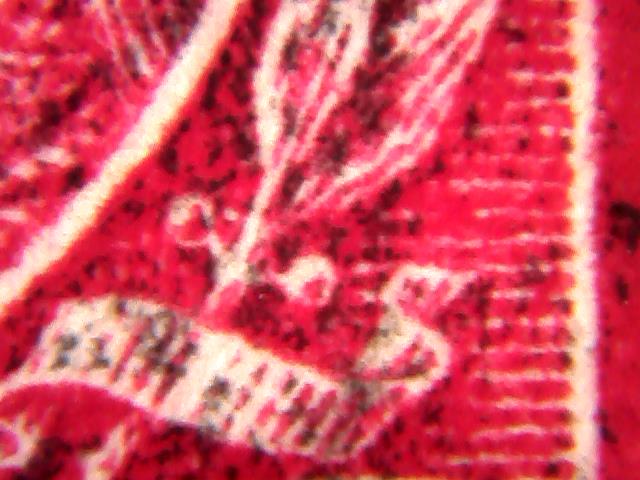
The stamp is a 499 based on the relative weakness of the toga button and the strength of the digs at the bottom of the toga rope relative to the fairly indistinct line at the top. Also, the shade in the image is too bright to be a 500 even if the image is a bit oversaturated. The ribbons are clean with no sign of any plating marks.
Clark |
Send note to Staff 
|
| Edited by cfrphoto - 02/09/2015 2:34 pm |
|
|
Valued Member
United States
131 Posts |
|
|
DNA, do you have a link to the text you mentioned?
"'partial line' should become the primary identifier". I'd like to read about this for the Type Ia Identifier. I would have just sent an email but new members can't do that.
Thanks in Advance. |
|
Send note to Staff
|
|
|
Pillar Of The Community
1545 Posts |
|
|
Thanks Al and DNA. I can see in DNA's scan the Type Ia characteristics. There is alot of good information in this topic. Probably because it is out there due to the 2 cent Washington being so difficult to identify in the first place.
-IBFS |
|
Send note to Staff
|
All science is either Physics or Stamp Collecting. -- Ernest Rutherford |
|
|
Pillar Of The Community
United States
937 Posts |
|
|
chaulkdust, I can't find the full article yet. I just read the few pages that are in the pictures of srailkb's link.
Along with that, here's some observations by Clark from a thread a few weeks ago:
"To clarify a couple of points. The article documenting plating or tick marks in the ribbons was not universally accepted. A few maintained that some 500 examples could exist without any plating marks. Also, Dr Prothreo asked to see type I examples with plating marks. My experience is that the exist on virtually all type Ia examples. I saw one type number 500 stamp with minimal tick marks on the right side because it had what I believe was a weak impression in the right half of the stamp. While it is possible that the plate was unevenly inked, it is also quite likely that one or more stamps on plate 208 may be poorly impressed on the plate. Recall that positions on the plate were reentered with the type I relief. It is possible that some other positions were relatively weak, but not so bad as to justify the time and cost of re-entry." |
|
Send note to Staff
|
Ryan = HDNAC = DNA = HDC = Hysterical DNA Collector = Historical DNA Collector = me who just loves stamps :) |
|
|
Pillar Of The Community
United States
2948 Posts |
|
|
Yes, I learned from Clark and probably Al E Gator and DNA also, in a recent thread, to look for those ribbon marks. Priceless info. Thanks to them and everyone here, as always.
Chalkdust, do a search of this site for W/F identification or any iteration of that. You'll probably find some great info and pics. |
|
Send note to Staff
|
| Edited by stampcrow - 02/09/2015 9:00 pm |
|
|
Valued Member
324 Posts |
|
|
Great info. Thanks for sharing. A quick question about the Deep Rose coloring for #500: Are there any #499 Deep Rose? I assume there are, but I've not seen any definite information on that. |
|
Send note to Staff
|
|
|
Pillar Of The Community
United States
2423 Posts |
|
|
Pillar Of The Community
United States
937 Posts |
|
|
Deep Rose isn't listed as a #499 variety, but I've got some that are very similar in color to my few #500's. Not all #500 are exactly the same color either. The #500 was an experiment conducted 1917, during the production period of the #499. So it would have been produced from the same batches of ink unless there was a lengthy pause in #499 production. |
|
Send note to Staff
|
Ryan = HDNAC = DNA = HDC = Hysterical DNA Collector = Historical DNA Collector = me who just loves stamps :) |
|
|
Replies: 24 / Views: 5,522 |
|



 Posted 02/09/2015 12:54 pm