Stamp Community Family of Web Sites
Thousands of stamps, consistently graded, competitively priced and hundreds of in-depth blog posts to read


Stamp Community Forum
 
Username:
Password:
Save Password
Forgot your Password?

This page may contain links that result in small commissions to keep this free site up and running.

Welcome Guest! Registering and/or logging in will remove the anchor (bottom) ads. It's Free!

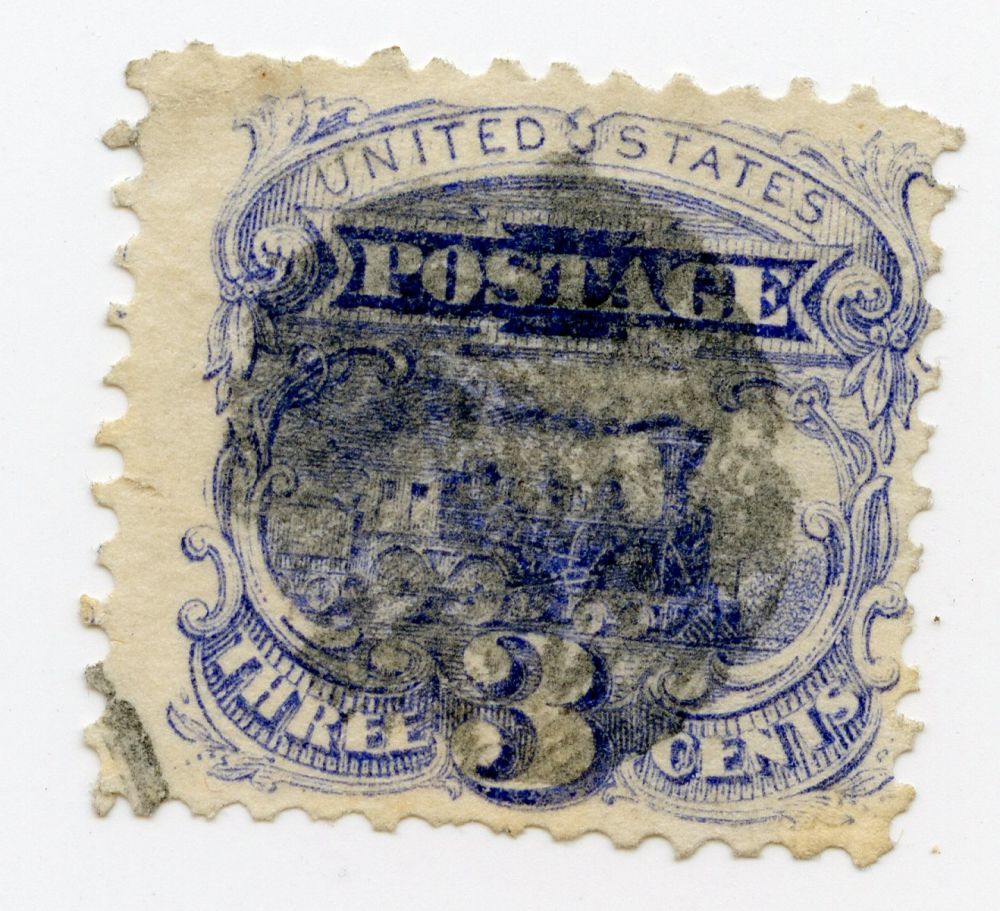
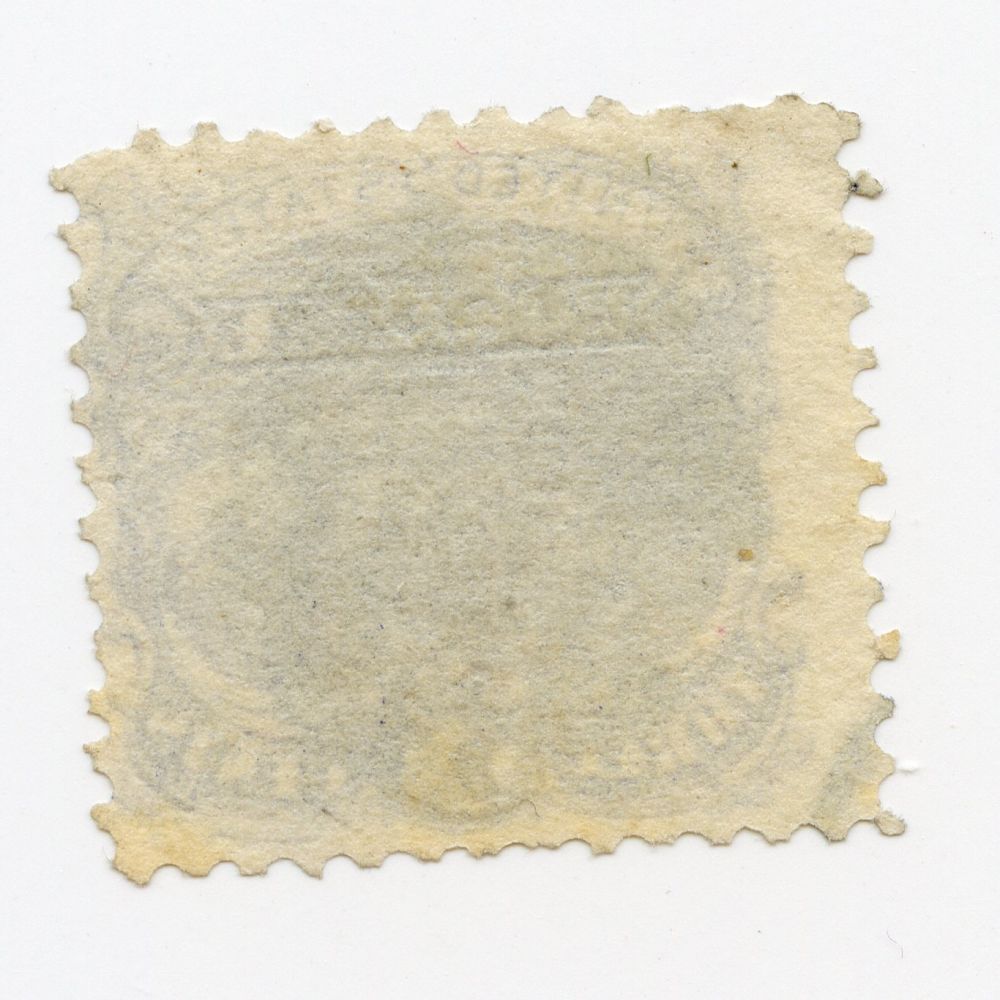
Where Is The Grill, What Am I Missing?

 
To participate in the forum you must log in or register.
Author Previous TopicReplies: 11 / Views: 1,936Next Topic  
Valued Member
United States
56 Posts
Posted 03/21/2015   09:38 am  Show Profile Bookmark this topic Add Joe to your friends list Get a Link to this Message


Send note to Staff

Pillar Of The Community
United States
3153 Posts
Posted 03/21/2015   10:12 am  Show Profile Bookmark this reply Add littleriverphil to your friends list  Get a Link to this Reply
All I can see is the edge of an impression.
Send note to Staff  Go to Top of Page
Valued Member
United States
56 Posts
Posted 03/21/2015   10:44 am  Show Profile Bookmark this reply Add Joe to your friends list  Get a Link to this Reply
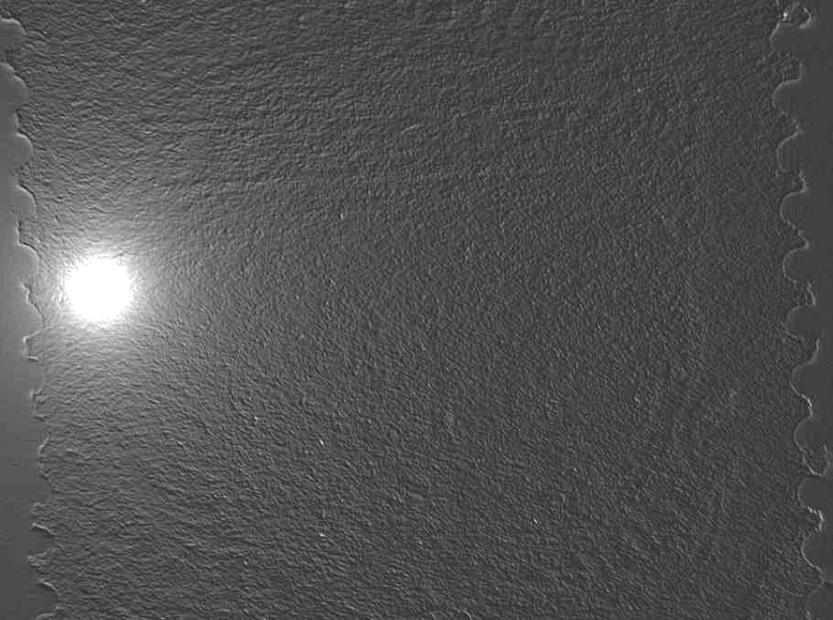
Ok I found it up high to the left a bit, have to put the light from the side to see it.
Send note to Staff  Go to Top of Page
Rest in Peace
United States
763 Posts
Posted 03/21/2015   12:49 pm  Show Profile Bookmark this reply Add Bill Weiss to your friends list  Get a Link to this Reply
Copied from my website. Perhaps it will help.

Using Graphite to study grill points

Here is a handy tip which can be used to detect or study grill points by transferring graphite from a pencil onto the grilled area. The graphite/lead adheres to whatever points protrude enough to allow some to stick to them, making them easier to observe.

1. Take a pencil which contains softer lead and deposit graphite from the point onto a piece of paper by rubbing back and forth until you have plenty on the paper;

2. Use your finger tip to transfer some graphite from the paper onto your finger tip by rubbing your finger over the grill area;

3. Now rub your fingertip gently over the grill area. You should now be able to see grill points much more clearly thanwithout the graphite enabling you to study the points and count them if you wish;

4. The graphite will NOT harm the paper, but if it bothers you, it is easy to erase using a soft eraser.
Send note to Staff  Go to Top of Page
Valued Member
United States
56 Posts
Posted 03/21/2015   1:34 pm  Show Profile Bookmark this reply Add Joe to your friends list  Get a Link to this Reply
Thanks Bill

I thought marking the back and using an eraser was a no no. I have stamps that are written on the back with the catalog number some correct, some incorrect, it is ok to then to erase these things?
Send note to Staff  Go to Top of Page
Pillar Of The Community
United States
8956 Posts
Posted 03/21/2015   1:56 pm  Show Profile Bookmark this reply Add Petert4522 to your friends list  Get a Link to this Reply
Joe, read Bill's advise again! He does not say to write on the stamp but gently rub very little graphite on the back of the stamp! You may want to try this first on some cheap stamps, before you tackle a keeper!

Peter
Send note to Staff  Go to Top of Page
Rest in Peace
United States
763 Posts
Posted 03/21/2015   2:33 pm  Show Profile Bookmark this reply Add Bill Weiss to your friends list  Get a Link to this Reply
I recommend that any pencil writing on the back of a stamp should be removed by gently erasing. Even though the graphite doesn't hurt the stamp (or gum if unused), it is distracting. The graphite put on the grill is harmless (despite what some naysayers might claim...) but my note #4 applies - if it bothers you, erase it.

On an unused stamp, it can be harmful in the respect that if the pencil was pressed too hard and the point indented the gum, it is a harmful fault. I've erased pencil off of gum probably hundreds of times in my career without causing any harm and also leaving no trace of the writing if the gum isn't disturbed by the pencil.
Send note to Staff  Go to Top of Page
Pillar Of The Community
United States
1756 Posts
Posted 03/21/2015   2:47 pm  Show Profile Bookmark this reply Add disi123 to your friends list  Get a Link to this Reply

Quote:
if the pencil was pressed too hard and the point indented the gum,


Re : Graphite... the best type to use, and easily obtainable, is the
powdered type in a plastic tube, which all hardware retailers offer,
for freeing up (vis a vis) "lubricating" sticky key locks ...

Short of the above, you can create a "pool" of graphite by rubbing s
pencil point sideways back and forth on scrap paper, until there's
a reasonable accumulation, then rub a cue tip (or your finger tip)
into the graphite and rub the grill tips gently in a single direction
repeating as necessary...

The above methodology eliminates direct pencil contact, and risk...
Send note to Staff  Go to Top of Page
Pillar Of The Community
United States
1942 Posts
Posted 03/21/2015   4:12 pm  Show Profile Bookmark this reply Add essayk to your friends list  Get a Link to this Reply
A long time ago I recall reading that the hardness differences in pencils is controlled in manufacture by the addition of clay to the graphite stick. The more clay the harder the stick. That's something to keep in mind when making your own pool of graphite. Use the softest pencil you can get to minimize abrasion.

I'm one of those "purist" types that does not like to smear anything like graphite all over the backs of my stamps. It takes a very light touch to get it right and not make a mess. As for removing it later, in the case of a stamp like this you could probably get most or all of a light smear to come off, since the paper was not broken by the grill points. However, when the fibers are broken, as the embossing was intended to do, and graphite particles fall into the "cracks," you won't be getting them all out again, unless you are willing to rough up the grill points a little in the process.

From a conservation standpoint, the graphite is not naturally present as issued, and does not aid the condition of the stamp. It's purpose is to make it easier to see a grill. Your thoughts about strong side lighting is a good one, and if it reveals the grill for you, then who needs the graphite? But a very shallow grill can be a huge challenge to see with lighting alone. By the same token you would not be the first to finally add the graphite, and still not see a clear grill. It's an acquired skill.

In the end though, you gotta do, what you gotta do.

Send note to Staff  Go to Top of Page
Edited by essayk - 03/21/2015 4:16 pm
Rest in Peace
7742 Posts
Posted 03/21/2015   4:33 pm  Show Profile Bookmark this reply Add wert to your friends list  Get a Link to this Reply
Joe, I used one of my software to artificially impose a light source on your stamp..I a not a pro with grills or American stamps..BUT..I cant see anything..


Send note to Staff  Go to Top of Page
Valued Member
United States
56 Posts
Posted 03/22/2015   8:50 pm  Show Profile Bookmark this reply Add Joe to your friends list  Get a Link to this Reply
Thanks for all the advice and comments.

I tried the graphite from a pencil with a Q-tip but I wasn't able to get enough on it, and I didn't want to mess it up. Maybe I'll get some powder as Pillar suggests.

But when I get the light just right I can see where the grill is Starts about the left edge of the O in postage and ends just to the right of the E, so it is about 9-10 mm and appears to be square.

There is another thread today about some people pressing or ironing the grills out to pass as a higher priced stamp.

https://goscf.com/t/42587

Thanks Bill for you advice.
Send note to Staff  Go to Top of Page
Pillar Of The Community
United States
937 Posts
Posted 03/22/2015   9:50 pm  Show Profile Bookmark this reply Add Historical DNA Collector to your friends list  Get a Link to this Reply
To add to and confirm others' advice, graphite powder available as a lock lubricant at hardware stores is most likely to be pure powdered graphite without the clay additives found in pencil lead. The clay additives don't matter much since the stamp isn't going to be moving much, but is a consideration. I agree with essayk that other methods such as a light source to the side of a stamp can reveal the grill without permanent modification of the stamp. The modification is minor and can be removed such that it is not visible to the naked eye. However, very close inspection will reveal if graphite was used. At this time, the use of graphite is widely accepted and might not ever become an issue of condition. I just want to provide you with both sides of the issue concerning utilizing graphite.

I'm not surprised that the Q-tip didn't work well for you. Rub a bunch of graphite from any source onto a piece of paper and then rub that against the back of your stamp. That way it only places graphite on the highest points of the grill.
Send note to Staff  Go to Top of Page
Ryan = HDNAC = DNA = HDC = Hysterical DNA Collector = Historical DNA Collector = me who just loves stamps :)
  Previous TopicReplies: 11 / Views: 1,936Next Topic  
 
To participate in the forum you must log in or register.

Go to Top of Page

Disclaimer: While a tremendous amount of effort goes into ensuring the accuracy of the information contained in this site, Stamp Community assumes no liability for errors. Copyright 2005 - 2026 Stamp Community Family - All rights reserved worldwide. Use of any images or content on this website without prior written permission of Stamp Community or the original lender is strictly prohibited.
Privacy Policy / Terms of Use    Advertise Here
Stamp Community Forum © 2007 - 2026 Stamp Community Forums
It took 0.34 seconds to lick this stamp. Powered By: Snitz Forums 2000 Version 3.4.05