| Author |
 Replies: 10 / Views: 1,857 Replies: 10 / Views: 1,857 |
|
|
Pillar Of The Community
United States
1756 Posts |
|
|
|
|
Pillar Of The Community
United States
937 Posts |
|
|
Good question that cannot be easily answered. There is always the issue of what constitutes conservation versus alteration amongst other things.
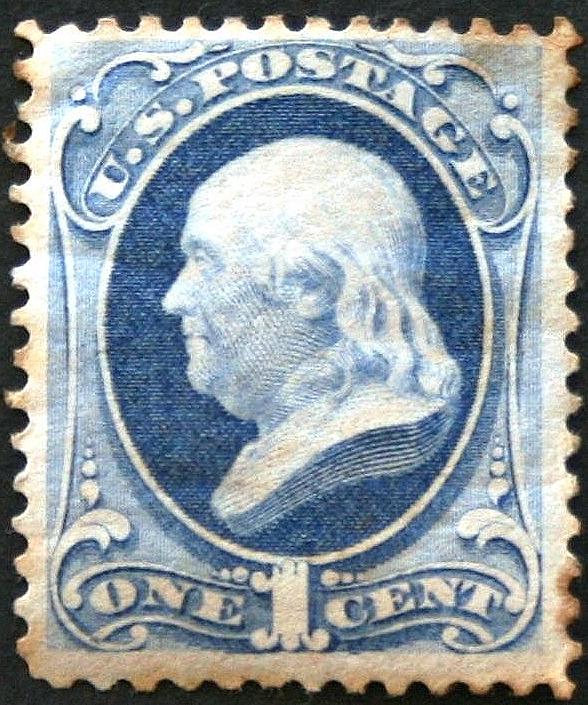
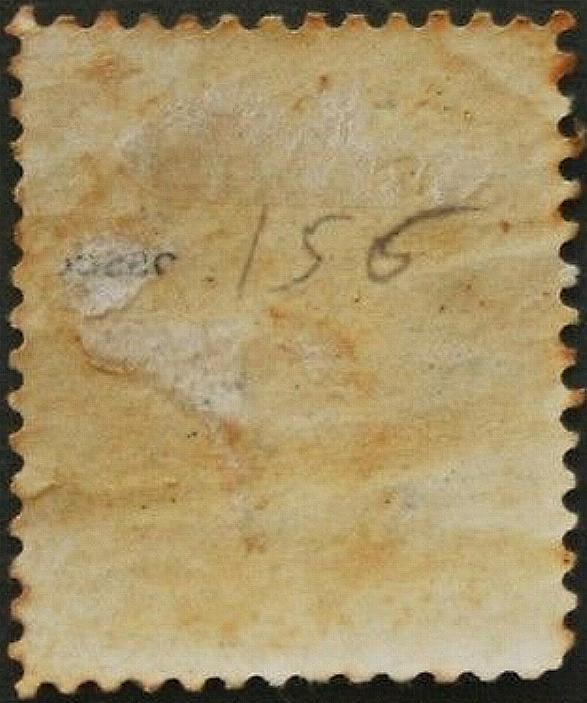
It seems to have quite a bit of "foxing" that is a destructive process that I believe should be dealt with because not doing so will result in further degradation as time passes. There are many threads here that discuss the issue and how to best deal with it including home remedies and purpose made chemicals available to buy.
The stamp is damaged, but some of the effects can be removed and the destructive process can be stopped. Do a search for "foxing" and you'll get many opinions of how to best deal with it. |
Send note to Staff 
|
Ryan = HDNAC = DNA = HDC = Hysterical DNA Collector = Historical DNA Collector = me who just loves stamps :) |
|
|
Pillar Of The Community
United States
1756 Posts |
|
|
Hi, DNA... thank you kindly for posting...
I had followed the discussions in the past few months
about restoring 'foxed' stamps in partial or in total,
and, it was based upon those discussions I purchased
this stamp today as a possible extreme test case, as
I (think) we may be looking at rust staining versus
foxing... I paid only $15, so it's a cheap guinea pig...
Collecting-wise, I'm a stamp collector, not a gum collector,
therefore I have absolutely no qualms whatsoever soaking off
the gum, and 'working' the entire stamp (in the sense), and
I think it would a good first-hand learning experience...
Most of my classice are NG's, so this would potentially be
a nice addition if I can 'pretty it up'...
Randall |
|
Send note to Staff
|
|
|
Rest in Peace
United States
763 Posts |
|
|
Randall.
I would not even consider trying to remove major foxing stains like those. As far as I know, the only way you can remove foxing is with chemicals. I have no idea which ones, but I think it's a pretty serious job. |
|
Send note to Staff
|
|
|
Pillar Of The Community
United States
1756 Posts |
|
|
Pillar Of The Community
1515 Posts |
|
|
disi123 since you care not for the gum, if you do choose to clean the stamp with chemicals, Lindner Mildew Stain Remover is the best way to do so. It removes all signs of mildew and rust - you need both "A" and "B" solutions. Note that the white of the stamp may turn out looking bleached - as always experimentation on cheap stamps is recommended. http://www.lindner-usa.com/pg5_engl...npflege.html |
|
Send note to Staff
|
|
|
Pillar Of The Community
United States
578 Posts |
|
|
IMO, that level of staining is way too severe to remove. It's not some 30-second soak (or even an overnight soak.) It's a $500+ professional restoration job, and even those folks would probably tell you it's too far gone to salvage without coming out the other end looking fake/altered.
Even IF (...and that's a big "if") you were somehow able to remove that level of staining, the alteration would surely be detectable with UV light (and any expertizer seeing that level of bleaching would naturally assume a cancel was also removed and would never give it an "unused" cert.)
IMO, you'd end up with some gaudy looking 156 that could only be certified as a faulty used stamp. |
|
Send note to Staff
|
|
|
Pillar Of The Community
United States
1946 Posts |
|
|
Randall, I inferred from your comments that you bought this stamp specifically to explore the problem and see what you could do about it. It's quite a challenge. Here is a link to a page that gives some referenced info and dialog about the different mold types that produce brown staining and what would be required to deal with them (and still preserve the paper and ink) http://inspectapedia.com/mold/Foxing_Stains.phpNote however, they disagree with some older recommendations for chemical treatments: Quote:
5. Chemical treatments for foxing: For the removal of foxing stains on paper such as stamps and other paper materials, Coleman recommended a now-obsolete procedure that used, in order of increasing severity, immersion in solutions of washing soda, chloramine, sodium chlorite, and potassium permanganate plus oxalic acid. [26]
Watch out: Calvini has warned at this article's FAQs section of this article that procedure #5 above is obsolete, dangerous, and can cause blindness. We list it here only so that readers can recognize it and thus stay away from it.
Watch out: Separately, Tronson warns
There has been no definite cure for neutralising the mildew [it's mold not mildew - Ed] spore, chemical use not only breaks down the paper cellulose but also reactivates the ink so not only do the fibres of the paper break down, after a while and the paper starts to disintegrate and the ink or what ever medium can be rubbed off!
...
Bleach treated or chemical treated papers on the other hand will always be subject to the foxing returning and eventual disintegration. [25]
|
|
Send note to Staff
|
|
|
Pillar Of The Community
United States
611 Posts |
|
|
The first thing to do with your guinea pig is to soak off the gum and see what you have. The foxing does look bad but it would be useful reference for future purchases what you can work over and what you can't. I would agree with most it is a bad example to start with.
I once had a GB 2 1/2p Edward VII ultra. It was mint but had a rust stain on it. It was either toss it or play with it. I tried several solutions, none of which worked. I then tried CLR. The CLR did a good job but also removed about 95% of the color. The stamp was tossed but it was still useful reference. |
|
Send note to Staff
|
|
|
Pillar Of The Community
United States
1820 Posts |
|
|
Quote:
Collecting-wise, I'm a stamp collector, not a gum collector, disi, I respect your posts and your positions on issues, but I have respectfully to comment on this because it's a sentiment that has often been expressed in, if I may say so, a rather holier-than-thou fashion by many collectors. The gum is just as much a part of the stamp as the printed design, the perforations, the overprint, the precancel, or what have you. Individual collectors have their own standards and degrees of acceptance regarding how each of these elements fit into their collecting habits. If someone does not care about the condition of the stamp's gum that it his/her right. What this means is that this person is an ink collector, but no more or less of a stamp collector than the person who pays attention to gum condition. End of thought, not intended to lead to a thread-jacking discussion. |
|
Send note to Staff
|
|
|
Pillar Of The Community
United States
6668 Posts |
|
|
A while back I had a 1¢ Franklin (Scott 24) that I purchased for a buck or 3 due to the imprint capture. I used boiling water, a finger bowl, and tongs and while it did not remove the brown spots (whether rusting or foxing) it did lessen them a bit and made the Stamp itself slightly more attractive. https://goscf.com/t/34910&SearchTerms=Franklin |
|
Send note to Staff
|
|
| |
Replies: 10 / Views: 1,857 |
|




 Posted 03/22/2015 5:36 pm