Quote:
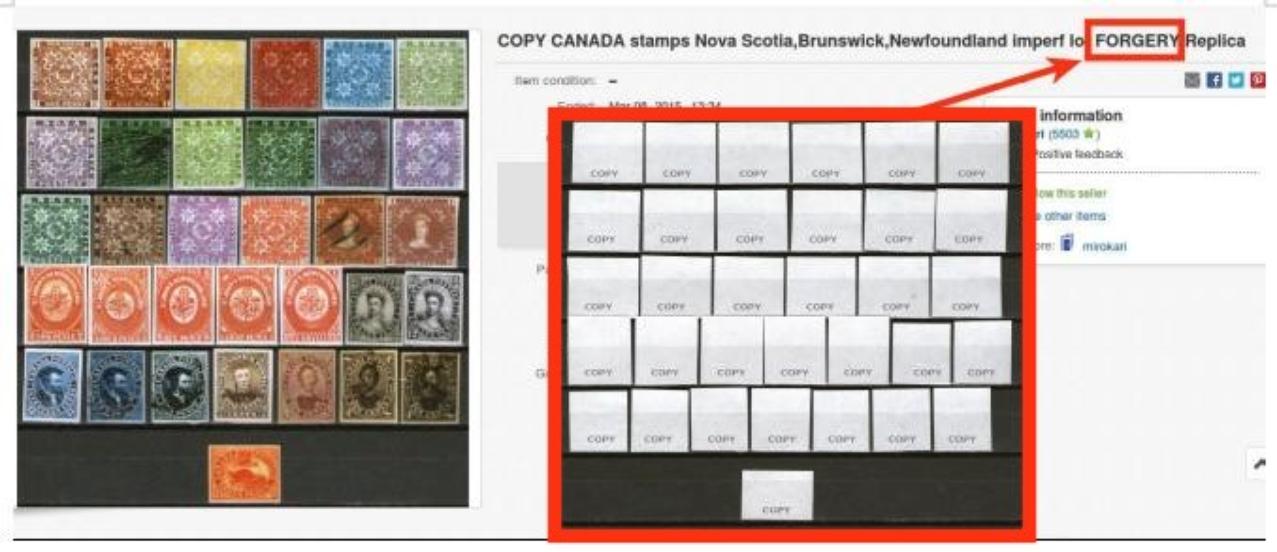
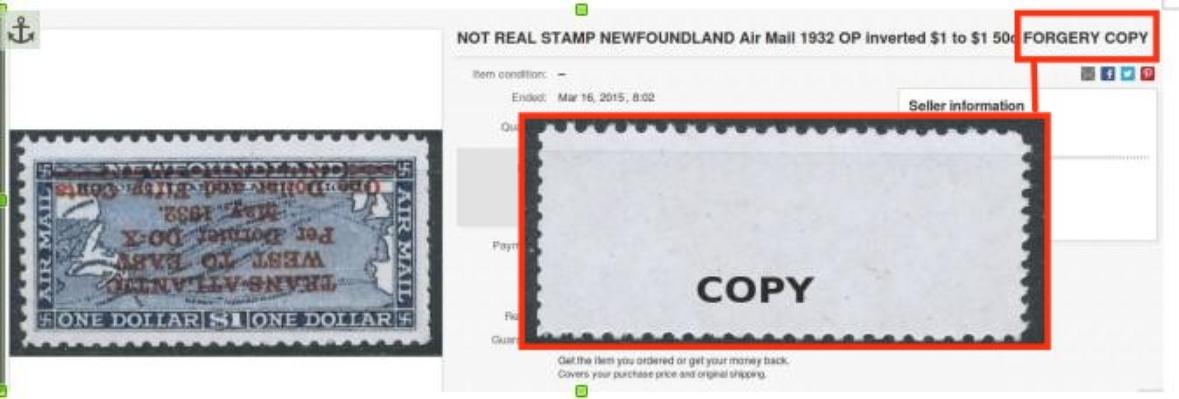
Well, here is a seller calling this REPRINT stamps forgeries.
And when I got them, they did NOT have[sic] copy on the back
Your post shows clearly why the
ebay marking requirement is silly and ineffective. I doubt if more than one or two sellers have ever been busted for photoshopping the back of the stamp with a word like "copy" or "facsimile". While the word copy is somewhat ambiguous, it fits the back of the stamp better assuming that it is actually present. It seems clear that photoshopping the word "forgery" or "Sperati" onto the back of the faux US number 2 listing would detract because some potential buyers would probably not be able to figure out the "wink, wink, nudge, nudge" indication that back image could be ignored, something that repeat buyers would know. The easier solution for the seller was substituting the word "reprint" for "forgery" in the title.
To remind readers of how irresponsible and incompetent
ebay application of "rules", just try to sell stamps from the time of the US military occupation of Cuba after the Spanish-American war. Instead of applying some intelligence to the issue, if there is one,
ebay chose to ban words like "Cuba" from titles, and possibly the description. This did not make the owners of covers from Cuba, NY happy either. I wonder how a hypothetical
ebay seller living in Cuba, NY would fare. It is not clear to me that
ebay has any actual responsibility for enforcing bans on products from embargoed countries. If so, would be up to
ebay to provide sellers a means of defining the country of manufacture and the time period before attempting any enforcement.
What
ebay is doing now is not only incompetent, but it is intellectually lazy, showing a lack of understanding of the philatelic marketplace and their complete lack of common sense. As Bill can attest,
ebay has shown an appalling indifference to the welfare of buyers in the stamp marketplace.
Clark





 Posted 03/21/2015 11:34 pm