| Author |
 Replies: 11 / Views: 2,322 Replies: 11 / Views: 2,322 |
|
|
Valued Member
180 Posts |
|
|
I got it today and now I'm confused,the picture is better than the website picture in my previous post this picture is not perfect but the best I can do,the "brickwork" is better than the picture shows( here at home),and the rectangles along the sides you can see about 40% of the lines down the middle here at home,it's a bit angled(the picture) but it's the best I can hold the camera. Here are the measurements,please guys I know you will question this,I have measured many stamps.For this one I used my perf gauge and a 552 and a 581 as templates,the measurements are correct. Width is 19.25 mm exactly,the height is 22.35 mm. I don't know what this stamp is,the internet says 22.75 mm on one site and 22.5 mm on another(for the 596),the internet said a 552 cannot be 19.25 wide. Can a flat plate 552 be 19.25 mm wide,you guys are the ones to ask,thanks,please help,if yes then mystery solved. 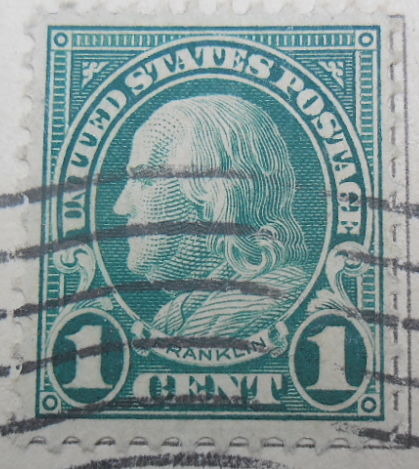 |
|
Send note to Staff
|
|
|
|
|
Pillar Of The Community
United States
2546 Posts |
|
|
Valued Member
180 Posts |
|
|
Sorry I forgot,it's 11 X 11 and this is a better picture for the color. 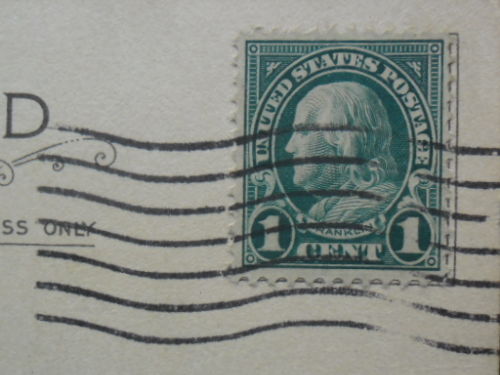 |
Send note to Staff 
|
|
|
New Member
4 Posts |
|
|
*** Edited by Staff - Shill ID for an existing member. Just to be clear, this can get you banned forever. *** |
|
Send note to Staff
|
| Edited by The Internet - 03/30/2015 8:18 pm |
|
|
Valued Member
180 Posts |
|
|
Hi,thanks,I'm here to learn,I like all the input,I agree it's not a rotary stamp,but I wish I knew the size variations you mentioned for the flat plate stamps,I can see having either the height or the width larger,I bought a bag of used stamps from ebay a while back and checked them all while I watched TV,I found lots with wider height or width but never both width and height off by this much,it's .25 wider(width) and .35 wider(length) than the 19 X 22 it's supposed to be,it looks big just by eye,that's why I bought it,I thought it was a 594,it's clear now it's flat plate,maybe it's a 575,19.25 X 22.25 sent through the 11 perf machine(just joking). I'll let APS figure it out,it's not much to send it in,if I don't it will bug me. |
|
Send note to Staff
|
|
|
Valued Member
180 Posts |
|
|
U.S prohibition for alcohol started in 1923 when the 594,595 and 596 stamps were supposed to be made,maybe that had something to do with it LOL. |
|
Send note to Staff
|
|
|
Pillar Of The Community
United States
1414 Posts |
|
|
Again, measurements without reference to another stamp are futile. The height of flat plate sheet stamps and rotary sheet stamps are different enough that a lay down test comparing a flat plate and a rotary press stamp will always show a difference of at least half a frame line width. A laydown test of a flat plate and a rotary coil or coil waste stamp will show a similar size difference. Flat plate booklet pane stamps are slightly wider and maybe shorter than flat plate sheet stamps. While visible in a lay down test, the difference is small compared to the rotary flat plate difference. Unfortunately, the measurements given in the Scott catalog are not precise enough to be helpful or useful.
Keep in mind that the standard size of definitive stamps after 1890 was a nominal 3/4 inch wide by 7/8 inch tall. Shrinkage of sheet stamps would make the width less than 3/4 inch. Booklet pane shrinkage would reduce the height from the nominal 7/8 inch. A rotary press stamp on the other hand will be taller than the 7/8 inch or wider than the 3/4 inch. Use of English measurements should give much better results because the engravers and machinists of the period were not using the Metric system. Scott uses metric measures in the catalog to be politically correct and seems to have no regard or understanding of how useless or misleading their measurements are.
Finally, rotary press stamps "look" different. Look at enough stamps, and the difference will be apparent almost all of the time, even for 1 cent stamps which are the most difficult.
Clark
|
|
Send note to Staff
|
|
|
Valued Member
180 Posts |
|
|
Hi Clark,I did mention in this post that I used a 552 and a 581 as a template,the 552 didn't match up at all,it was way off,the 581 matched up perfectly for the width,19.25,but didn't match up for the height,my 581 template height was just over 22.50,that's why I was confused,my 581 template width was right on but the height is off about .15 mm,or 22.35 or so,and it shows clear rotary characteristics in some places but some flat plate characteristics too but I will concede it's a flat plate. |
|
Send note to Staff
|
|
|
Pillar Of The Community
6352 Posts |
|
|
Huffy, If your 552 template does not match at all, then perhaps some of your templates are incorrect. Can you post a scan of them for us? |
|
Send note to Staff
|
|
|
Pillar Of The Community
United States
1414 Posts |
|
|
I am not sure my message was clear or not. The "difference" you describe of .15 mm is about .006 inch, almost too small to be seen. A picture or scan of the lay down test would be worth a thousand words. I described the test as a go or no go test. A rotary press stamp must be taller or wider than the original 3/4 x 7/8 inch size of the die. A flat plate stamp will not extend beyond the 3/4 by 7/8 inch. Variations in shrinkage due to the paper mesh or grain can be expected. If the stamp is smaller than the die, it must be a flat plate stamp. If it is larger than the die, then it is a rotary press stamp. By "larger", I mean about 1/2 a frame line or maybe 1/2 mm. Others have reported "short" rotary press stamps, but proceed with extreme caution. Soaking a stamp for a few days can result in some shrinkage. How much? I don't know, but I don't need to know there are still other ways to determine if the stamp is a rotary or flat plate printing. Except for the perf 11 coil and sheet waste, rotary perforations will be aligned between rows (side to side on horizontal coils) or top to bottom on vertical coils and sheet stamps. All of the perf 11 coil and sheet waste stamps are distinctive enough in appearance to stand out from the flat plate population or later rotary production based on shade and the amount of ink wash in the unprinted areas of the stamp.
Clark |
|
Send note to Staff
|
|
|
Rest in Peace
United States
763 Posts |
|
|
Quote:
All of the perf 11 coil and sheet waste stamps are distinctive enough in appearance to stand out from the flat plate population or later rotary production based on shade and the amount of ink wash in the unprinted areas of the stamp.
Clark
The last part of Clark's post is important and one which inexperienced collectors (and dealers!) often overlook. I would guess that 80% of the pre-1930 rotary stamps will show a certain amount of ink wash. Flat plate stamps do not. So look - especially in the white areas of the stamp, for traces of the "streaky ink". Another thing to look for with off-cover stamps is whether there is any ink set-off on the back. Flat plate stamps virtually always has some set-off ink on the back while rotary stamps do not. So the first easy test when you think you have a rare rotary stamp is turn it over and check for set-off on the back. |
|
Send note to Staff
|
|
|
Valued Member
180 Posts |
|
|
Hi,OK,thanks everybody,I have just put up another post I would like you guys to look at,it's a 134 stamp but has a full grill. |
|
Send note to Staff
|
|
| |
Replies: 11 / Views: 2,322 |
|




 Posted 03/30/2015 1:22 pm


