Quote:One of our experts, cfrphoto/Clark said in another thread that searching through large quantities of groups such as the 1908 series 2c Washingtons can be very rewarding. I wonder if he was the winner of a recent
ebay auction of 5000 of them that came from Northern Europe. He made that statement shortly after the auction lot would have shipped.
Not me. I haven't bought anything on
ebay for a couple of years. I don't find much profit buying on
ebay to sell on
ebay. Anyway, I am still working off a lot of 300,000 mostly Washington/Franklin stamps bought a few years ago.
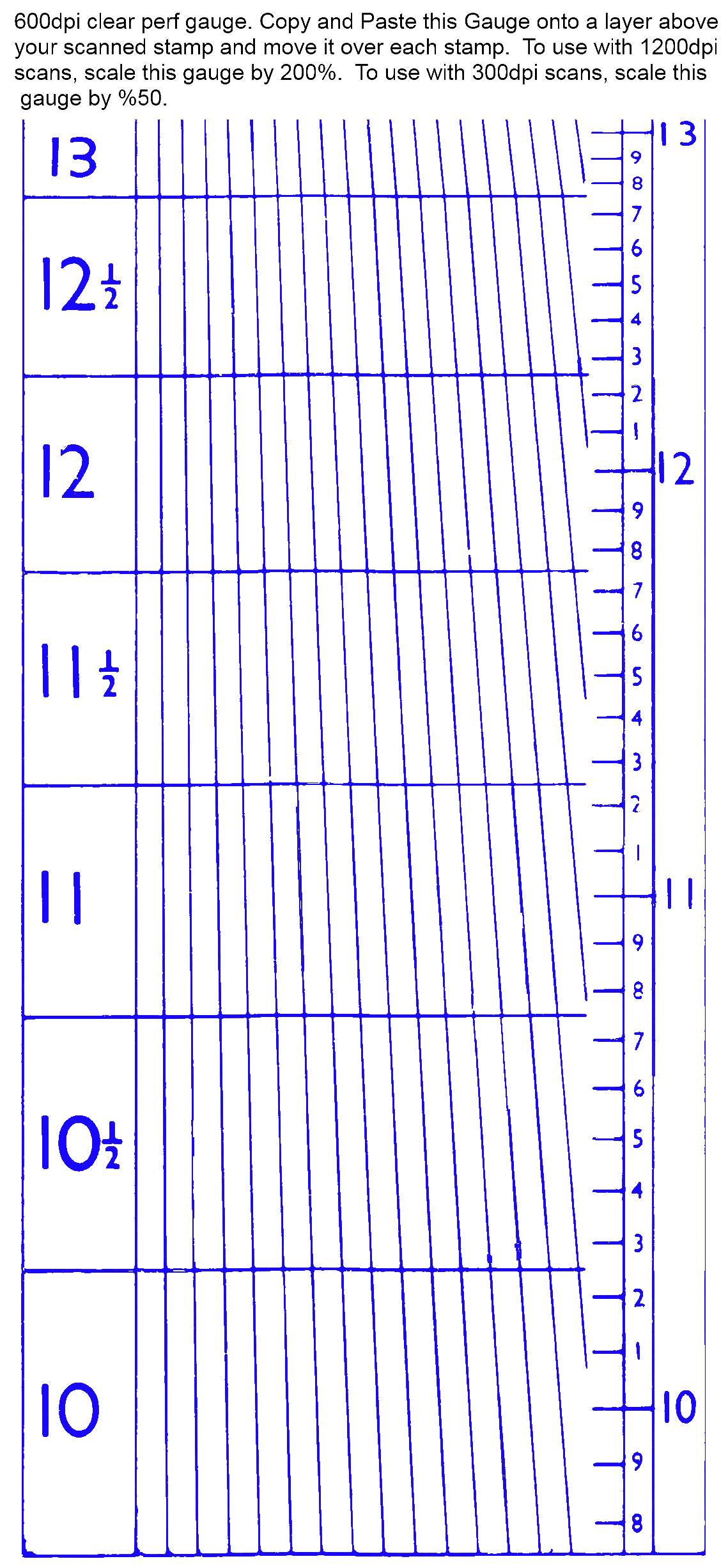
Also, I am puzzled about this on line perforation gauge. If one must use a perforation gauge, the Kiusalas or Multi-Gauge would be much more accurate for US stamps. But, using another stamp is so much easier. In case the image is on line, counting the perforations and holes between the extension of the frame lines top and bottom is a quick filter. It is also possible to count the side perforations and count them on an actual stamp.
The problem I see in the initial post is an image of a 2 cent flat plate block from the corner of a sheet juxtaposed with mention of the type II rotary press Scott 539. I am surprised that anyone responded because rotary press coil stamps were from a much different sheet layout. Also the appearance of rotary press and flat plate stamps of the period are quite different. To fully understand Washington/Franklin stamps and develop a quick way to remember the various perforations and types, start with the business problem. The Bureau of Engraving and printing could barely keep up with the demand for stamps and had serious quality issues. Then, learn about the production methods used to produce the stamps, especially the development of the Stickney rotary press.
I don't see much value in continuing to respond to speculation about perforation varieties never reported after almost one hundred years. While some of the reported varieties like perf 12 x 10 and 10 x 12, type II coil waste, perf 11 sheet waste and the later perf 10 on one side anomaly are quite rare, the logic of their existence is well understood, if not well documented. Inventing new varieties where none exists is unnecessary. We have enough reported varieties. Even then new discoveries like unreported plate numbers still turn up and are reported in the United States Bureau Specialist.
It is time for more members of this forum to join the United States Stamp Society and check out various back issues, now on line, before making up new varieties and posting here.
Clark





 Posted 04/05/2015 10:17 pm