|
This page may contain links that result in small commissions to keep this free site up and running.

Welcome Guest! Registering and/or logging in will remove the anchor (bottom) ads. It's Free!
To participate in the forum you must log in or register.
| Author |
 Replies: 36 / Views: 7,244 Replies: 36 / Views: 7,244 |
|
|
|
Pillar Of The Community
United States
1946 Posts |
|
|
I want to thank you one and all for the honest and candid replies. I see this can be an emotional issue, so I respect your willingness to say ANYTHING. Some have preferred to tell me how they FEEL about reperfed material without commenting on how that would impact the price they would pay (even if it is zero). That's cool. No problem. But I am looking for a sense of the principles one applies to a purchase decision, not so much in black and white areas, but in the gray of it all. So here's a case study for those game to play. What would you do with this one? What would you pay? The pic and catalog description (not from ebay): U.S. #119. Auction cat description: 15 Brown & Blue, Type II (119), VF, fresh & well centered, possibly reperfed at top, light cancel, rich colors, cat $250.00. 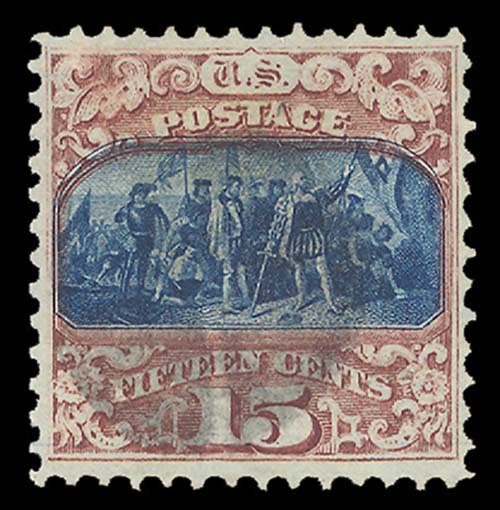 The item was sold, not to me, and is not available. Academic discussion. I haven't done the Srail test yet, but I am more wary of the perfs on left than on the top. |
Send note to Staff 
|
| Edited by essayk - 04/18/2015 2:44 pm |
|
|
Pillar Of The Community
United States
937 Posts |
|
|
Quote:
But I am looking for a sense of the principles one applies to a purchase decision, not so much in black and white areas, but in the gray of it all. essayk, great topic for discussion. For you latest questions, are you looking for more detail about how the different variables interplay when making a decision? Are you looking for more detail about the decision making process from each viewpoint? |
|
Send note to Staff
|
Ryan = HDNAC = DNA = HDC = Hysterical DNA Collector = Historical DNA Collector = me who just loves stamps :) |
|
|
Pillar Of The Community
Guatemala
1501 Posts |
|
|
To lump any changes as "...altered to deceive..." seems a bit unfair. There are a number of experienced, honorable individuals and companies that are in the business to professionally restore, not deceive. Regummed and margins added (but not necessarily margins repaired) may however, fit the "altered to deceive" category. No doubt a number of valid objections to stamp restoration exist but there are also valid reasons to restore. For me, improving a stamp by just a minimum would make my crappy looking stamps look less crappy is in my book a plus. I might add that I am in favor of full disclosure of any restoration or changes be required for selling such stamps. BTW, my posts are not meant to belittle anyone's opinion. We all have them and are inclined to follow our opinions, so hearing each other out is a great way to become better educated. |
|
Send note to Staff
|
| Edited by quigngt - 04/18/2015 6:09 pm |
|
|
Pillar Of The Community
Guatemala
1501 Posts |
|
|
essayk, to answer your question on the #119 shown, I would not hesitate to pay at least 50% cat, if I had the extra money to buy it. |
|
Send note to Staff
|
|
|
Pillar Of The Community
United States
845 Posts |
|
|
I could pay 25%, maybe more for the #119 above, if as described, but I bet that would be a lowball offer that would lose in an auction. It looks sweet to me. I don't give a rats bottom whether it was enhanced by reperfing. It's done in art works all the time in the name of restoration, and stamps are art to me. |
|
Send note to Staff
|
| Edited by HungaryForStamps - 04/18/2015 7:09 pm |
|
|
Rest in Peace
United States
205 Posts |
|
|
I think the way to look at it is to ask which has more value - a stamp with a straight edge or the same stamp with that edge having fake perforations? The answer, I think, starts with answering the question - is the "reperforated" stamp being offered as such or as a sound stamp? Clearly, if the seller thinks he can do a good enough reperforating job that at least one buyer will be fooled, or that a buyer will eventually come by who doesn't care about such things, then the reperforation adds value. However, if the seller is not so ethically challenged then the choice to "reperforate" comes down to whether his clientele will buy it over a stamp with a straight edge.
We all know stamps with straight edges languish in dealer's stocks. And generally speaking, collectors who would never buy a reperforated stamp will typically pass on one with a straight edge, too, unless looking for a position piece. But by enhancing the look of the stamp it can become more easily sold. So by being able to move a stamp sooner than later, a reperforating job adds value even if it doesn't increase sale price because several reperforated stamps, even if disclosed as such, might turn over in the time a single straight-edged stamp will.
Taking that argument a step further, the seller doesn't have to do the reperfing or even know who did it; if he can buy it for the same price as a straight edged copy and believes he can sell it faster than a straight edged copy then his profit will be multiples over a straight-edged stamp. For example, if he can sell either a straight-edged or reperforated stamp for a ten dollar profit, buying and selling each for the same price, and he will sell four reperfs in the span of time that will see one straight edge sell, then he'll make $40 off reperfs in the same time he'll make $10 off the straight edged stamp.
Bottom line - volume - if sold for the same price, the reperforated stamp will be attractive to a wider collector base and will turn over faster than the same stamp with a straight edge. The fact that an item will turn over faster means it has more value. |
|
Send note to Staff
|
|
|
Pillar Of The Community
United States
1820 Posts |
|
|
For me classic stamps are like historical artifacts, analogous to antiques. There is an artistic dimension in both cases, but the historical aspect is the main thing for me. So any repair, restoration or enhancement (the worst case, adding something that wasn't present in the original) devalues the stamp vis-a-vis an unaltered "sound" specimen. For me. As I said in an earlier post, there are cases in which an unaltered sound example is extremely rare, in which case you take what you can get. But for stamps that are readily available, like the ones under discussion here, I would take a sound straight-edge example over one with perfs added 100 percent of the time, all other things being equal (the cancellation, the plate position, marginal markings, etc.). For me, this is choosing between a genuine item and an attractive fake. Admittedly, like most collectors, I would also take a genuine example with perfs on all sides over a straight-edge copy.
|
|
Send note to Staff
|
|
|
Valued Member
United States
344 Posts |
|
|
In response to Rileysan... Quote:
I'm curious what our members here would have paid I would have offered $35 for the #114 with the guide arrow as pictured -- ONLY because I have not yet found an example for my specialized collection. Were this a sound, straight-edge copy I would be willing to pay more for it, but that $100 asking price falls into what I call "stupid money" and so I would (sadly) walk away from it. |
|
Send note to Staff
|
|
|
Valued Member
United States
344 Posts |
|
|
In ressonse to essayk... Quote:
What would you do with this (Sc.119)? What would you pay? I agree with you on the LS perfs being more suspicious, as the other three sides all show wide holes and thin tips (no comment on my srail test). Assuming it is otherwise sound, as it is better centered and cleaner than the one currently in my US collection, here is how I would bid: - on ebay, $75 and ignore it until ~12hrs before close and think hard about a snipe if that bid was still competitive.
- an auction house bid of $100 and happy win or lose.
- at a bourse, somewhere between those two price points, but I'd try trading for it first.
|
|
Send note to Staff
|
|
|
Valued Member
United States
344 Posts |
|
|
I really struggle with re-perfed stamps. I LIKE straight-edge stamps because that is the way they were made! On the other hand, I also like having obtained a few r/p stamps of which a "true" sound stamp is beyond my budget. In my opinion, an attractive re-perf like the stamps in this thread looks better than an example with visible damage. Yes, I consider most re-perfed stamps to be faulty, likely less-so than a collector a level or three above me would. I judge each stamp on its own merits (or lack thereof): - Was it done to "pretty up" the stamp?
- Was it done well or does it detract from the stamp visually?
- Was it done to fraudulently make a common stamp into something rare?
It would be wonderful if I were in a position to collect classic material of just the finest quality available. I'm just not. There is a market for lower quality material for a reason. |
|
Send note to Staff
|
|
|
Pillar Of The Community
2013 Posts |
|
|
Quote:
For me classic stamps are like historical artifacts, analogous to antiques. There is an artistic dimension in both cases, but the historical aspect is the main thing for me. Museums restore paintings, a restored Rembrandt have less value? The only artistic value in stamps is the work of the engraver and designer. For me, the paper and perforation are not art, it's just the canvas. |
|
Send note to Staff
|
|
|
Pillar Of The Community
United States
1946 Posts |
|
|
I have been truly intrigued by the range of responses to the questions in this thread. I sincerely thank all who contributed their thoughts.
Since no one denied that reperfing was a form of alteration, the stamp in question was perceived by all as "damaged goods." But it is damage with an edge to it. Unlike incidental damage from usage or storage, this is intentional damage. Everyone recognized that reperforation is a form of tampering, but there was some difference of opinion about how serious a problem that is for them as buyers. A polarity developed. For some it was akin to fraud and unacceptable at any price. For others it was viewed as enhancement, akin to the kind of cosmetic improvements that come with restoration. The purists among us decry ANY form of enhancement, but most seem willing to tolerate it under certain conditions. Intuitively I suspect that those with the strongest reaction against this kind of defect, calling it fraud, load it with a heightened emotional response to being deceived or misled by the perpetrator or seller. They don't tolerate being deceived. Those not freighting it that way tended to weigh the merits of the altered stamp for their collections.
Among those who would consider buying a reperfed stamp it was clear that price mattered, as always. We had three test cases that gave a lot of food for thought about how and when some reperforation might be tolerated. When a stamp is very scarce to rare, respondents seemed to be more tolerant of reperfing if it was done well and made the stamp appear more attractive. But they wanted to be sure the alteration was noted by the seller, and that the price reflected a significant reduction. How much of a reduction they expected depended upon the perceived rarity of the item or its overall desirability. I was intrigued that there was a fair amount of interest in the 15c Pictorial (up to 50% of cat) and almost no interest in the 2c Jackson. I did not test it, but I surmise that nearly everyone assumed that the Jackson was the common #73, with nowhere near the cat of the #119. In fact however, this one has an E-grill with a cat value not far from that of the #119. However, I don't know if that would have made a difference or not, because the Pictorials have an aesthetic fascination for collectors of today that is greater than that of the 1861-68 issues. Perhaps I should have tested that, but the thread has gone on long enough.
The concise comment by wert stated the obvious, namely that the price one would pay depended upon the demand for it [my paraphrase]. This thread was meant to be an exploration of the factors of that demand. For an individual collector the biggest factors would seem to center on the perception of utility (how do I need it) and the perception of authenticity (how bad a fake is it). The authenticity question is more or less objective and fairly easy to address. Perhaps that is why it gets more discussion than the very imprecise and subjective matter of utility.
So that prompts a question for another thread.
How do you decide when you "need" a stamp, and how does that effect what you will pay to get it?
|
|
Send note to Staff
|
| Edited by essayk - 04/20/2015 10:18 am |
|
|
Pillar Of The Community
1151 Posts |
|
|
The stamp is only worth what the buyer (if one could be found) is willing to pay for it. Listed catalog is just a guide, just an estimate for a certain stamp in a certain condition. If the catalog value given is $100, but the only buyer only offers $10, the owner accepts the offer, then the value at the transaction is $10. This is what a reperfed stamp is worth!
Dave |
|
Send note to Staff
|
|
|
Moderator

United States
12330 Posts |
|
|
I am not so sure the discussion boils down to the polarity mentioned. I assume many of us adjust our attitudes towards reperfs in our own collections based upon cash considerations. Many of us have reperfs filling spots where we can't afford better specimens.
But I saw no posts which supported the offering of a reperf stamp without full disclosure. An ethical line exists here which could be explored a bit more. If you have a reperf stamp and go to trade or sell it, do you mention it to the potential buyers? What if you only suspect it is a reperf but aren't really sure; do you still bring it up?
Given some of the responses I see from the sellers that I communicate with at Stamp Smarter; the ethical line falls in many places. Sometimes I simply do not understand the logic such as with, "well I bought it that way so that is how I am offering it". And I sometimes get a variant of the 'ignorance' response, "I really don't know, I am just selling this for someone else". Most often seen is the, "hey, I posted a good image, buyers beware". But in about 40% of the communications we get folks who will improve their listings. These responses generally sound like, "thank you, I was wondering if the right side was reperfed. I'd rather improve the listing now than have a angry customer returning the stamp later".
And we also have only discussed r/p in terms of having one. It would be interesting to know if anyone is willing to admit that they actually clean up perfs on their own stamps. Obviously giving a stamp a clean bath and perhaps uncurling a folded perf would be considered acceptable by most folks. But what about reperfing a few ragged holes? I am sure many off us would support the 'right' of an owner to do what he wishes with his property. (I have no heartburn with anyone who has altered every stamp in his album. Some would shudder to think that someone might alter a rarer specimen. But I 'got over' this feeling after watching thousands of rare cars being consumed for things like Hollywood movies.)
There are many interesting ethical justifications and positions on this topic; but they all seem to have dependencies upon 'disclosure'.
Don
|
|
Send note to Staff
|
|
|
Pillar Of The Community
United States
2963 Posts |
|
|
One of the questions I alluded to that no one attempted to answer:
Regarding stamps with perfs added to natural straight-edges, would it be acceptable to cut-off the added perforations to restore the natural straight edge? In the case of my 114 with huge margins, no one would ever know the difference! Does this still make my stamp faulty in the minds of those who devalued it for the added perfs?
Brian |
|
Send note to Staff
|
Brian Riley
APS 223349 |
|
|
Replies: 36 / Views: 7,244 |
|
|
To participate in the forum you must log in or register. | |
 My First Stamps Help Newbie.help With Stamp Identification (J29) Inherited These Stamps, Are They Genuine? APS Membership Discount Metropex Stamp Show: Roseville, Minnesota October 23-24 Weird Covers, 1885,1886, And 1982 For Users Of Two-Post Blue International Albums What Is Your Experience With Binders. New Member Posting Image Of Avatar, Front And Back Of U2 Cut Square, Market Value Or References? Working On An Offline Collection George Washington 3 Cent 1861 With Print On The Back Hello From The Netherlands - New Member Then And Now, From Old Postcards New Member Wanting To Add An Avatar Sparks Auction Fees? 163 VF Nyfm Vertically Ribbed 163 XF Quartered Cork, Labeled Jumbo 136 VF Quadruple Split H Grill Nashville Philatelic Society-Your Invitation To Our Auction Night Meeting Monday, October 26, 2026 Nashville Philatelic Society-Your Invitation To Our Meeting Monday, October 19, 2026 Christmas Around The World 2026 C.e. In The Large Queen Cancel A More Condensed Album Page Experiment. US Scott #3 Postmarked Or Fake? Linn's Is Back - The Newspaper Is Back In Print Lots Of 1867 Grills On Sale My First Stamps Help Newbie.help With Stamp Identification (J29) Inherited These Stamps, Are They Genuine? APS Membership Discount Metropex Stamp Show: Roseville, Minnesota October 23-24 Weird Covers, 1885,1886, And 1982 For Users Of Two-Post Blue International Albums What Is Your Experience With Binders. New Member Posting Image Of Avatar, Front And Back Of U2 Cut Square, Market Value Or References? Working On An Offline Collection George Washington 3 Cent 1861 With Print On The Back Hello From The Netherlands - New Member Then And Now, From Old Postcards New Member Wanting To Add An Avatar Sparks Auction Fees? 163 VF Nyfm Vertically Ribbed 163 XF Quartered Cork, Labeled Jumbo 136 VF Quadruple Split H Grill Nashville Philatelic Society-Your Invitation To Our Auction Night Meeting Monday, October 26, 2026 Nashville Philatelic Society-Your Invitation To Our Meeting Monday, October 19, 2026 Christmas Around The World 2026 C.e. In The Large Queen Cancel A More Condensed Album Page Experiment. US Scott #3 Postmarked Or Fake? Linn's Is Back - The Newspaper Is Back In Print Lots Of 1867 Grills On Sale
APS Membership Discount My First Stamps Help Inherited These Stamps, Are They Genuine? Czech Stamp Engravers 1851-57 12c Washington Newbie.help With Stamp Identification (J29) What Did You Do Philatelically: Today Or Recently? Collecting By Engraver Soviet Union Stamp Engravers Spain Stamp Engravers On The Road Again - Eye To Eye With The Local Postal Authority For Users Of Two-Post Blue International Albums What Is Your Experience With Binders. Children On Stamps Lets See Your Souvenir Sheets! World Post Day And International Letter Writing Week Christmas Around The World 2026 Working On An Offline Collection What Is The Strangest Or Most Unusual Stamp Material You Own? Weird Covers, 1885,1886, And 1982 Gems And Minerals Metropex Stamp Show: Roseville, Minnesota October 23-24 New Member Posting Image Of Avatar, Front And Back Of U2 Cut Square, Market Value Or References? Hello From The Netherlands - New Member Lakes, Marshes, Mangroves, And Wetlands On Stamps Show Your Film And Music Star Stamps
Disclaimer: While a tremendous amount of effort goes into ensuring the accuracy of the information contained in this site, Stamp Community assumes no liability for errors. Copyright 2005 - 2026 Stamp Community Family - All rights reserved worldwide. Use of any images or content on this website without prior written permission of Stamp Community or the original lender is strictly prohibited.
Privacy Policy / Terms of Use Advertise Here |
| Stamp Community Forum |
© 2007 - 2026 Stamp Community Forums |
| It took 0.39 seconds to lick this stamp. |
 |
|
|
|


 Posted 04/18/2015 2:41 pm


