Thanks for flagging those yellow/olive green "cancels." They are now on my "suspicious" list. If I may, could we take a better look?
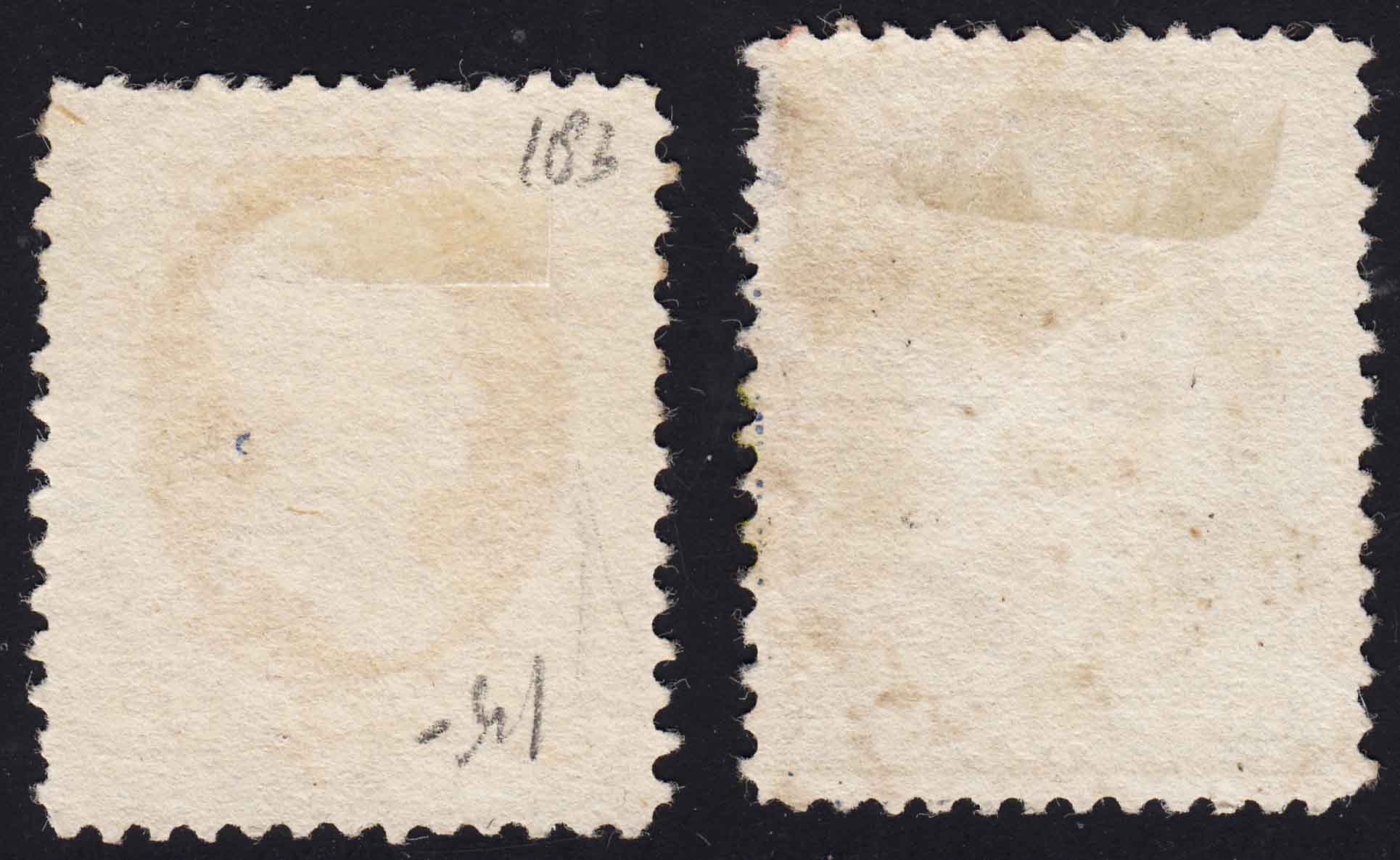
First to your question about "bleed-through." Here are the reverses, with the 2c vermilion on the left:
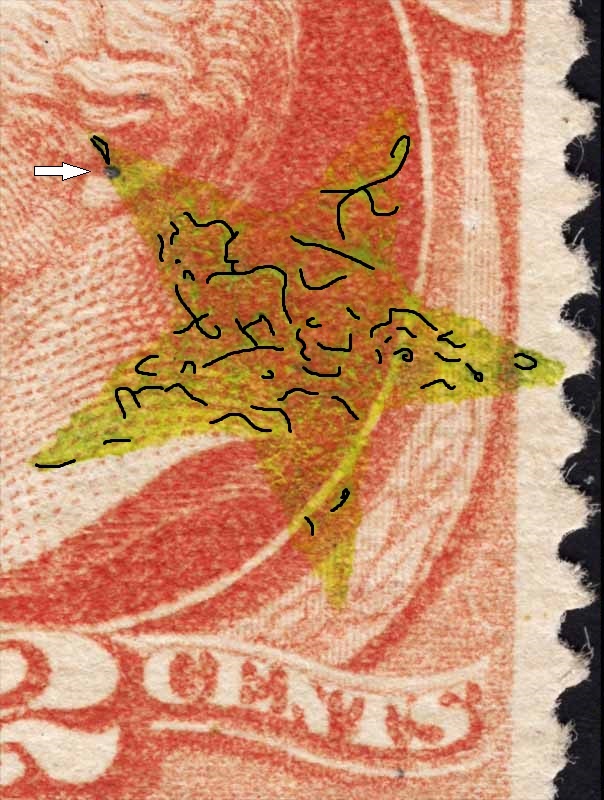
Here is a closer look at the 2c vermilion (#183) and the #212 1c of 1887.
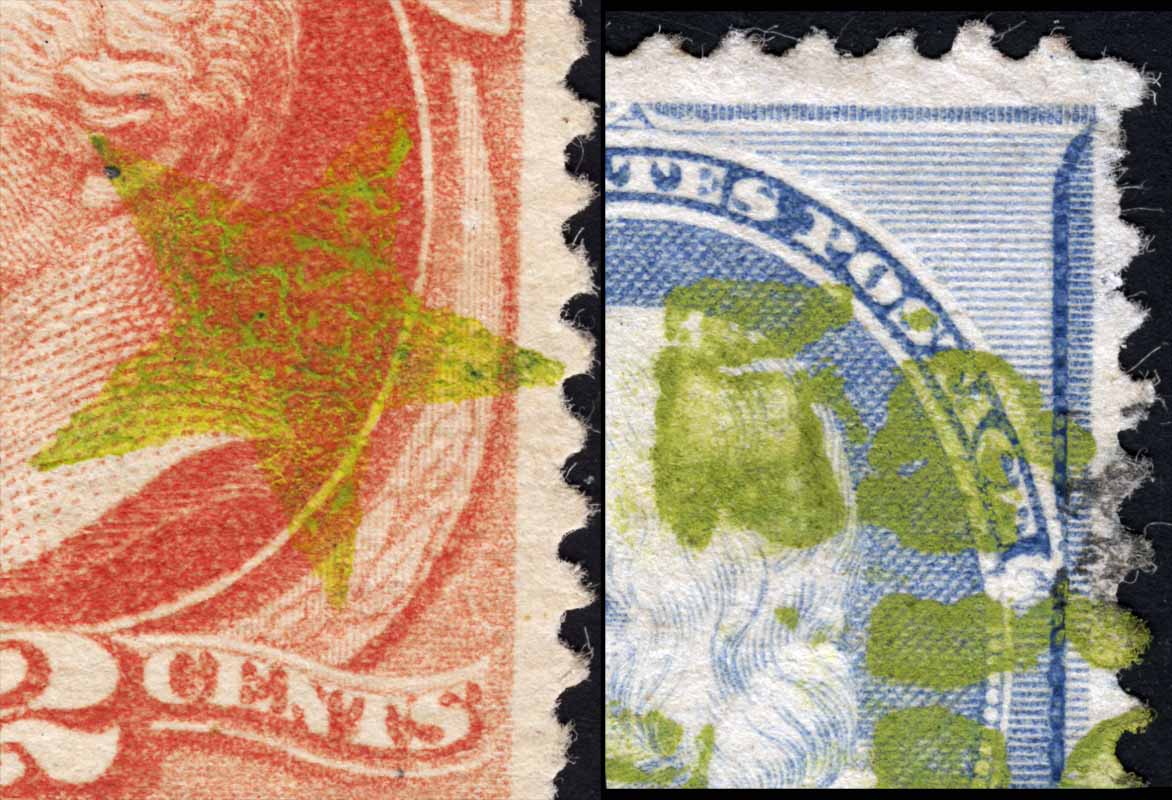
These were scanned side by side according to the same scale, and color adjusted to the same specs (uncalibrated system however). The color match for the cancelling ink is dead on to my eye. I cannot tell if the ink on both had the same viscosity, but it is "clumped up" on both stamps even though the effect is more pronounced on the vermilion example. I tried to select a spot on the 212 where the black cancellation, which is very fragmented, was able to be seen in proximity. I think the olive ink shows up as heavier in this image, but that may only be because I know it to be so.
I am a bit chagrinned by this since the two stamps were acquired 20 years apart and the earlier (#183) had been purchased from a reputable seller known to me circa 1991. Without validation I assumed the olive ink was unusual but okay, so when the #212 came along in 2011 from an
ebay seller I went for it. Didn't notice the residual black cancel in the seller's pics.
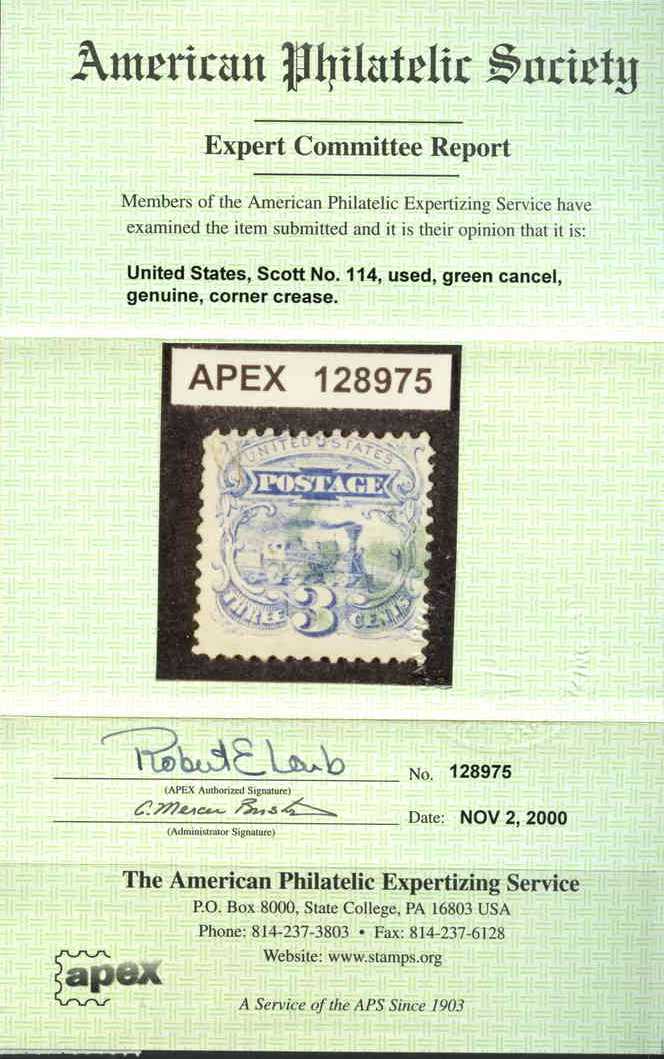
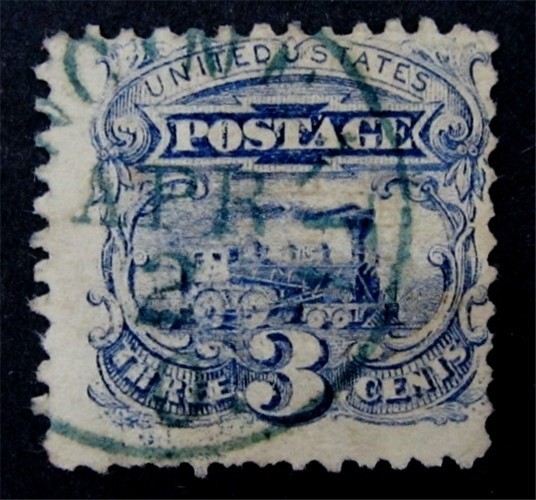
Now I'd like to ask your (group) opinion on another item I bought from Rich the same day that I bought the 2c vermilion. They have adjacent numbers in my old acquisitions database.
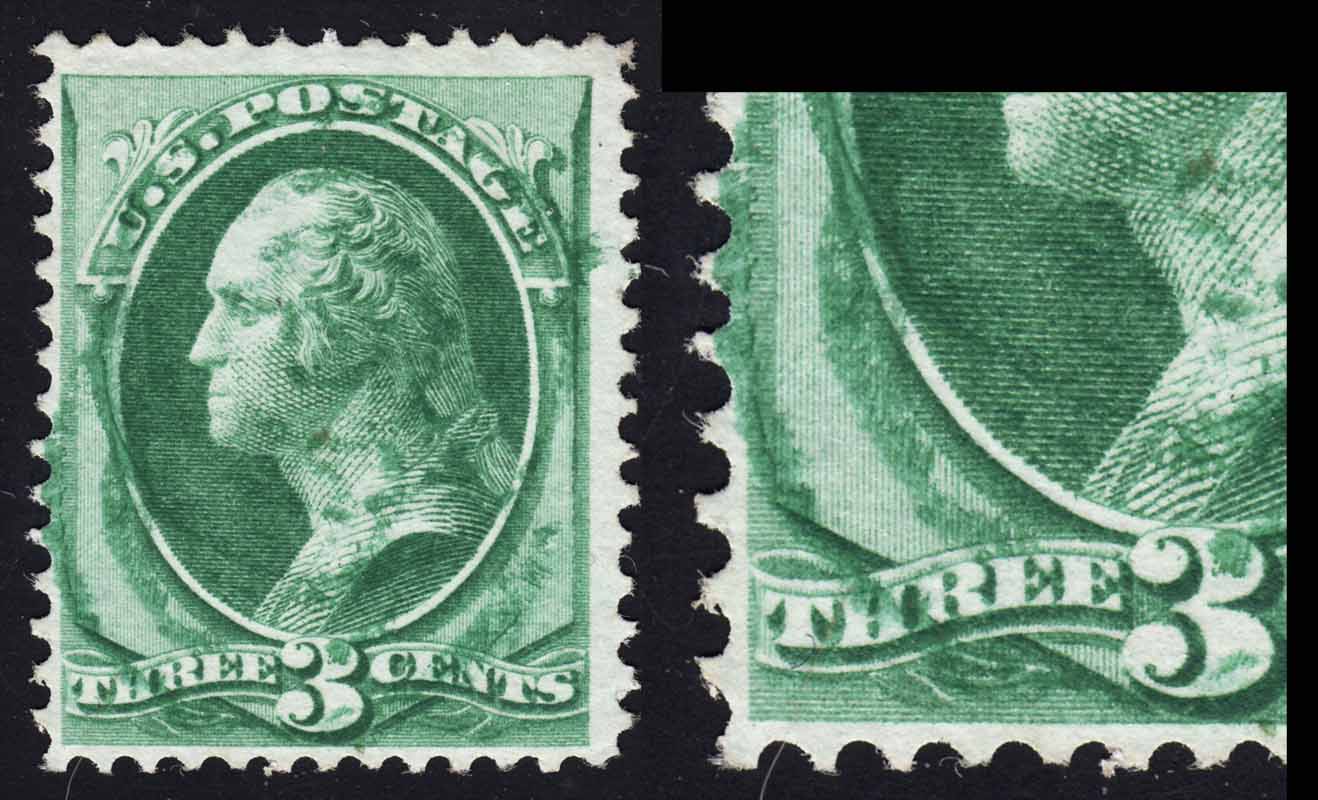
The cancellation appears to be a slight double strike of a concentric ring killer. This I think is a normal green with no hint of a black cancel on the stamp. But my experience with green cancels is quite thin, and I do not consider myself much of a judge on them.
How does this one look so far?





 Posted 04/27/2015 11:07 am


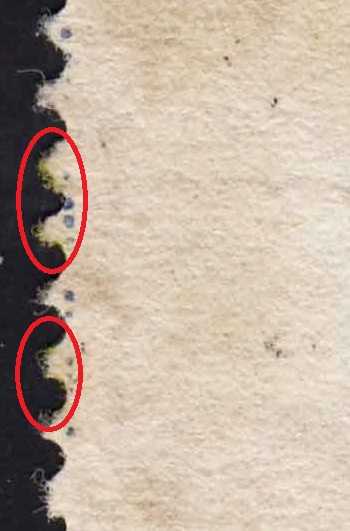




 , but it's
  .
.
