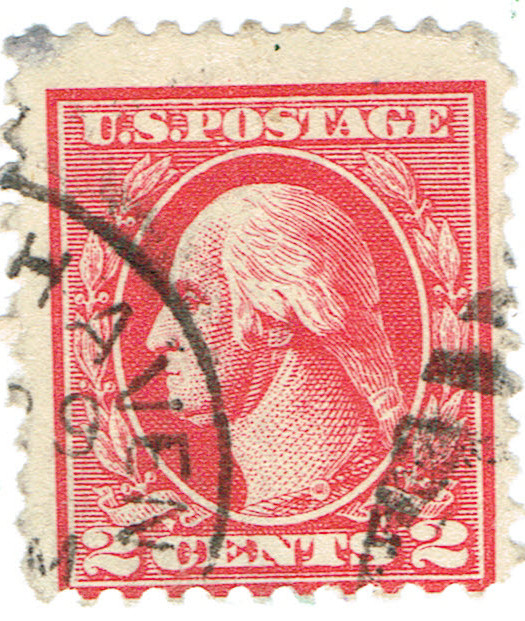
The offset plate making process starts with a large negative made by photographing a complete sheet of 400 stamps. The plate impression is captured by exposing emulsion on the plate to strong light through the negative similar to making a contact print. When the plate is "developed", the exposed parts of the emulsion remain while the unexposed parts are washed away.
After the plate is wrapped around the plate cylinder on the press, ink is transferred to the plate and then to a transfer roller and in turn to the paper. While it is possible for the plate to be damaged and lose some printed area, adding to the printed area either occurred because of a fleck on the negative or extraneous ink ending up on the transfer roller. It would seem like a fleck on the negative is more likely. Several fairly complete discussions of the offset printing process exist on the web. The Wikipedia article includes a diagram:
http://en.wikipedia.org/wiki/Offset_printingClark





 Posted 05/13/2015 07:01 am