| Author |
 Replies: 20 / Views: 3,065 Replies: 20 / Views: 3,065 |
|
Moderator

United States
5107 Posts |
|
|
Not much value, but interesting to see. I just picked these up in the 10 cent box at my local club. The pair has position dots on both stamps, but not quite in the same place. Fun to find! Together, left and right closeups. 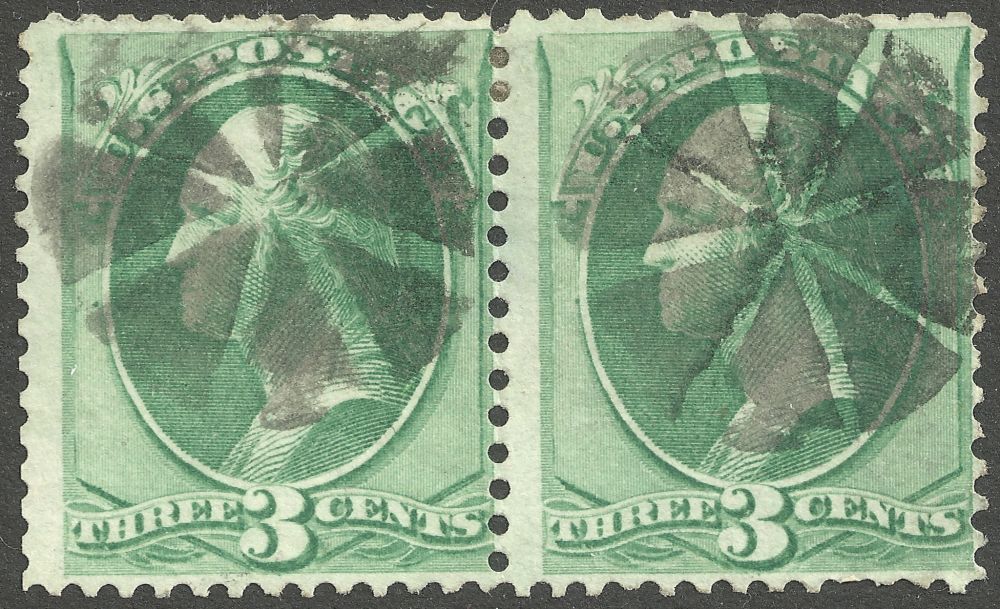 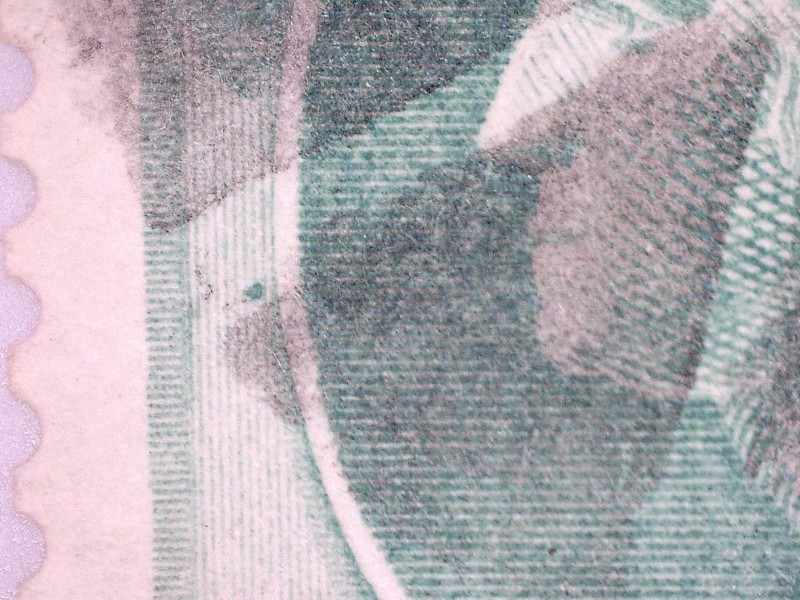 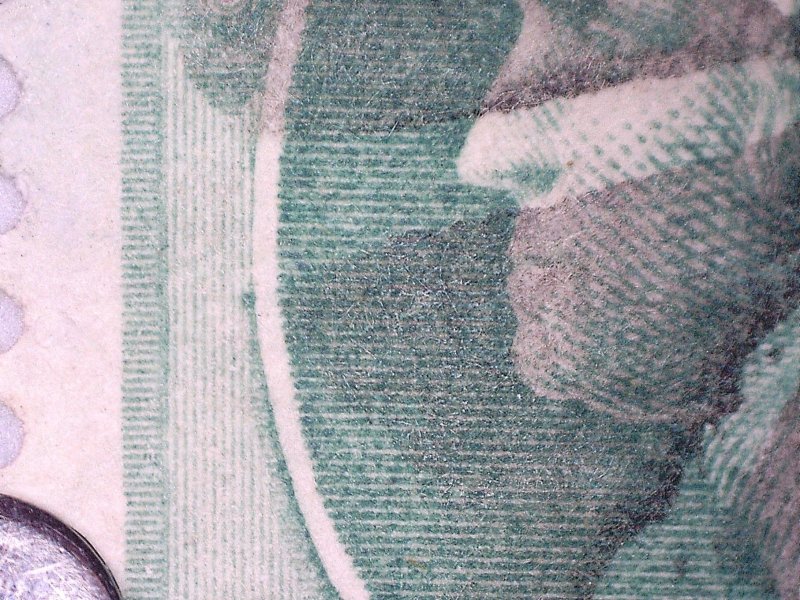 |
|
Send note to Staff
|
|
|
|
|
Pillar Of The Community
United States
1946 Posts |
|
|
Yes, those are fun to find, especially in a pair like this. But what is that going on in the LL corner of the lower pic? |
Send note to Staff 
|
|
|
Pillar Of The Community
United States
8956 Posts |
|
|
Moderator
United States
5107 Posts |
|
|
Quote:
But what is that going on in the LL corner of the lower pic? Those would be my stamp tongs. I had to hold them down a bit to get the clearest picture. Couldn't crop out the rest. In the same purchase, I got another pair, but noticed some extra marks below the "3". Anything significant here, or just normal? (No extra tongs this time.) 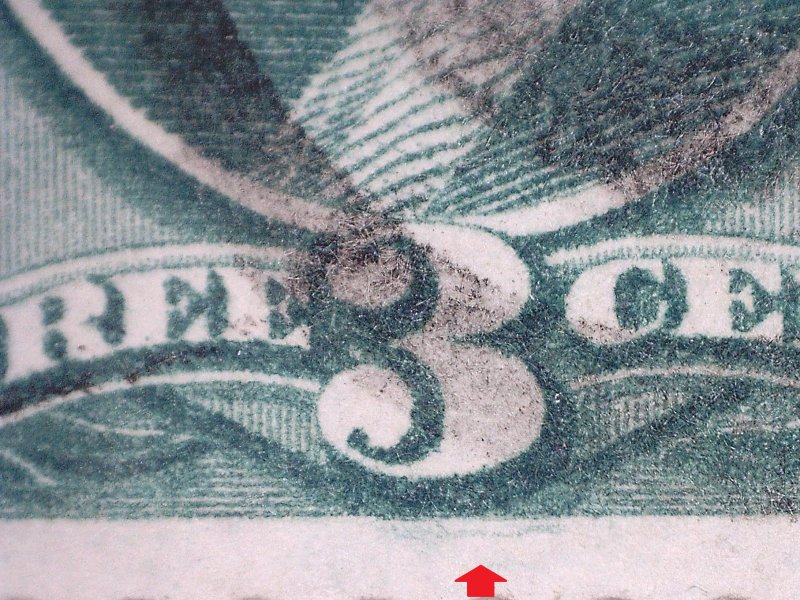 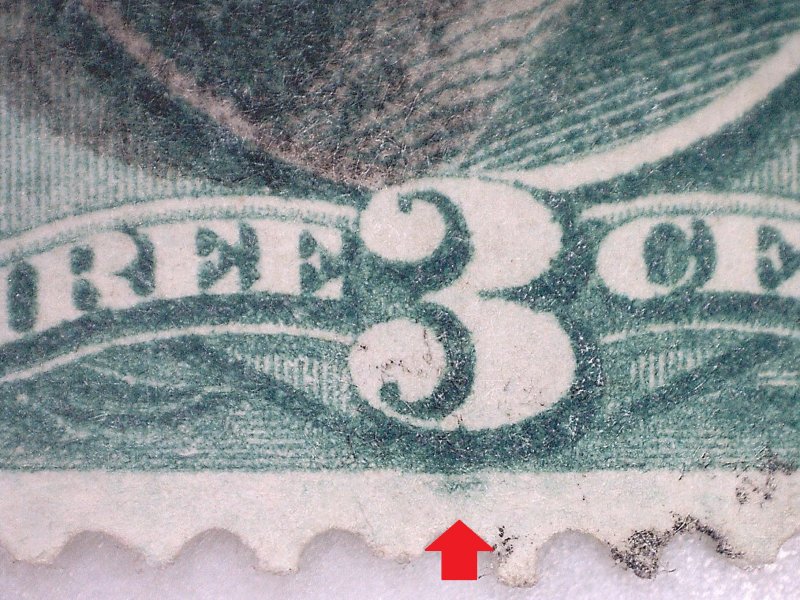 |
|
Send note to Staff
|
|
|
Valued Member
United States
211 Posts |
|
|
What is a position dot? I see them in the pictures. Just don't know what they are and google just takes me to someone else asking the same thing.
I find it amazing you can purchase a pair of stamps from the 1800s for only ten cents. Is this common? (sorry for the simple questions, newbie trying to learn more) I've never seen a stamp this old before outside of books and images on the internet. As a kid I think the oldest stamp I ever saw was a 2 cent red stamp of George Washington from 1922 or 1923. |
|
Send note to Staff
|
|
|
Pillar Of The Community
United States
8956 Posts |
|
|
dsmith426, a position dot is more often called a guide dot or a layout marking (LOM). They are used by the engravers to put the stamps in the correct position on the sheet. Most of the time in modern engraved stamps these dots ( and lines ) are removed before printing
Peter |
|
Send note to Staff
|
|
|
Pillar Of The Community
United States
8956 Posts |
|
|
Partime, those extra marks below the '3' look like the result of bad plate wiping to me.
Peter |
|
Send note to Staff
|
|
|
Pillar Of The Community
United States
1946 Posts |
|
|
Peter could be right about the significance of the marks below the three, but the story is not as simple as he presents. I am still looking for my notes from a conversation I had with Ron Burns, a specialist in the 3c BankNote issues, in which he details two different types or states of the design, one of which has a dot below the three and the other does not. None of this is in any catalog. At the moment I cannot recall what the situation is beyond the stamps of the National Bank note co. But Ron and I had been discussing these types in terms of the DIES used by all three companies. When I find those notes, or have a chance to check out the die proofs again, I will comment more.
In the meantime, could you verify that the stamps behind those last two images are on hard paper? |
|
Send note to Staff
|
|
|
Valued Member
United States
211 Posts |
|
|
Since the dots are in different spots, does that mean the engraver did a poor job at the placement of the stamp images? Or does the position dots actually relate to something else like just being a measurement and the engraver would use that in his calculation to where to place the next image? |
|
Send note to Staff
|
| Edited by dsmith426 - 11/28/2015 4:14 pm |
|
|
Valued Member
United States
211 Posts |
|
|
After reviewing the photos again I realize the difference isn't that great. The magnification made it look worse. So you can ignore my last question. |
|
Send note to Staff
|
|
|
Moderator
United States
5107 Posts |
|
|
Quote:
Since the dots are in different spots, does that mean the engraver did a poor job at the placement of the stamp images? You also commented that the difference wasn't that far off. Actually, I think it is off by a few vertical lines, so I would call that significant. I'm not sure about your original question, though. They seem to be horizontally aligned, but not equal distance. They are, at least, the same or similar size. |
|
Send note to Staff
|
|
|
Moderator
United States
5107 Posts |
|
|
Quote:
In the meantime, could you verify that the stamps behind those last two images are on hard paper? Essayk. Good point, and, unfortunately, I am not a very good judge of that. I did a little research, though, and decided to compare it to a good copy of Scott #65 and another copy of Scott #210. It is a closer type of paper to the #65, so I am going to go with Hard Paper. Here is a view of both stamps: 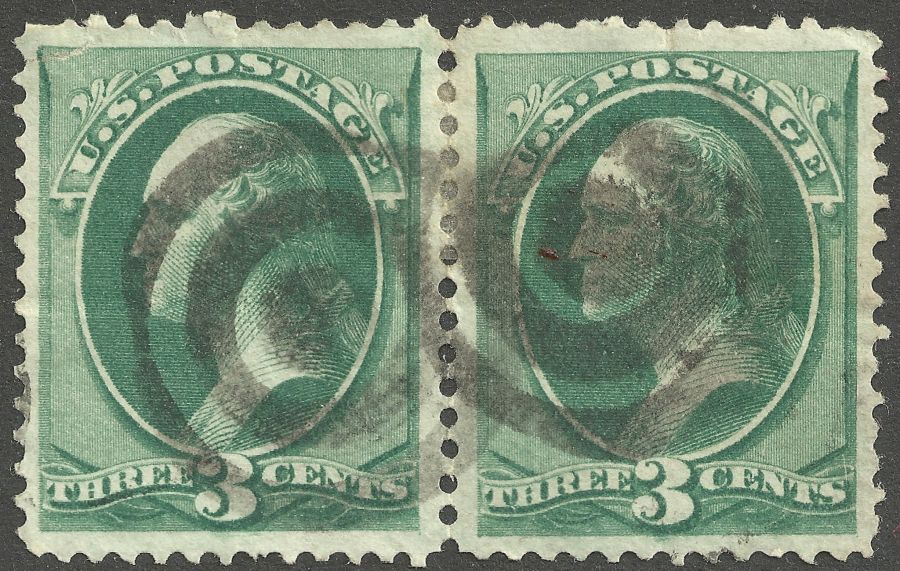 And a close examination of this pair shows another guide/position in the bottom right corner of both stamps. 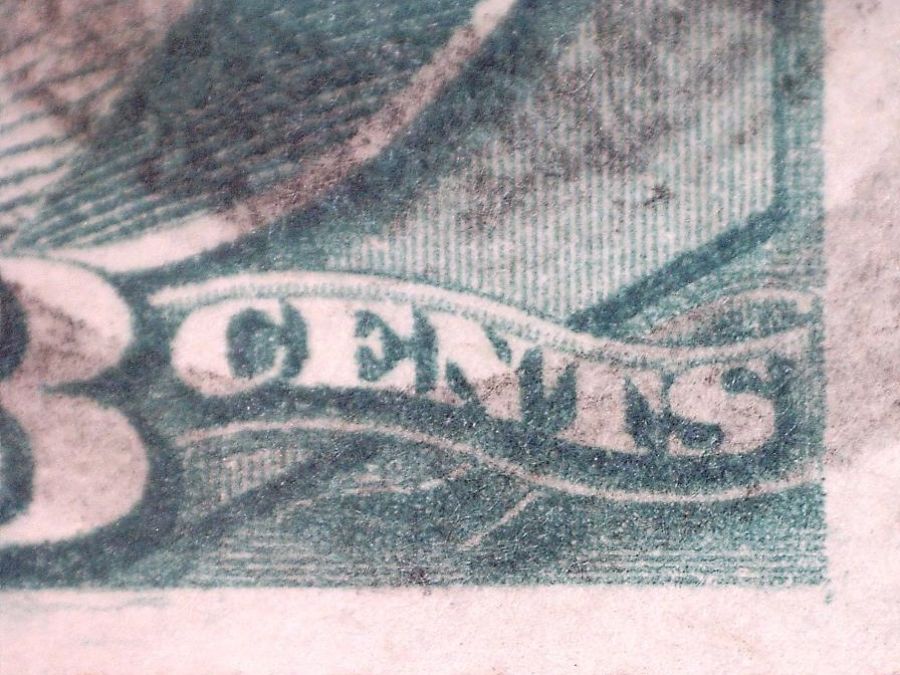 |
|
Send note to Staff
|
|
|
Pillar Of The Community
United States
8956 Posts |
|
|
Essayk, I hope I did not give the wrong impression. I did not imply that the stuff under the "3" was poor wiping, but that to me it looked like it.
I can not wait to see what you come up with!
Peter |
|
Send note to Staff
|
|
|
Valued Member
United States
10 Posts |
|
|
Do all stamps have those position dots? I have a number of these stamps. Should I go through them and look for this? How scarce are they? Sorry about all the questions, even though I collected as a kid and now just getting back into collecting I am a newbie.
Thanks,
Robert
|
|
Send note to Staff
|
|
|
Moderator
United States
5107 Posts |
|
|
Valued Member
United States
211 Posts |
|
|
Pondering the photos and what I've learned and reviewing the photos again I feel more confident to make a guess and see what people think. Is it possible that the guide dots are supposed to be hidden on the inner side of the white oval of the portrait? This would have hid the dot in the darkness and also centered the stamp nicely. |
|
Send note to Staff
|
|
|
Replies: 20 / Views: 3,065 |
|




 Posted 11/27/2015 01:24 am


