| Author |
 Replies: 7 / Views: 1,789 Replies: 7 / Views: 1,789 |
|
|
Valued Member
129 Posts |
|
|
Does anyone see a grill on this stamp? 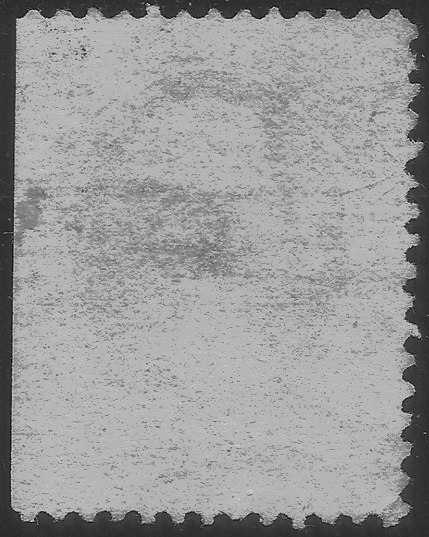 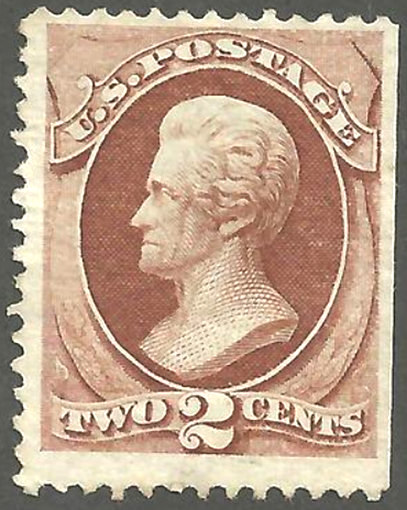 |
|
Send note to Staff
|
| Edited by carlberky - 12/04/2015 11:13 am |
|
|
|
|
Pillar Of The Community
United States
1946 Posts |
|
|
Not from these pictures, I don't.
But it might.
Photographing grills is not as straightforward as some would like to think. Unless the grill is strongly impressed a scanner will not do it justice. To get a weak grill to show, you need to use a camera and a moveable external light source that you can control for angle of incidence. The light should be held low and shine across the grill partially from the top and partially to one side. Whatever shows best in the viewfinder is what you want. For depth of field the aperture should be stopped down (f8-f11), so the light source should be bright enough to give a good exposure when the aperture is small.
As for using a cell phone...um...not so much.
It's a lot of fussing, but that is what it takes for clarity. |
Send note to Staff 
|
|
|
Pillar Of The Community
United States
517 Posts |
|
|
I can't tell from the pic. Essayk that sounds better than grafite. I know grafite works but the rediual of the grafite stays on the stamp which to me looks bad. Do you know of a way to remove the rediual? |
|
Send note to Staff
|
|
|
Bedrock Of The Community
United States
10864 Posts |
|
|
If one takes the time to learn how to apply the graphite properly with a very light touch then the amount on the stamp is minimal anyway. |
|
Send note to Staff
|
|
|
Pillar Of The Community
United States
1946 Posts |
|
|
The usually recommended approach to removing graphite from a stamp is to brush the affected area lightly with a clean art gum eraser until the graphite has been removed or reduced to your satisfaction. However, it may be all but impossible to completely remove a heavy deposit. Moreover, if the grill has points that break the paper, then I do not advise trying to remove graphite with an eraser. Even slight abrasion can aggravate the fiber breakage from the grill punctures.
The addition of ANY graphite to a stamp is an alteration to its original state. People differ in how much of that they will tolerate. I prefer not to do it, and have found that with my other tools I usually don't have to resort to that. But if one must add graphite to the back of the stamp, then I agree with revcollector that it is best to go lightly and exercise control over the process.
Most people know that you can build up a "puddle" of graphite by rubbing a pencil over a limited spot on a sheet of paper. Unfortunately some folks seem to think that the next step involves dragging the stamp face up through that puddle to get a nice coat of graphite all over the grill and see its limits and every point.
wrong!!
Instead, rub the tip of an index finger lightly in the graphite puddle, and then very lightly rub (tickle) this over the place where the grill is expected to be. In small tapping steps like this you may reveal more of the grill than you can otherwise see.
Once satisfied, you MIGHT be able to remove the graphite so applied as I described at the beginning. Or leave it so the next owner doesn't need to do it all over again.
|
|
Send note to Staff
|
|
|
Valued Member
129 Posts |
|
|
After careful examination of the stamp and scans, there doesn't appear to be a hint of a grill. Based on the redish-brown color, I will bite the bullet and call it a #157. It was bought as a #146. |
|
Send note to Staff
|
|
|
Pillar Of The Community
United States
1946 Posts |
|
|
Carl, if the color is the reddish brown as seen in the pic, and it has no grill, then it IS a #146 as originally described when you bought it. If it had a grill it would have been a #135. Both are from National. The Continental version is a much deeper/darker brown. |
|
Send note to Staff
|
|
|
Valued Member
129 Posts |
|
|
Oops, had a senior moment there. I bought it as a #135, and will relist it as a #146. Thanks, essayk. |
|
Send note to Staff
|
|
| |
Replies: 7 / Views: 1,789 |
|




 Posted 12/04/2015 10:13 am


