| Author |
 Replies: 21 / Views: 3,544 Replies: 21 / Views: 3,544 |
|
Valued Member
United States
195 Posts |
|
|
|
|
Pillar Of The Community
United States
8956 Posts |
|
|
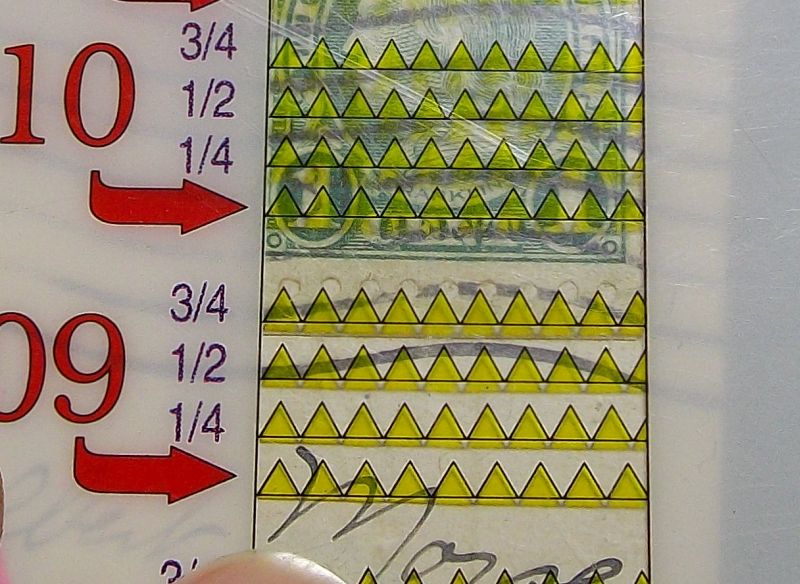
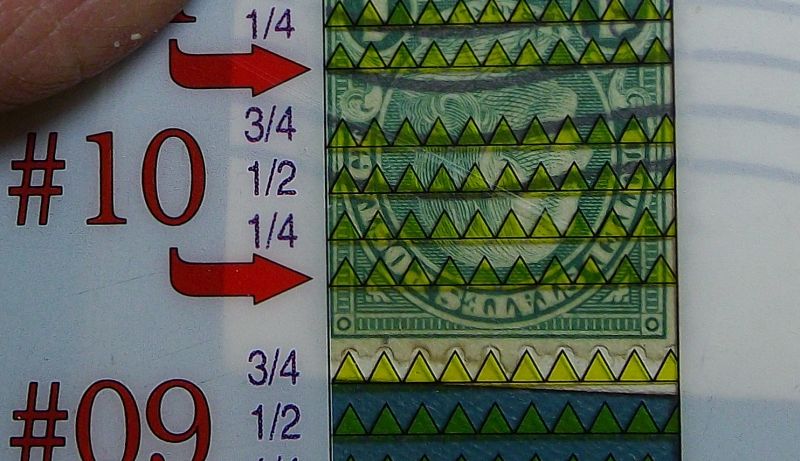
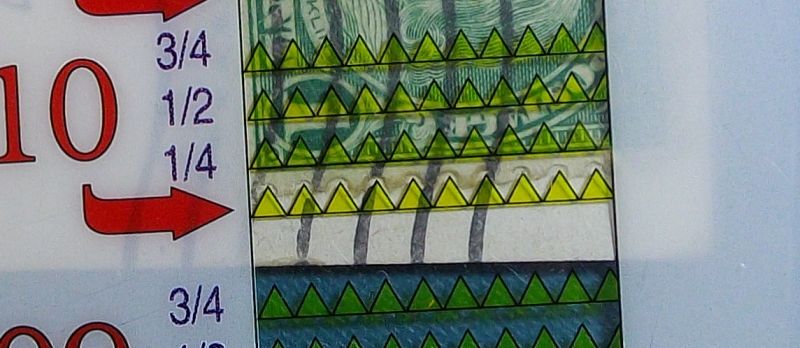
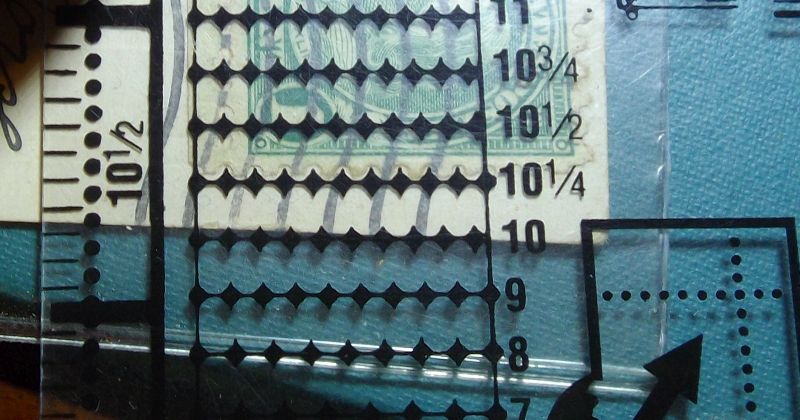
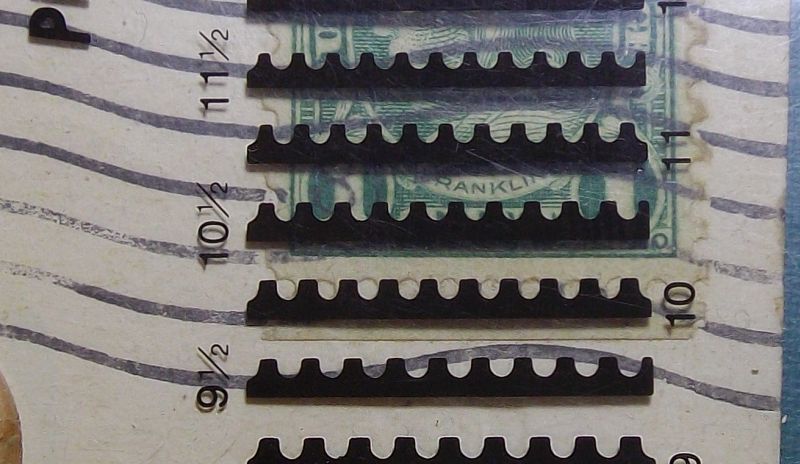
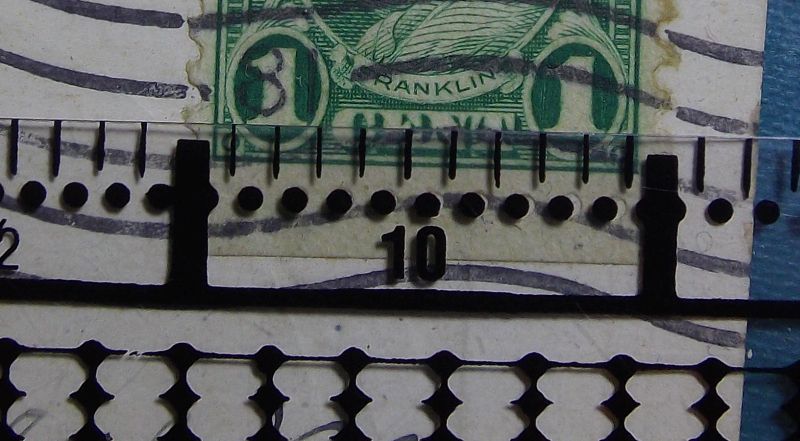
That is a fancy perforation gauge! I use the old fashioned kind that has the round dots that fit inside the perforations. That way you can see immediately when the perfs are off. But I believe that you are correct with your measurement!
Peter |
Send note to Staff 
|
|
|
Valued Member
United States
195 Posts |
|
|
Pillar Of The Community
United States
2423 Posts |
|
|
Hmmmmm. This is why I get so frustrated at times. You could easily convince me that this stamp simply doesn`t exist. |
|
Send note to Staff
|
|
|
Pillar Of The Community
United States
2423 Posts |
|
|
Pillar Of The Community
United States
1414 Posts |
|
|
There is no substitute for the Kiusalas US Specialty gauge. Sonic Imagery sells a modern version. US stamp perforations from the 19th century and the first two thirds of the 20th century are best measured using English measurements. Counting how many perforations to the nearest half fit in between two lines two centimeters apart is dysfunctional at best. Inaccurate results are almost certain.
Scott 581 is perforated 10-80 x 10-80 (with 0.080" spacing between perforation pins). Flat plate perf 10 is 10-79 (0.079" spacing). If a flat plate perf 10 and rotary perf 10 stamps are placed side by side or top to bottom, the perforations will not line up across the row. Both are "perf 10" yet they are different. So much for using a conventional perforation gauge, especially one that may have changed size slightly over time.
Clark |
|
Send note to Staff
|
| Edited by cfrphoto - 01/12/2016 6:45 pm |
|
|
Pillar Of The Community
United States
8956 Posts |
|
|
I see, Clark. So how do you measure the perfs above? I notice that on the bottom picture the perforations and the gauge do not line up!
Peter |
|
Send note to Staff
|
|
|
Valued Member
United States
195 Posts |
|
|
Thanks guys,, I guess I will call it a 581 KGB but with a big asterisk ..I'm going to compare with other 581s... I guess I will have to get another gauge also . Thanks Clark for the info,, Bob |
|
Send note to Staff
|
|
|
Valued Member
United States
195 Posts |
|
|
Pillar Of The Community
United States
1414 Posts |
|
|
Pillar Of The Community
United States
1179 Posts |
|
|
It's not your perf gauge-- it's the stamp issue -- or actually it's a bit more complicated. You're looking for a precise science where there is none. Paper used in this period of printing lack quality control -- Offset Rotary Printing was still new and the manufacturers delivered paper with inconsistent water content; it was delivered to the BEP with moisture content too high for printing postage stamps. So, the shrinkage seen in these issue causes some very strange perf combinations, which knowledgeable collectors have learned to adjust for, when collecting, i.e.; 11-1/4 =11; 10-3/4 usually =11; and so on. (Whatever the perf is closest to--that's the perf you chose.) And, unfortunately, there is no guide to the % of shrinkage (or expansion). As paper with a high moisture content, when fed through web offset rotary printing rolls, has a tendency to expand, as in squeezed between the printing rolls, then the paper cures (expels moisture) contracts. I believe the problem was explained in the Max & Johl books, The U.S. Postage Stamps of the 20th Century, Vol. 1- Revised, in describing this or other issues of this period. Hope that helps.
Best,
Hal |
|
Send note to Staff
|
|
|
Moderator

United States
12330 Posts |
|
|
Pillar Of The Community
United States
2555 Posts |
|
|
Bringing printing methods and moisture contents of paper at time of printing into this discussion is doing nothing other than muddy the water. We are not talking about design measurement, we are talking about perforation measurement. The problem here is using a perforation gauge based on metric units to measure peforations made by equipment built using English units. The Kiusalas gauge is made to measure certain perf spacings exactly where the perf gauges that everybody shows here will only measure approximate gauge of the subject stamp.
Getting back to paper moisture content slightly. Stamps were perforated when the paper was dry. |
|
Send note to Staff
|
| Edited by sinclair2010 - 01/13/2016 05:14 am |
|
|
Valued Member
United States
195 Posts |
|
|
So I guess this is most likely a 578 .. I'm going to order myself a Kiusalas gauge and see for myself .. Thanks everyone for your comments. Bob |
|
Send note to Staff
|
|
|
Pillar Of The Community
United States
1414 Posts |
|
|
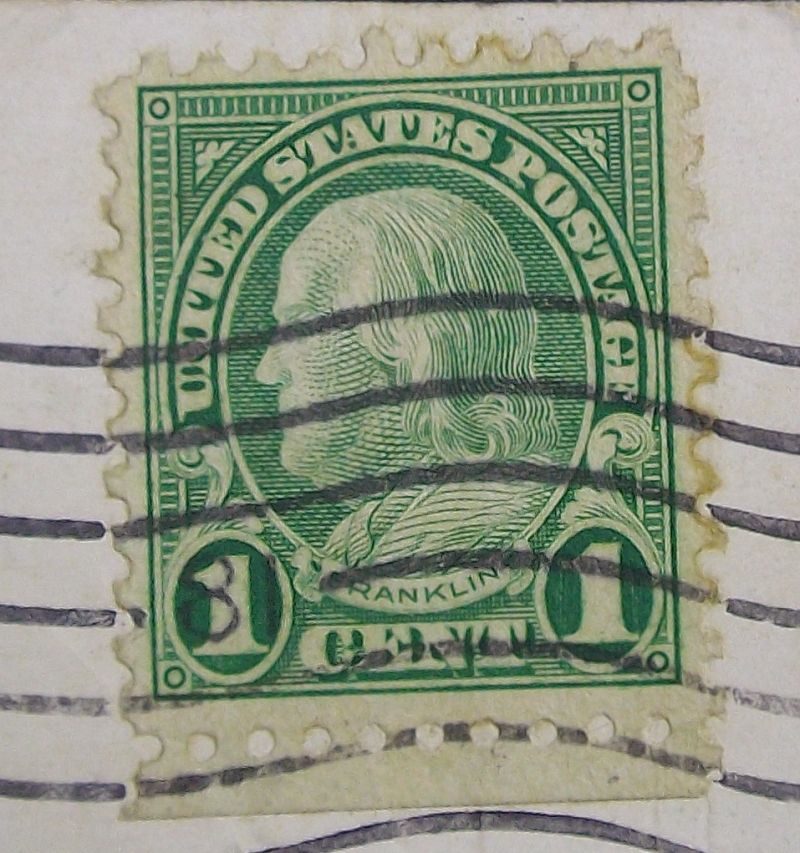
The stamp is not a 578 because the top and bottom perforations are not perf 11-72. Although a clear scan of the stamp is lacking, the last image shows that the side perforations are not aligned between rows, a must for wide rotary coils and coil waste like 578. Because the stamp is a 581, the top and bottom perforation rows will be aligned with each other.
Clark |
|
Send note to Staff
|
|
|
Valued Member
United States
195 Posts |
|
|
Replies: 21 / Views: 3,544 |
|



 Posted 01/12/2016 3:37 pm