| Author |
 Replies: 20 / Views: 3,321 Replies: 20 / Views: 3,321 |
|
Valued Member
Brazil
65 Posts |
|
|
Is this the Washington Rose #65? I have only this one and I don´t know very well this stamp. 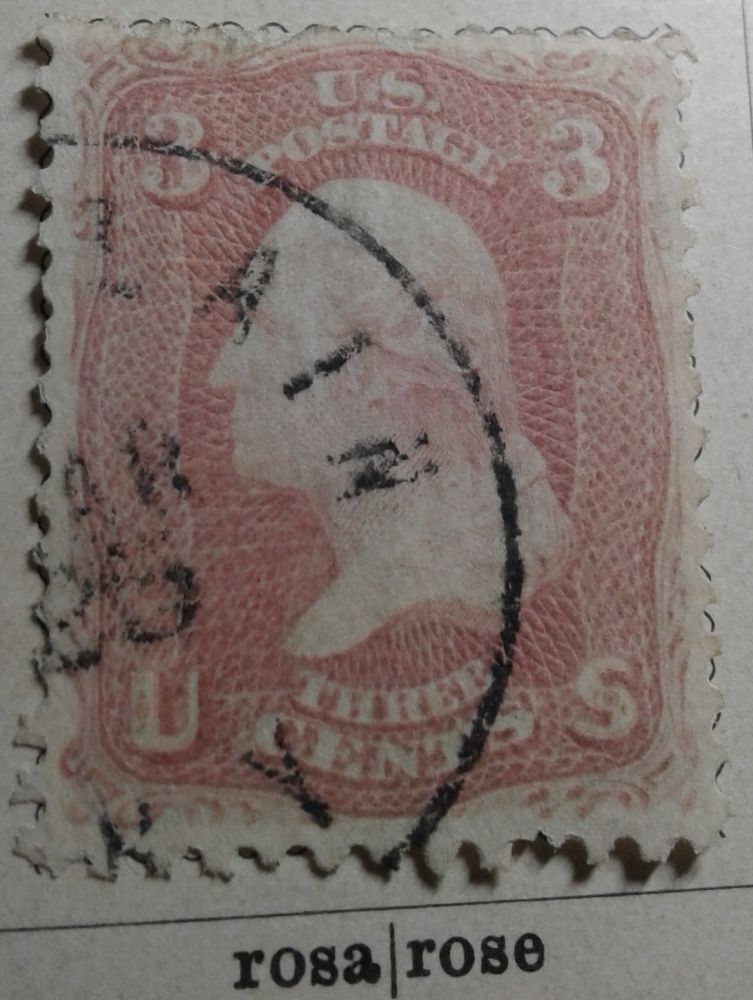 |
|
Send note to Staff
|
|
|
|
|
Pillar Of The Community
United States
1946 Posts |
|
|
On my monitor this appears as the normal and most common shade of #65 which in the catalog is listed as rose. How that compares to what you or others see on their monitors I do not know. |
Send note to Staff 
|
|
|
Pillar Of The Community
United States
2230 Posts |
|
|
Quote:
On my monitor this appears as the normal and most common shade of #65 which in the catalog is listed as rose.  It's impossible to determine the exact color from your scan. However, it is possible to say that it is highly unlikely that it is a premium color (#64/64b). |
|
Send note to Staff
|
|
|
Valued Member
Brazil
65 Posts |
|
|
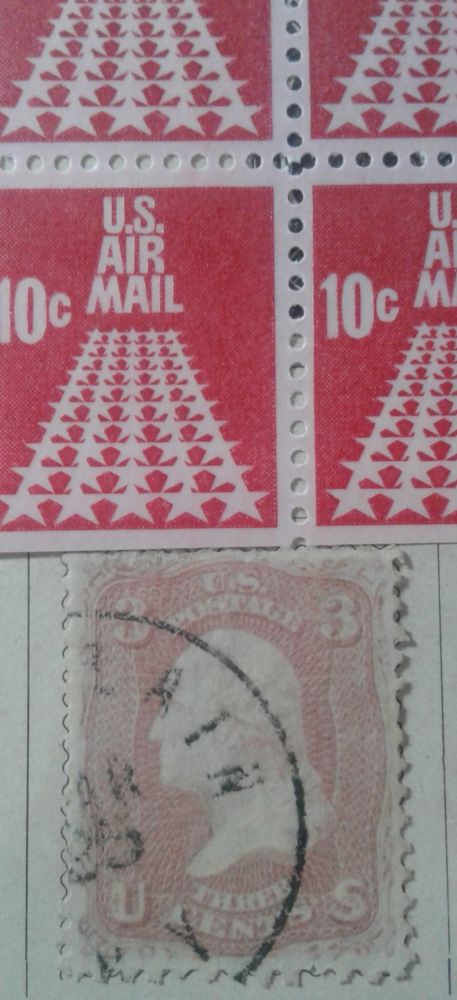
Thank you...maybe Rose. I'll provide other picture with some thing together to compare the color.
|
|
Send note to Staff
|
|
|
Valued Member
Brazil
65 Posts |
|
|
Pillar Of The Community
United States
8956 Posts |
|
|
Valued Member
Brazil
65 Posts |
|
|
There is any table of colors available to be used as a guide to stamps? To me is a little bit difficult to identify all the colors described on the catalogs. |
|
Send note to Staff
|
|
|
Valued Member
United States
56 Posts |
|
|
I've seen a few color guides on the market to help with discerning color shades or aberrations. Problem is would they be the same as what Scott references and what about the aging process of the inks and paper?
At a minimum I would like to see Scott print examples of their colors in if not every catalog, perhaps every other year.
|
|
Send note to Staff
|
|
|
Pillar Of The Community
Croatia (Local Name: Hrvatska)
1131 Posts |
|
|
Pillar Of The Community
United Kingdom
8622 Posts |
|
|
Colour guides tend to reflect larger national colour categorisation, which is used to describe paint, textiles etc. Thus, the colours used by Gibbons in its guide will sit with those of the UK's Colour Council. They won't necessarily precisely match the colours mentioned in Scott, Michel or Yvert. |
|
Send note to Staff
|
|
|
Pillar Of The Community
United States
8956 Posts |
|
|
I agree with GeoffHa. For American stamps you would need to use an American color guide. Scott makes a great color guide for US stamps.
Peter |
|
Send note to Staff
|
| Edited by Petert4522 - 05/15/2016 4:47 pm |
|
|
Moderator

United States
12330 Posts |
|
|
The challenges in color identification are very substantial.
Start with the most basic situation. We gather 5 random people to look at a single stamp, all 5 might see slightly different colors. Now consider the ambient light; the color will change under indirect natural light, sun light, incandescent light, fluorescence lights. So even with this most basic situation, we have some significant challenges in identifying a specific color.
Adding in more variables, consider trying now to match the stamp to a color chip. No color chip, even if it were made with pure pigment, will stay color fast over time. So we have to assume the color chips are fresh, less than a year or two old, and have been stored correctly. And as the other posters have noted, the naming nomenclature of the colors are far from standard, no cross indexes exist; so we are stuck with a single catalog publisher and their associated color chips.
Now consider the stamp itself, all stamp ink/colors change over time. Stamp color is similar to stamp condition in this respect. At best all we can really say is that that at this moment in time the stamp appears to be color x. The ink, chemistry, paper will all react to the passage of time; controlling the environmental conditions will help preserve the color and condition somewhat, but not prevent the inevitable changes.
Lastly, when we try to add technology like scanners, drivers, graphic software, video adaptors, and display devices to the situation we have now made it virtually impossible to make any kind of reasonable color identification.
I respect the folks who study stamp colors and work to understand the differences but it seems to be a bit ephemeral. I look forward to the day when technology will allow us to define colors in a definitive and quantifiable way.
Don
APS #094826 |
|
Send note to Staff
|
|
|
Valued Member
United States
56 Posts |
|
|
Oh jeez - I started to briefly write a tiny tad on the subject of "color" and many paragraphs into it I finally told myself to stop. (There were too many details and technical jargon and how the human "sees" what we call color.) Naturally I did, listen to myself that is, and stopped writing to, instead, offer one of the many web links out there talking about "color" in a minimally-technical sort of way. A brief read is interesting in any of the several related areas they provide the visitor. I can say that in an engineering lab down the hall from my office, a few years back, the Light Lab was a fascinating place to visit. I only wish now I could borrow a few of their ever shrinking in size and cost hand-held meters sitting on the shelves. Who'd have thought there was so much involved in defining such a simple thing as the color of something! Anyway - the site worth a quick scan is http://desktoppub.about.com/od/howc...blishing.htm if you're interested. Yes, there are many others out there too. |
|
Send note to Staff
|
| Edited by Waazwi - 05/16/2016 6:38 pm |
|
|
Valued Member
Brazil
65 Posts |
|
|
I understand that is an area that depends of the light...many people can see the same color differently...and much more... But I think that would be good to have a basic table to show the colors used to describe stamps even that generically, to provide an idea of the color....let me explain some funny difficult s that I've faced...for example...the #220 Stamp Carmine or....LAKE...The Lakes are brown,green even blue...but red like wine or blood? Of course I did a search on the internet to find...but...uau from were come this denomination? When I see deep brown, dark brown,brown violet, deep orange brown,dark orange brown....ooo my god....I'm from Brazil and I'm trying learning how to identify the USA stamps....but...I understand.. is part of the game. I´ll take a look on this site Wasswi....thank you! |
|
Send note to Staff
|
|
|
Valued Member
United States
56 Posts |
|
|
There could be any of several full or partial solutions to the color naming convention issues. That would involve the international stamp catalog publishing community agreeing to work with postal authorities on naming conventions, RBG / CMYK data points and so on.
Or if countries had some reason to see any benefit, they could individually supplement their stamp color description with their RBG (screen)and CMYK (print) values. |
|
Send note to Staff
|
|
|
Valued Member
Brazil
65 Posts |
|
|
I agree. We have international standards for colors and they were not applied to describe stamps in the catalogs until now. I talked about this issue with a friend that collects Greek stamps, and he told me that for Greeks stamps the colors are one of the most important points. He told me that was created a catalog just to describe colors for Greeks stamps, but It is too much expensive. |
|
Send note to Staff
|
|
|
Replies: 20 / Views: 3,321 |
|



 Posted 05/13/2016 9:57 pm