Quote:
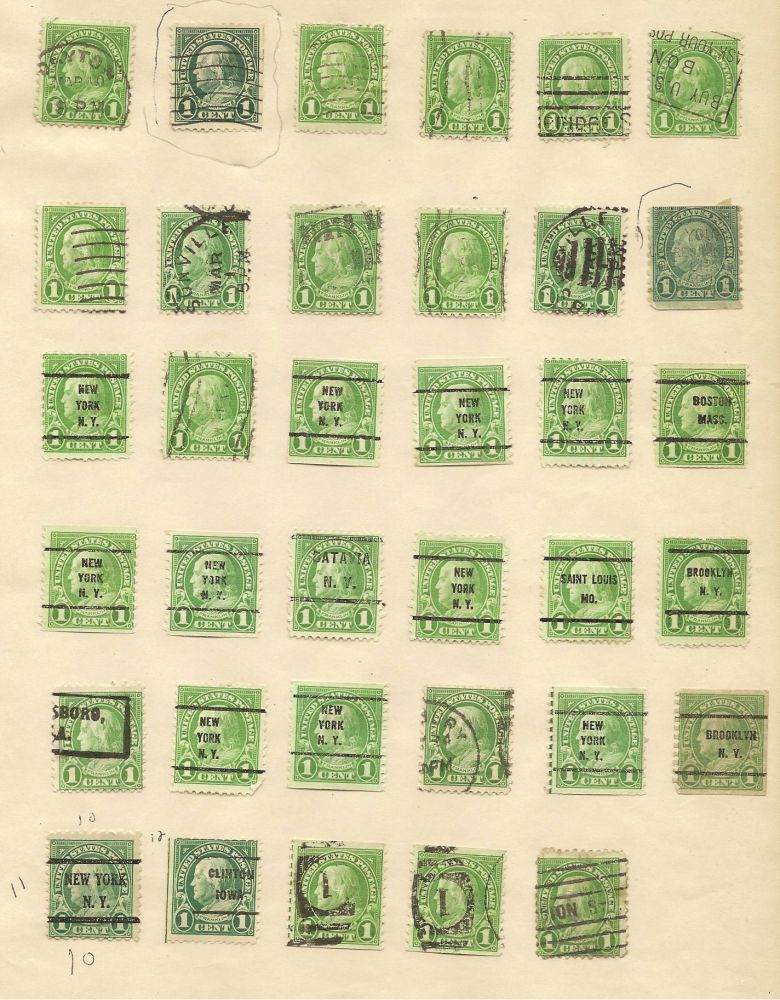
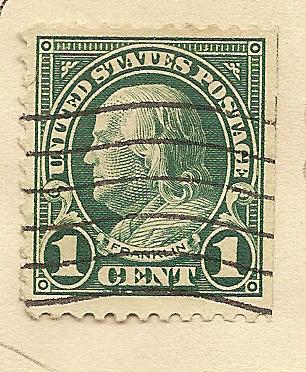
The stamp appears to be a rotary type. Seems a bit wider than flat plate types. Also, note how the top and bottom perforations seem to line up.
It is time to stop the guessing game. The stamp shade is typical of a flat plate printing. Rotary press colors are more of a dull green or a yellow green. If the stamp is slightly wider and shorter than a flat plate sheet stamp, it would be 552a booklet pane single. Booklet panes were printed on horizontal grain paper to better control shrinkage that would affect the cutting of booklet panes from sheets. After flat plate booklet pane production was replaced by rotary press printing, remaining stocks of "special paper" was used to print high value regular 1922 issue stamps, some E13 special delivery stamps, some C11 Beacon airmail stamps and the 1928 printing of the Special Handling QE1-QE3 stamps.
The size difference between rotary press and flat plate is more pronounced than between regular and special paper. All of this is well documented in posts on this site. The best source is the United States Stamp Society site. Membership is not expensive. Perhaps if more posters here were members the quality of posts would improve.





 Posted 07/10/2016 10:44 am