Thanks for responding guys.
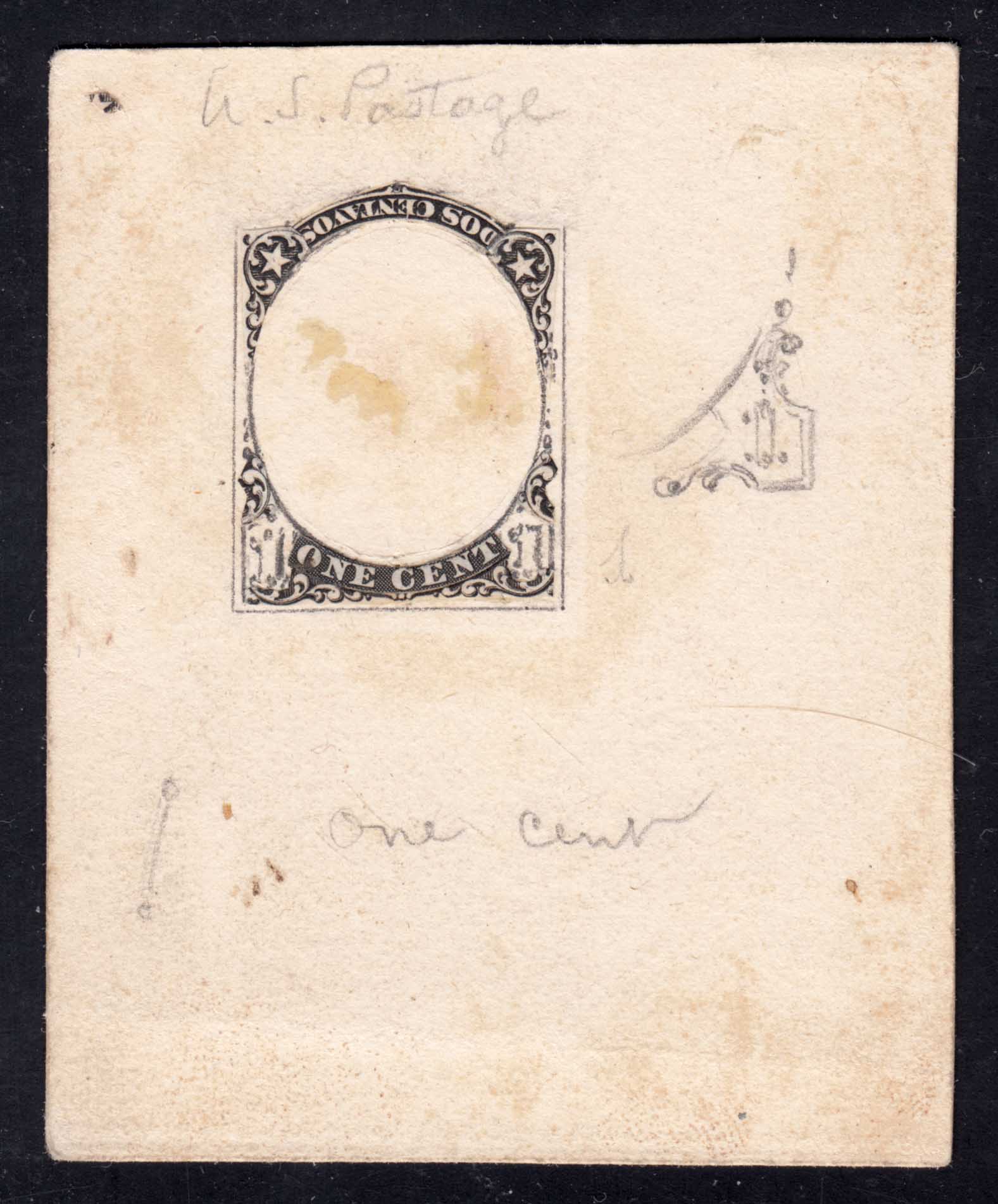
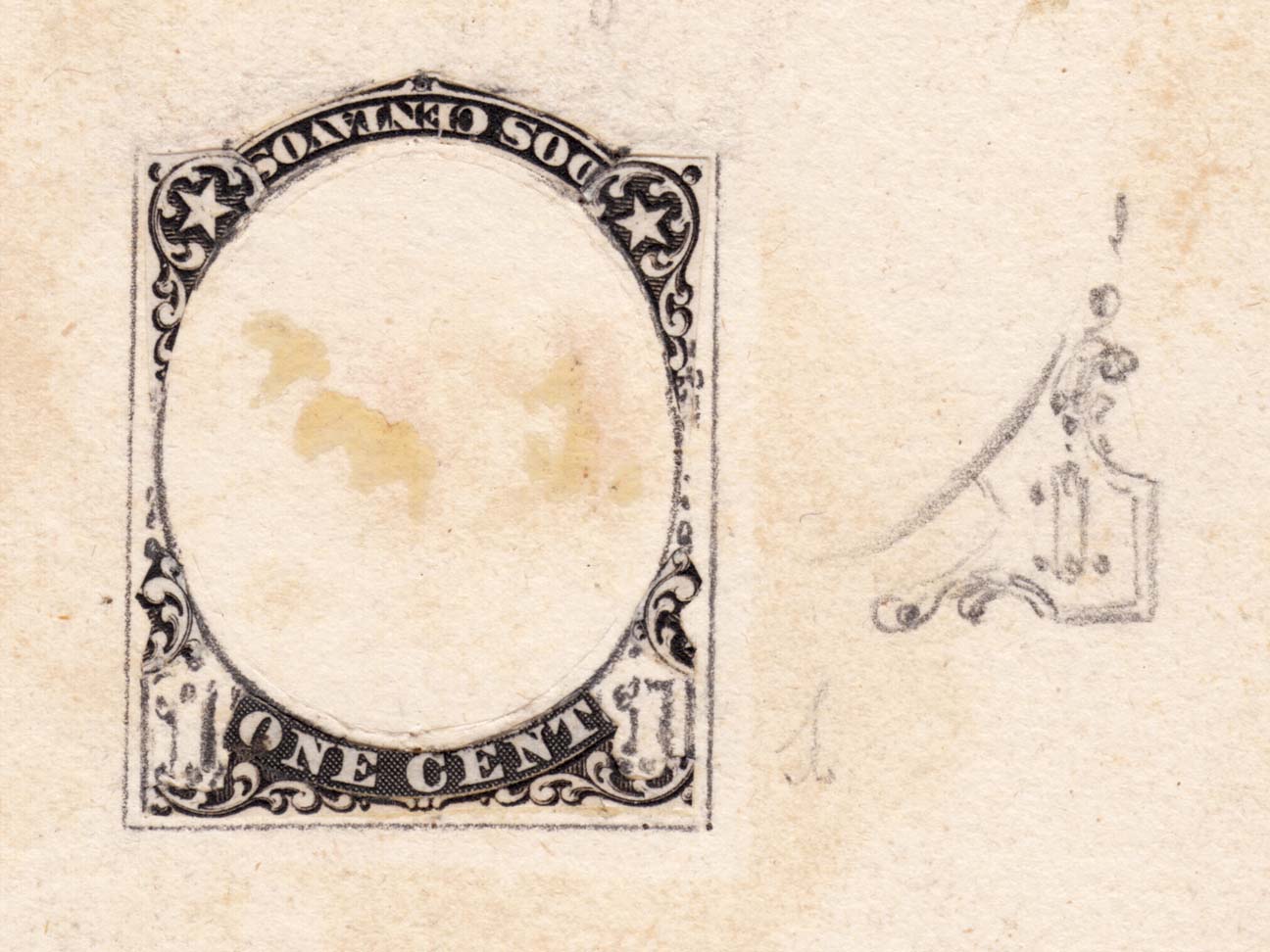
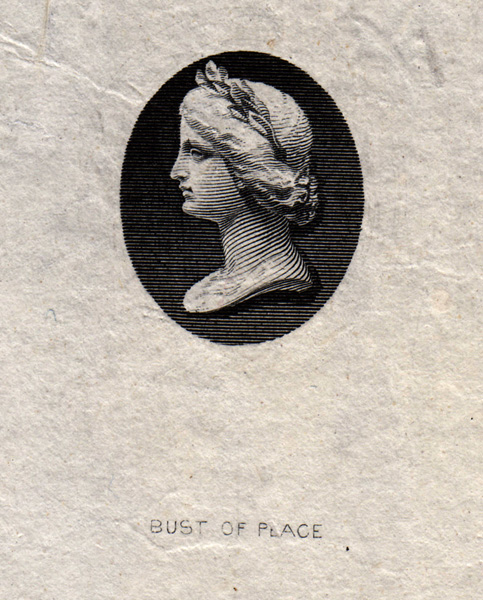
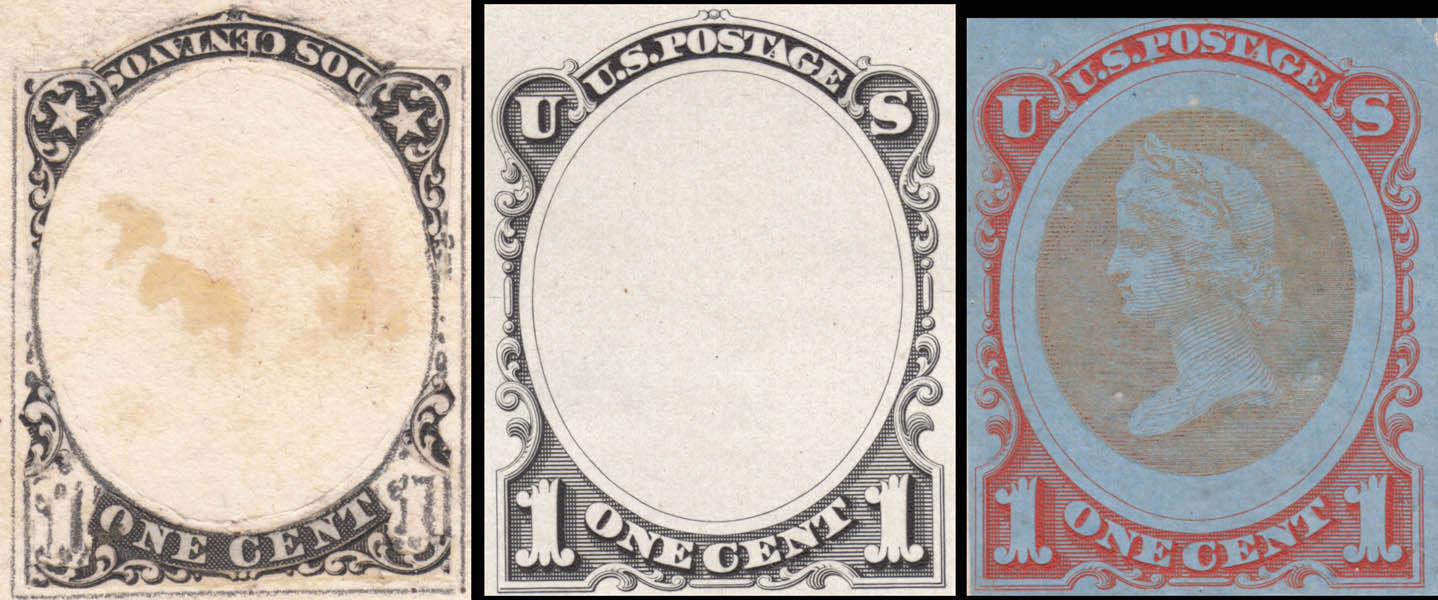
revc - You are quite right that this is a composite model composed partly of snippets of proof material cut from various stamp designs, and partly of pencil drawing and ink. That it was on its way to becoming a B&C private die proprietary puts it a bit too early however. Let me show you a couple of later essay stages for which this was the preliminary model:
This model surfaced out of the Finkelberg collection. In 2001 it was offered at auction for the first time, tandem with a "mate" but with a description in words only - no photo. They sold well and that became the basis for their listing and pricing in Scott as 206-E1 and (this one) 206-E1B. Both were offered again in 2005 in Lakeshore part 1, with illustrations, but realized about half of where they had been. I had other interests in that sale and missed buying it then. Now I intend to research it.
It's more than a little intriguing to me that revc would make an association with Butler & Carpenter (B&C). I assume that is because of the star and shell motif which they did use. B&C were the inheritors of the production metal from Toppan, Carpenter, and Co. (via Joseph Carpenter) whose unsuccessful bid for the contract of 1861 had been accompanied by designs only slightly modified from those introduced in 1851. But as txstamp points out, there are similarities to the value label on the 1c of 1851. They are not, however, identical:
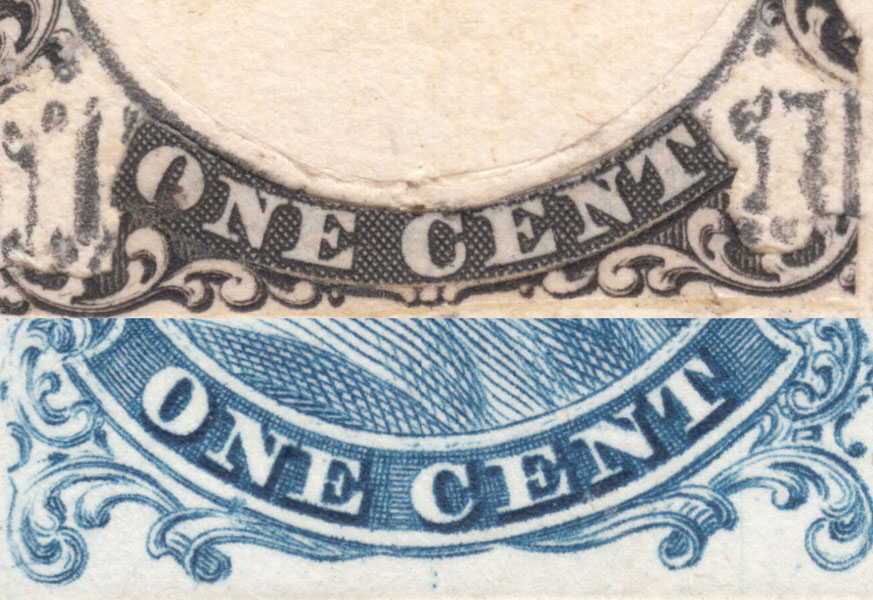
I would like to identify the sources for the other design elements in this piece, including the "DOS CENTAVOS" element which I think was merely serving to show the kind of upper arc curvature the artist had in mind for the country label. As you can see from the subsequent stages, the star-and-shell motif was abandoned.





 Posted 12/05/2016 1:26 pm