In this second part to the penny universal stamp I'll start to cover the identification of the 16 different plates that were used in printing the stamp.
This question was asked in response to part 1 - "Has anyone had a study on this stamp and found a way to tell which stamps came from what plate?" - or can one tell the difference between plates. The answer is yes and no!
Stamps from the London plate can be identified by their colour and fineness in appearance.
Stamps from the three local plates, where the stamps were printed in new Zealand, are more difficult to tell and only the retouches give indication of which plate.
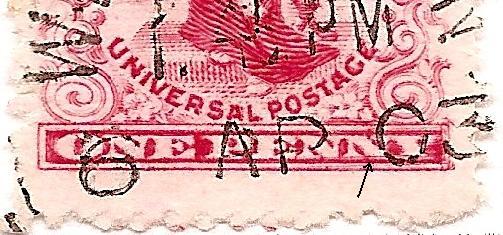
Stamp from Local plate 2 row 8 number 4 (see small arrow under "NNY")
When the local plates started to wear out more plates were ordered and the Reserve plate was used. The reserve plate can be identifies by its extra shading round the head and shoulders of Zealander.
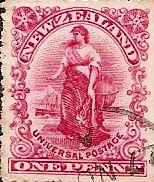
Reserve plate
I don't know too much about how plates are made in general. However there was an original die from which the impression of this die is put onto the plates by transfer rollers. The original die was damaged and retouched. All other plates have this "retouch flaw" it is called the 4 o'clock flaw - see illustration below.
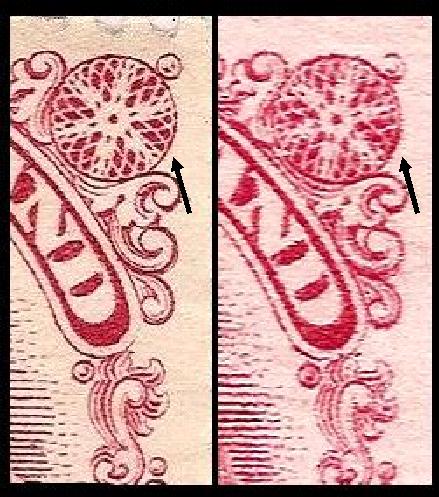
If the rosette is clean like the stamp on the left, the stamp is from the London plate, Local plate 1,2 or 3 or the Reserve plate. If the stamp has the 4 o'clock flaw like the one on the right it is from the Booklet plate, Dot plates, Waterlow plates, or the Royal plates. Each of these
Each series of plates can be identified - next time





 Posted 11/10/2009 3:35 pm


