| Author |
 Replies: 12 / Views: 1,963 Replies: 12 / Views: 1,963 |
|
|
Pillar Of The Community
United States
5894 Posts |
|
|
This is an awesome design, but I cannot find it in Scott. Would like to know Catalog# or year of issue and value. It's a photo, so not as good as I would like it. Thanks! 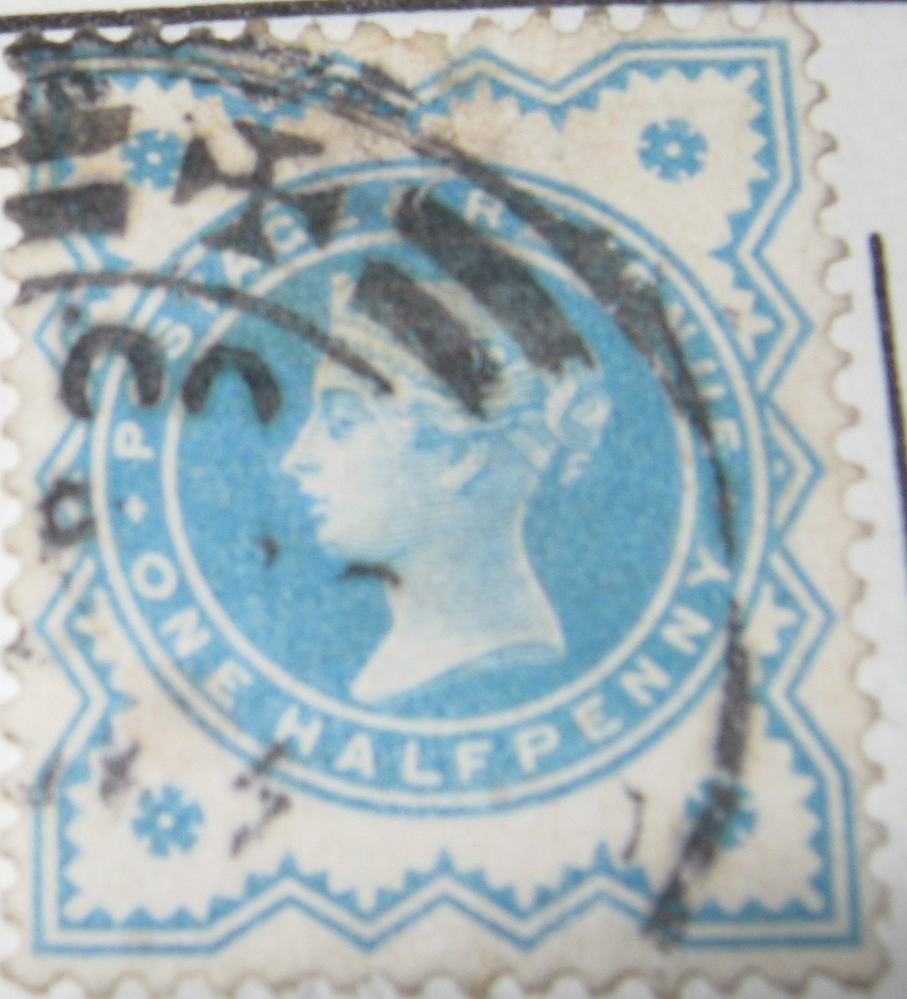 |
|
Send note to Staff
|
|
|
|
|
Bedrock Of The Community
United States
12128 Posts |
|
|
I just looked up a similar stamp I have in vermillion. Mine is a Scott #111; the one you have, I believe, is Scott #125 (blue green) dated to 1900. Sorry I can't help with value, but my catalogs are 25+ years old. At that time, a used copy was only worth mininum value of 10 cents. |
Send note to Staff 
|
|
|
Pillar Of The Community
United States
6756 Posts |
|
|
In the 2010 Scott, the stamp is GB #125(17Apr1900) and has an italicized used value of $2.10.
It is supposed to be blue green. The light/bright blue is a color changeling. |
|
Send note to Staff
|
|
|
Pillar Of The Community
United States
5894 Posts |
|
|
It is more green in person. You guys are great, thanks!
So italicized means that people tried to falsify used versions of this stamp?
What do you mean by color changeling? |
|
Send note to Staff
|
| Edited by smauggie - 11/10/2010 9:32 pm |
|
|
Pillar Of The Community
United States
6756 Posts |
|
|
Quote:
So italicized means that people tried to falsify used versions of this stamp? No. The stamp was issued on Apr 17, 1900. King Edward VII was crowned on Jan 22, 1901. So this stamp had a relatively short "correct" period of use. If I am not mistaken, the italicized used price is for stamps showing genuine postal use during that brief period -- but don't hold me to that. Quote:
What do you mean by color changeling? During a few months of 1900, one of the components used for the ink resulting the color changing from blue-green to light/bright blue over time. So it is considered a color changeling and not given a catalog number in Scott nor Stanley Gibbons. Technically, the ink was different during those couple of months, so I don't really understand why it was never assigned a minor catalog number. |
|
Send note to Staff
|
| Edited by khj - 11/10/2010 9:46 pm |
|
|
Pillar Of The Community
United States
6756 Posts |
|
|
Pillar Of The Community
United States
5894 Posts |
|
|
Pillar Of The Community
United States
6756 Posts |
|
|
Your stamp is also known to exist with watermark inverted (i.e., upside-down). Since it is not on cover, it may be worth your effort to hold it up to a light and check. |
|
Send note to Staff
|
|
|
Pillar Of The Community
United States
6756 Posts |
|
|
By the way, if I read the postmark on your stamp correctly, it was used in 1900 -- so that would be "correct" period of use. |
|
Send note to Staff
|
|
|
Pillar Of The Community
United States
5894 Posts |
|
|
Bedrock Of The Community
Australia
38679 Posts |
|
|
Found on an Argentine cover. Postmark : Printed Matter Any members able to suggest what the "W.l" stands for, on Figure #86? and indeed, the "12" if you happen to know. Thanks.  |
|
Send note to Staff
|
| Edited by rod222 - 02/01/2017 5:09 pm |
|
|
Pillar Of The Community
Germany
1714 Posts |
|
|
What do you mean by color changeling?Three different mixtures of ink were used to print the blue-green ½d stamp. Mixture one contained lead chromate (poisonous  ) so it was replaced with a mixture containing Prussian Blue and zinc chromate (a yellow pigment). This yellow was easily soluble so any "color changelings" come from this second mixture of ink and are due to the yellow being washed out leaving the various shades of blue. The third mixture of inks contained non-soluble pigment. These stamps were valid up to 1st January 1902 when the new Edward VII ½d stamp was issued. Edit: color changelings only occur after contact with moisture so that is why there are no catalog listings. |
|
Send note to Staff
|
| Edited by scotzm - 02/01/2017 6:27 pm |
|
|
Pillar Of The Community
United States
6756 Posts |
|
| |
Replies: 12 / Views: 1,963 |
|




 Posted 11/10/2010 9:17 pm


 k
k


