The British Commonwealth "countries" used key plates to make stamp production simpler and less expensive for the smaller colonies. Both Victoria and George V issues are found with varieties in the dies used to create the designs.
Scott and Stanley Gibbons
British Commonwealth both show the dies, but don't do a fantastic job of picturing the written explanations.
Perhaps I'm reinventing the wheel, but I thought I would point out the specific differences of the George V dies, using Mauritius #156 and 156a as the examples.
Here are the stamps:
Sc. 156
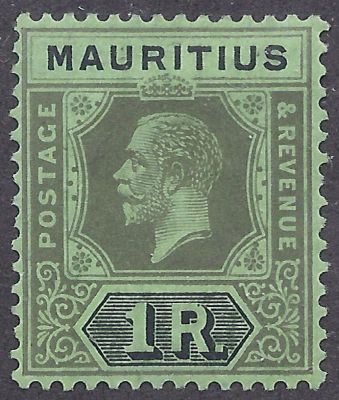
and
Sc. 156a
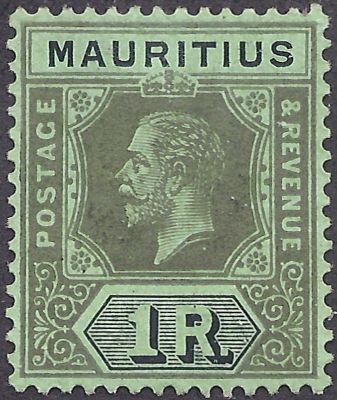
Pretty similar at first glance.
Scott and SG agree on three spotting features. Scott adds a fourth. Here are each of them.
First, the tablets on the sides curve inward at the top on Die 2, but are square on Die 1.
Die 2, with the spotting feature highlighted:
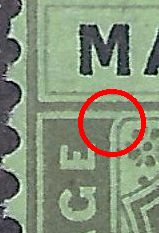
and Die 1, without the inward curve:
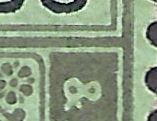
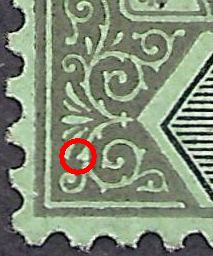
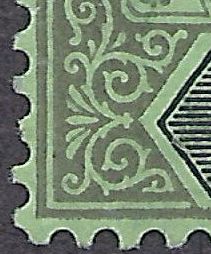
Second, there is a bud on the scrollwork in the frame on each lower side on Die 1, missing from Die 2:
Die 1:
Die 2:
Third, the second line below the country name (i.e., the thick line) has steeply-angled ends at each side of the crown on Die 1, while the ends are vertical on Die 2.
Die 1:
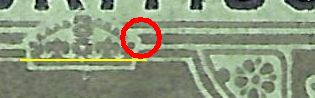
(ignore the yellow line for now)
and Die 2:
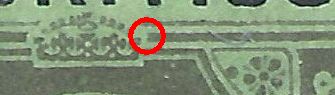
Finally, Scott lists a fourth feature. On Die 1, the base of the crown is below the "line" formed by imagining that the white frame line around George's portrait continues straight through the crown. This imaginary line is represented by the yellow line, above. On Die 2, the crown rests on the imaginary continued line. (You have to be using the
bottom of the white line for this to work.)
There is some variability to these. Scott mentions Dies 1a and 1b (found in Ceylon, for instance) and we can go into those in another post. Victoria's spotting features can be a matter for another topic, if there is interest.
Please offer any corrections or clarifications that seem necessary or useful.





 Posted 02/06/2011 3:33 pm


