Stamp Community Family of Web Sites
Thousands of stamps, consistently graded, competitively priced and hundreds of in-depth blog posts to read


Stamp Community Forum
 
Username:
Password:
Save Password
Forgot your Password?

This page may contain links that result in small commissions to keep this free site up and running.

Welcome Guest! Registering and/or logging in will remove the anchor (bottom) ads. It's Free!

Austria Fine Or Coarse Print - Help Please

Previous Page | Next Page    
 
To participate in the forum you must log in or register.
Author Previous TopicReplies: 32 / Views: 8,603Next Topic
Page: of 3
Pillar Of The Community
United States
3568 Posts
Posted 04/03/2011   10:51 pm  Show Profile Bookmark this reply Add jhlovell to your friends list  Get a Link to this Reply
jimjamtwo look at the two EXTENDING lines one left side of eyebrow and the other below the eye. Unless I am mistaked that is a pretty telling set of lines. - Jeff
Send note to Staff  Go to Top of Page
Pillar Of The Community
United States
7070 Posts
Posted 04/03/2011   11:08 pm  Show Profile Bookmark this reply Add Cjd to your friends list  Get a Link to this Reply

Quote:
I think I will start a thread on the 1850 arms issue.


Capital idea.

Send note to Staff  Go to Top of Page
Rest in Peace
Canada
5701 Posts
Posted 04/05/2011   12:25 pm  Show Profile Bookmark this reply Add BeeSee to your friends list  Get a Link to this Reply
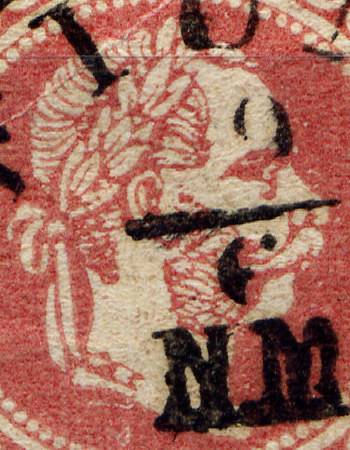
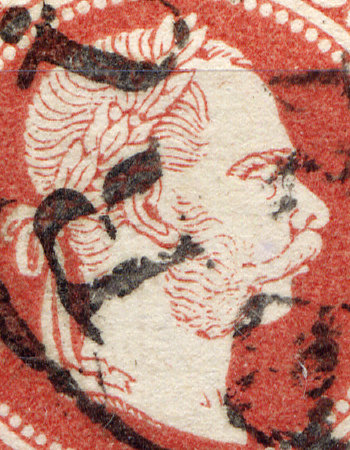
After examining some of my Empire stamps, it seems that the coarse and fine differences are not so simple! The Michel illustrations from Butterfly confuse it more, as the eye extensions don't seem to match, nor the lines on the bottom of the neck.

Here is what I have, first what seems "coarse", second "fine":


Send note to Staff  Go to Top of Page
BeeSee in BC
"The Postmark is Mightier than the Stamp"
http://brcstamps.com ---- BNAPS, RPSC, APS
Pillar Of The Community
United States
3568 Posts
Posted 04/05/2011   12:45 pm  Show Profile Bookmark this reply Add jhlovell to your friends list  Get a Link to this Reply
boy doesnt that just confuse the issue.
Send note to Staff  Go to Top of Page
Edited by jhlovell - 04/05/2011 12:46 pm
Valued Member
United States
427 Posts
Posted 04/05/2011   6:46 pm  Show Profile Bookmark this reply Add butterfly to your friends list  Get a Link to this Reply
Reminds me of the US postage due color varieties. I got a couple dozen of them and was able to arrange a near continuum of color shades, so just gave up trying separate into the Scott categories.

I was thinking my difficulties in typing were related to light prints of the coarse and heavy prints of the fine; but now I'm beginning to wonder if multiple plate varieties are out there.

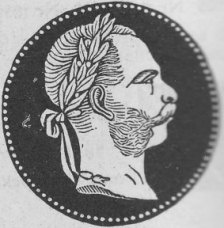
On the arms issue Michel does illustrate the 9K types as shown below.
I also had some difficulty with that.


Send note to Staff  Go to Top of Page
Valued Member
United States
427 Posts
Posted 04/05/2011   7:37 pm  Show Profile Bookmark this reply Add butterfly to your friends list  Get a Link to this Reply
On the other hand, could your stamps have been in close proximity to one another for a long period of time?
They might have produced hybrids.
Send note to Staff  Go to Top of Page
Pillar Of The Community
Australia
2156 Posts
Posted 04/05/2011   7:38 pm  Show Profile Bookmark this reply Add jimjamtwo to your friends list  Get a Link to this Reply
Out of five examples that I own, three don't have coloured areas in the ears, just lines.
Send note to Staff  Go to Top of Page
Pillar Of The Community
United States
7070 Posts
Posted 04/06/2011   09:15 am  Show Profile Bookmark this reply Add Cjd to your friends list  Get a Link to this Reply
I think plate wear can put these on some sort of continuum.

Send note to Staff  Go to Top of Page
Rest in Peace
Netherlands
963 Posts
Posted 04/02/2021   03:54 am  Show Profile Bookmark this reply Add Galeoptix to your friends list  Get a Link to this Reply
Andy's article explains all where the catalogues are WRONG!

Coarse vs fine whiskers

By Andy Taylor

The ‚coarse vs fine' whiskers are a consequence of the printing arrangements, and are not a design feature. The stamps were printed from ‚plates comprising 100 individual cliches held within a frame. The plate was placed face-up on the bed of the press; above it were two rollers, a smaller one for the ink and a larger one for the paper. As the plate was traversed forwards and backwards, both rollers rotated. The plate was inked by the smaller roller, the skill of the printer ensuring that neither too much nor too little ink was applied. Meanwhile the paper was gripped to the larger roller (in English called the Impression Cylinder), which as it rotated pressed it on to the just-inked plate, causing the image to be printed. This roller was steel covered by a ‚make-ready' to allow the raised parts of the plate to press into the paper without creating indentations in the roller. Apart from the recognised subtypes of the 5kr, the differences are reputedly due to the use of felt or soft card as a make-ready under the stamp paper for the ‚coarse' prints, and a strong paper make-ready under the ‚fine' or ‚hard' prints, with variations caused by changes in the stamp paper itself, the make-ready becoming hard with repeated use or absorption of ink, etc etc. It is not true that all stamps printed before 1874 are coarse-whiskered and all on or after that date fine-whiskered.

Gary Ryan has pointed out that illustrations of the ‚coarse' and ‚fine' prints (such as that given in Michel or Gibbons) are an oversimplification and considerable experience is sometimes required to differentiate between the two. Study of the paper or the perforations can assist. However, a more reliable guide for the 5kr value is available, by examination of detailed design variations: see below. The first type II appeared in 1872, hence no type II stamps were sold in Hungary.

http://www.austrianphilately.com/gurahon/index.htm
Send note to Staff  Go to Top of Page
Pillar Of The Community
United States
7070 Posts
Posted 04/02/2021   8:54 pm  Show Profile Bookmark this reply Add Cjd to your friends list  Get a Link to this Reply
At a quick glance, an interesting read. This requires some digesting. Thanks for sharing it.
Send note to Staff  Go to Top of Page
Pillar Of The Community
Romania
596 Posts
Posted 04/03/2021   02:37 am  Show Profile Bookmark this reply Add cupram to your friends list  Get a Link to this Reply
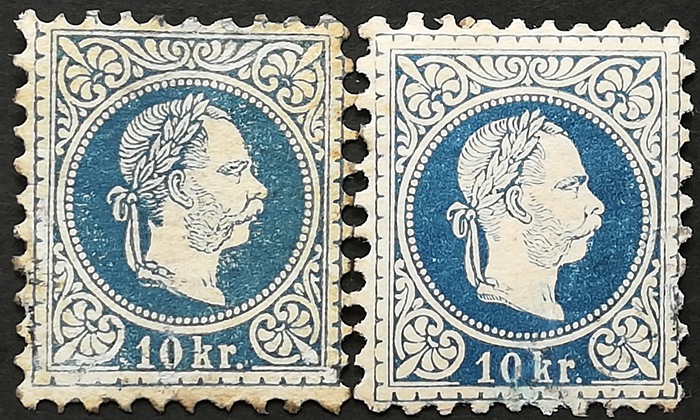
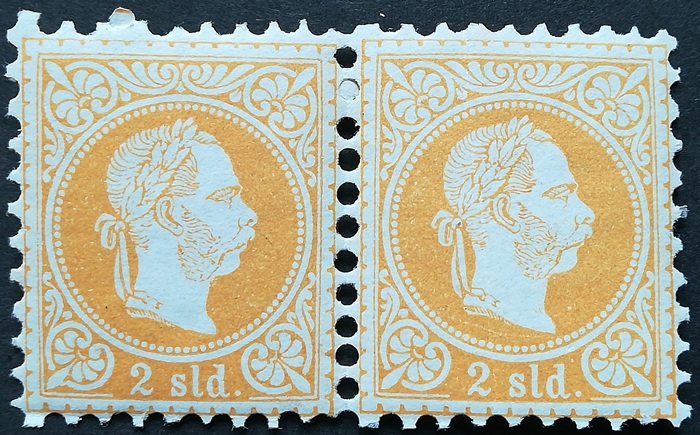
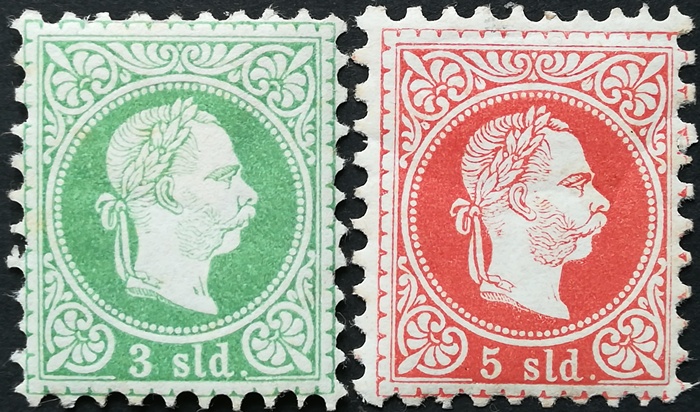
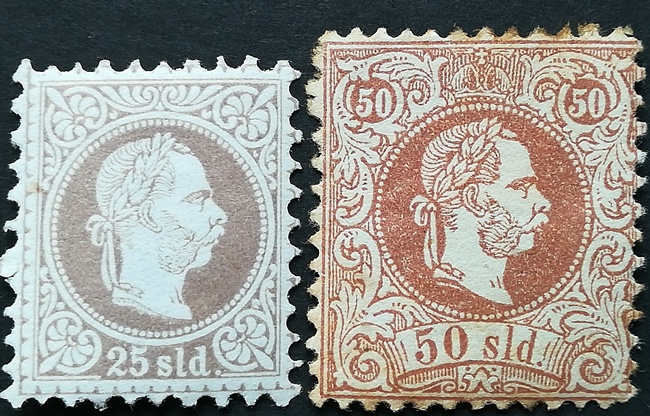
These stams are not in my area of interest (I inherited them).
The first 10 kr and 50 sld I think are coarse printing.
The shadows in the lines in the hair of the head I think differ a lot.
I hope it will help you.


Send note to Staff  Go to Top of Page
Pillar Of The Community
1326 Posts
Posted 04/03/2021   8:27 pm  Show Profile Bookmark this reply Add DrewM to your friends list  Get a Link to this Reply
"Gary Ryan has pointed out that illustrations of the ‚coarse' and ‚fine' prints (such as that given in Michel or Gibbons) are an oversimplification." I couldn't agree more.

I collect Austria but only to the extent that I have an album filled with Austrian stamps, not that I'm an expert on Austrian stamps. Nevertheless, for what it's worth, this "coarse vs. fine" print difference can be very misleading. Defined this way, you'd think there were two distinct varieties. But there aren't.

There would be two varieties if the stamps were printed at two distinctly different times (they weren't) from different plates (they weren't) with different inks (I don't think they were) or on different paper (they weren't). As the links in this thread explain, what actually happened is that over time, different rollers were used, some softer and some harder, and different underlayments were used beneath the stamps (some softer and some harder) and perhaps the amount of ink changed (completely unknowable) and the printing plates themselves may have gradually worn, and so on. So -- over time -- stamps printed from different rollers, etc. produced different degrees of "fineness" or "coarseness".

To simplify them, you could divide these stamps into two varieties, "fine" and "coarse," but really some are very fine, some moderately fine, some a little coarse, others more coarse, and so on. From "fine" vs. "coarse" there's a gradation from really fine to really coarse with many stamps in between, and it's as many as you decide there are depending on this whisker or this lock of hair, and so on. Feel free.

Today this wouldn't be allowed, but back then a stamp was a stamp and how sharply or not these stamps were printed may not have seemed like a big deal. A little surprising for Austria since they generally pay a lot of attention to the details. But maybe not on this issue.

So you don't have two varieties, coarse and fine, nor four varieties as it says somewhere. What you have is a gradation of stamps or a continuum that gets coarser over time, with the use of different rollers and maybe with other factors, too. Call them "fine" and "coarse" if you want, and that's a decent enough distinction to make, but remember that a lot of these stamps are neither. They may be exceptionally clear so "very fine" or fine on the way to becoming coarse or really coarse in a very obvious way -- or they're somewhere in between these.

If I were laying out an album page, I'd provide spaces for stamps that are crystal clear and well printed ("fine") -- and identical spaces for stamps that are much more coarse. And I'd leave it at that. And that's pretty much what Scott and many albums do. Collectors naturally ask is this stamp more "fine" or more "coarse"? The answer is you need to compare two identical stamps and decide. If your "coarse" stamp isn't coarse enough, maybe look for an even coarser stamp. If your "fine" stamp is just a little too coarse, look for one that's more fine.

But trying to put these stamps into two distinct piles of "fine" and "coarse" is just not going to work. There are no clear dividing lines between groups. So, depending on how many of these stamps you have, your "fine-to-coarse scale" may include just two or three or stamps. Or you may need six, seven, or eight stamps in your scale from really fine to really coarse. Both are correct. It just depends on how far you want to go.

As for my Austria album, I just mount the crispest and finest stamps in one place and the coarsest below them -- as s if they were two distinct printings. Which of course they weren't. I'm a busy man.
Send note to Staff  Go to Top of Page
Edited by DrewM - 04/03/2021 8:54 pm
Pillar Of The Community
Canada
1462 Posts
Posted 04/03/2021   11:30 pm  Show Profile Check gmot's eBay Listings Bookmark this reply Add gmot to your friends list  Get a Link to this Reply
I am about to go through a recently purchased lot of early Austria - and this is very useful information to keep in mind. Thanks much.
Send note to Staff  Go to Top of Page
Pillar Of The Community
United States
1106 Posts
Posted 04/04/2021   08:44 am  Show Profile Bookmark this reply Add danstamps54 to your friends list  Get a Link to this Reply
Great thread!

Coarse and fine prints have confused and frustrated me for a long time!
I may start to tackle my Austria stamps again

Dan
Send note to Staff  Go to Top of Page
Experienced stamps need a home too. I'd rather have an example that is imperfect than no example.
I collect for enjoyment, not investment.
APS Member #223433
Postmark Collectors Club Member #6333
Meter Stamp Society Member #1409
Bedrock Of The Community
12551 Posts
Posted 04/04/2021   09:05 am  Show Profile Bookmark this reply Add rogdcam to your friends list  Get a Link to this Reply
Send note to Staff  Go to Top of Page
Page: of 3 Previous TopicReplies: 32 / Views: 8,603Next Topic  
Previous Page | Next Page
 
To participate in the forum you must log in or register.

Go to Top of Page

Disclaimer: While a tremendous amount of effort goes into ensuring the accuracy of the information contained in this site, Stamp Community assumes no liability for errors. Copyright 2005 - 2026 Stamp Community Family - All rights reserved worldwide. Use of any images or content on this website without prior written permission of Stamp Community or the original lender is strictly prohibited.
Privacy Policy / Terms of Use    Advertise Here
Stamp Community Forum © 2007 - 2026 Stamp Community Forums
It took 0.19 seconds to lick this stamp. Powered By: Snitz Forums 2000 Version 3.4.05