| Author |
 Replies: 32 / Views: 8,746 Replies: 32 / Views: 8,746 |
|
Pillar Of The Community
United States
3568 Posts |
|
|
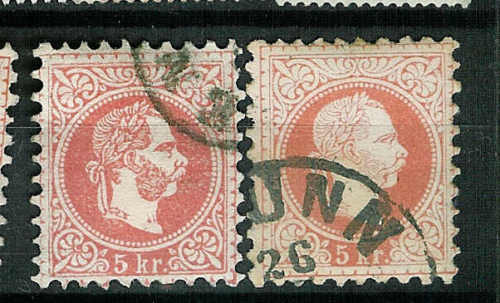
Is there someone that can help me learn to distinguish between coarse and fine print. I know the values are not that much different but that's not the point. I have these three (and others) and I don't have any comparison to be able to tell. If someone has a comparing scan or explanation that would be wonderful. Thanks in advance - Jeff  |
|
Send note to Staff
|
|
|
|
|
Pillar Of The Community
United States
7104 Posts |
|
|
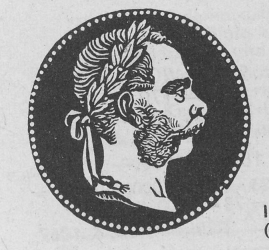
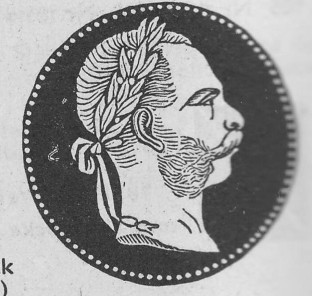
Jeff, as you probably know, the "fine" and "coarse" correspond to the whisker/hair detail. It is most obvious when you are holding one of each in your hand.
I'll be interested to see if anyone agrees with my guessing...I'd say the 5kr is coarse and the 10kr is fine.
Thoughts? |
Send note to Staff 
|
|
|
Pillar Of The Community
United States
3568 Posts |
|
|
the green was hardest to look at cause it is so light. The difference on the scan is more discernable that with a magnifying glass. I was hoping someone had a scan of each type that was already know so we could compare, but as of right now I agree with you and the green is I guess more like the 10kr. Thanks for looking Collin. |
|
Send note to Staff
|
|
|
Pillar Of The Community
United Kingdom
1356 Posts |
|
|
Pillar Of The Community
United States
2480 Posts |
|
|
Pillar Of The Community
United States
3568 Posts |
|
|
Pillar Of The Community
United Kingdom
1356 Posts |
|
|
Pillar Of The Community
United States
3568 Posts |
|
|
that's it timiseksj!  collin, stampgal we have pictures! I love this forum. |
|
Send note to Staff
|
| Edited by jhlovell - 04/03/2011 3:56 pm |
|
|
Rest in Peace
Canada
5701 Posts |
|
|
Valued Member
United States
427 Posts |
|
|
Pillar Of The Community
Australia
2156 Posts |
|
|
Pillar Of The Community
United States
3568 Posts |
|
|
Pillar Of The Community
Australia
2156 Posts |
|
|
I went to the webpage given above and, while it was interesting, I must say that the Ferchenbauer method of distinguishing between four types (Ia, Ib, IIa, and IIb) doesn't work.
I have 5 of these stamps and it was only possible to identify one by this method. I have a Type Ia.
However, the other four stamps all contradict his model. Not one of them has a '5' with a flat top, so cannot be Type II, yet not one of them has an ornament like the one indicated for Type I.
In other words, they're neither Type I nor Type II! This is odd, because the fact that I have four of them suggests that this is the most common variety of the stamp!
Clearly, distinguishing issues of this stamp is a subject of considerable difficulty.
jhlovell, can you pls tell me more about the line on the eyebrow matter? |
|
Send note to Staff
|
| Edited by jimjamtwo - 04/03/2011 7:51 pm |
|
|
Rest in Peace
Canada
5701 Posts |
|
|
Thanks for those illustrations Butterfly! Now does Michel have the illustrations for showing the different types in the earlier Austrian arms issue? Scott's descriptions do not help me at all. |
|
Send note to Staff
|
|
|
|
Pillar Of The Community
United States
7104 Posts |
|
|
The note in Michel Europe (Middle Europe) under the 1850 issue seems to direct one to the Austria Specialized catalogue for details. (I don't have Austria Specialized.) The general listing is less detailed than Scott.
Yvert Classique shows the 9kr value tablets (only) for each of 3 types, but doesn't depict the single line/two lines around the center.
[edit: by "less detailed than Scott" I meant Scott Classic...I didn't double check to see if Scott Vol. 1 and Scott Classic have exactly the same information.] |
|
Send note to Staff
|
| Edited by Cjd - 04/03/2011 10:14 pm |
|
|
Rest in Peace
Canada
5701 Posts |
|
|
Thanks Cjd. When I get back home I think I will start a thread on the 1850 arms issue. |
|
Send note to Staff
|
|
|
|
Replies: 32 / Views: 8,746 |
|




 Posted 04/03/2011 3:19 pm