| Author |
 Replies: 24 / Views: 16,132 Replies: 24 / Views: 16,132 |
|
Pillar Of The Community
Australia
2156 Posts |
|
|
I've never seen these before. Does anyone know what they are exactly? 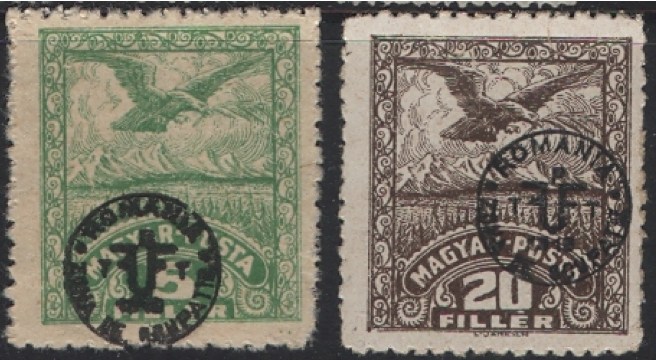 Also, do these stamps exist without the overprint? I haven't seen any such Hungarian stamp. |
|
Send note to Staff
|
| Edited by jimjamtwo - 06/03/2011 11:22 am |
|
|
|
|
Bedrock Of The Community
Australia
38679 Posts |
|
|
Look Hungary back of book,
Romanian occupation of Hungary
DEBRECZIN
1920
SGD55 and SGD59 (stan gibbons)
wiki:
After World War I, Hungary lost a considerable portion of its eastern territory to Romania, and Debrecen once again became situated close to the border of the country. It was occupied by the Romanian army for a short time in 1919.
The stamps are curious as this is the only place they pop up IIRC
perhaps Wadmalatz can give us some deeper information?
|
Send note to Staff 
|
| Edited by rod222 - 06/03/2011 12:30 pm |
|
|
Pillar Of The Community
United States
7104 Posts |
|
|
In Scott, Second Debrecen issue, ##3N4 and 3N8. Forgeries abound.
The First Debrecen issue is made up of overprints on Hungarian stamps, so forged overprints are common. In the case of these, you'd have to forge the stamp and the overprint. Which, of course, they did. |
|
Send note to Staff
|
|
|
Pillar Of The Community
Romania
886 Posts |
|
|
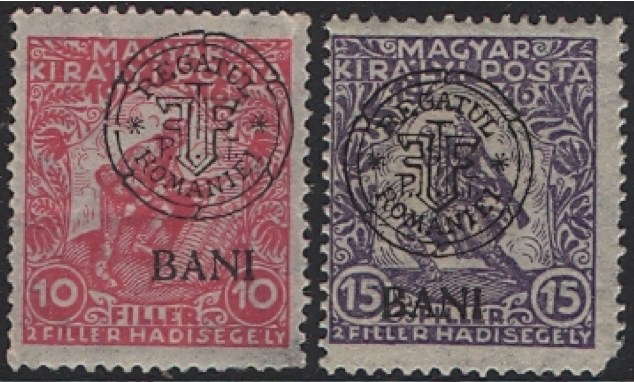
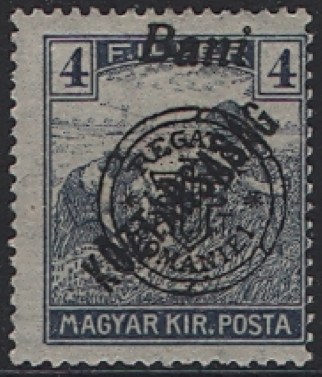
The overprint: Romania- Ocupation Zone. PTT= Posta, Telefon, Telegraf. FF= Ferdinand (king of Romania at that time, till 1927). These stamps have minimal CV (in both Michel and Hungarian catalogue). The stamps were designed in Debrecen (some say according to the sketches of a romanian officer Boboiceanu, by Lipot Janesch,3 of them: Turul, a scene with horseman, peasant woman), printed in Oradea, then overprinted in Debrecen. Because of the low CV, there is few literature about this overprint (I can`t tell you if these are forgeries or not). About the first Debrecen issue there is more information (because some of these can reach higher CV). First Debrecen Issue is indeed made up of overprints on Hungarian stamps, but the overprint is elliptical. |
|
Send note to Staff
|
| Edited by Wadmalatz - 06/03/2011 3:17 pm |
|
|
Pillar Of The Community
Australia
2156 Posts |
|
|
So it's not possible to say whether the stamps are even genuine, let alone the overprints?
I can't understand why someone would create new designs for forged stamps and go to the trouble of having them printed rather than just forging overprints on real stamps.
A bizarre case indeed! |
|
Send note to Staff
|
|
|
Bedrock Of The Community
Australia
38679 Posts |
|
|
Pillar Of The Community
United States
7104 Posts |
|
|
As far as I know, if you wanted to forge the second-issue stamps, you had to start by creating the stamps. There were no unoverprinted, original stamps to forge an overprint on. (Again, as far as I know.)
|
|
Send note to Staff
|
|
|
Pillar Of The Community
Australia
2156 Posts |
|
|
Pillar Of The Community
Australia
2156 Posts |
|
|
Pillar Of The Community
Romania
886 Posts |
|
|
For these I`ll provide scans and info. These are Romanian stamps. Two types exist: Cluj (upper row: BANI) and Oradea (down:Bani). After occupying Trannsylvania, Hungarian stamps were overprinted. First seems (and only seems) a forgery: the star on the left bw. the 2 R: two points, instead of one (min. 43 and 47), circle broken. Anyway, you should first examine the stars, on majority of the forged overprints these are just rough imitations, spots, made of points etc. Late in the afernoon I`ll scan a larger picture of the original overprint. The distance bw. the two ends of the R (up and down) should be 1,5 mm. And all 3 have a low CV (at least in Michel, cca. 0,20 Eur each) Here`s the scan: (remember: BANI or LEI- Cluj/ Bani or Lei - Oradea) the overprint was made in Bucharest (letters local) sent first to Cluj, then to Oradea- that`s why Cluj overprints are usually clearer. 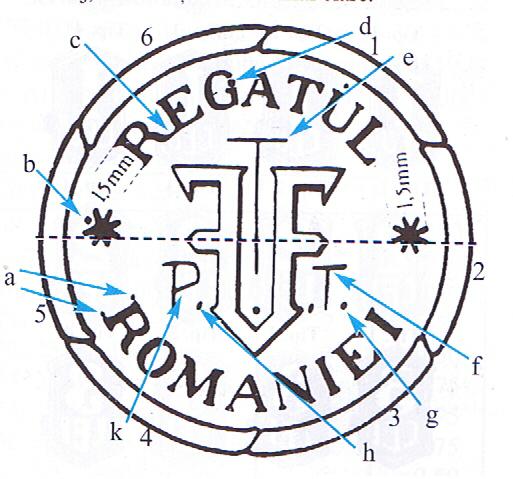 |
|
Send note to Staff
|
| Edited by Wadmalatz - 06/04/2011 09:39 am |
|
|
Pillar Of The Community
Australia
2156 Posts |
|
|
Thanks so much for the information and the illustration, Wadmalatz! I have about 16 more of these stamps so your knowledge is invaluable. I wonder if I could ask about one more stamp. This is probably the nicest vintage Romanian stamp I own. Do you know the catalogue number and CV (MNH, original gum) for this one? 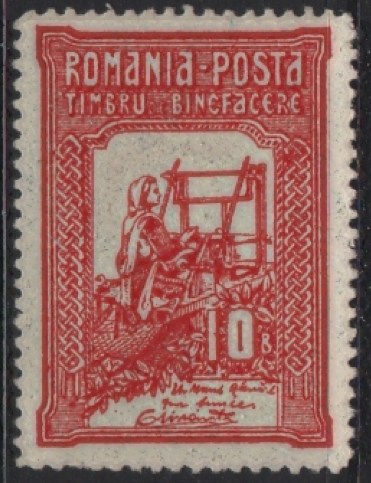 |
|
Send note to Staff
|
|
|
Pillar Of The Community
Romania
886 Posts |
|
|
Romania, 1906. Queen Elisabeth (Elisaveta) in traditional costume. Handwriting under would be something like: ~The future of the country is woven by women~ Elisaveta. Only Michel number can give and MNH CV, depends on perforation:
Mi. nr. 167 perf. 11,5= 40 eur/ 11,5:13.5 = 40 eur/ 11.5:13.5:11.5:11.5= 150 eur (that means on 3 sides 11.5, one side 13.5).
By the way, it was forged... (good quality forgeries in Bruxelles), but this seems ok |
|
Send note to Staff
|
| Edited by Wadmalatz - 06/04/2011 11:19 am |
|
|
Pillar Of The Community
Australia
2156 Posts |
|
|
Bedrock Of The Community
Australia
38679 Posts |
|
|
Pillar Of The Community
Australia
2156 Posts |
|
|
Thanks for the reminder, Rod. The numbers were making my eyes blur!
By the way, Wadmalatz, the perfs of my Queen Elisaveta stamp are 12.5, which number you did not mention. Does that mean that my copy is most likely a forgery? |
|
Send note to Staff
|
|
|
Pillar Of The Community
Romania
886 Posts |
|
|
 , don`t know. Bruxelles forgeries have broken (and thinner) frame- down left, pale colour. So this seemed allrigt to me. You should perhaps take a look at the gum (I don`t have MNH). I`ve read, that forgeries have smooth, even gum, originals have white, uneven gum. Or ask sby, who can provide a scan (I can`t find mine, total mess here  ) |
|
Send note to Staff
|
|
|
Replies: 24 / Views: 16,132 |
|




 Posted 06/03/2011 09:52 am