Thanks for the comments, everyone.
I've been able to learn something about the two Polish locals from this website.
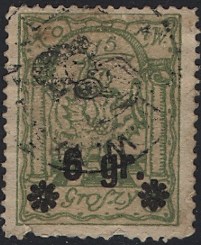
http://catalogue.klaseboer.com/vol2.../polaloc.htmStamp (2) is a Warsaw local. Klaseboer rates the stamp with this overprint as common.
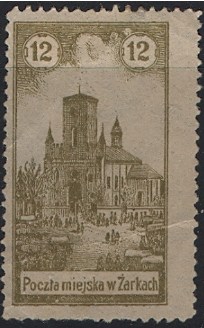
Stamp (1) is a Zarkach local. Klaseboer rates this stamp as uncommon, but adds the following note. 'Warning: Many forgeries exist! It seems that only 5000 of these stamps were issued (most of the above stamps are probably forgeries!). In the genuine stamps the 'r' and the 'k' in 'Zarkach' should not touch each other. The genuine stamps should be perforated 11 1/2. The genuine stamps don't exist imperforated!' By these criteria, the stamp shown is authentic.
Another website:
http://home.golden.net/~medals/locals.htmlgives a longer list of characteristics distinguishing originals from forgeries. I'm still working my way through them!
These are 8 ways in which forgeries of Zarki stamps differ from the genuine stamps:
1. Forgery has 2 rows of white bricks; Genuine has 3 rows.
2. Forgery has crescent in window @ 9 o'clock position; Genuine closer to 8 o'clock.
3. Forgery has the left person in the "group of 3" appearing shorter than the other 2;
Genuine- all in the group are roughly the same height.
4. Forgery has the r & k in "Zarkach" touching; Genuine does not have the r & k touching.
5. Forgery has the tree tops appearing heavy; Genuine has tree tops appearing light & whispy.
6. Forgeries come perf and imperf; Genuine exist only perf 11 1/2.
7. Forgeries are mainly uncancelled; Genuine exist cancelled and uncancelled.
8. Forgeries usually have paper that does not fluoresce under black light; Genuine paper fluoresces.
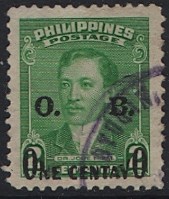
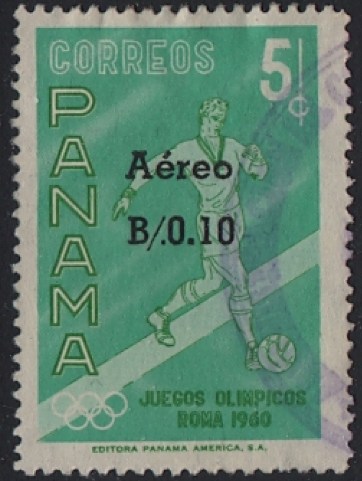
Regarding stamp (4) what I'm wondering is if the final '0' for Centavo is correct. Scott shows an image of this overprint on another stamp and it's an 'o' at the end, not an '0.'





 Posted 06/10/2011 10:48 am