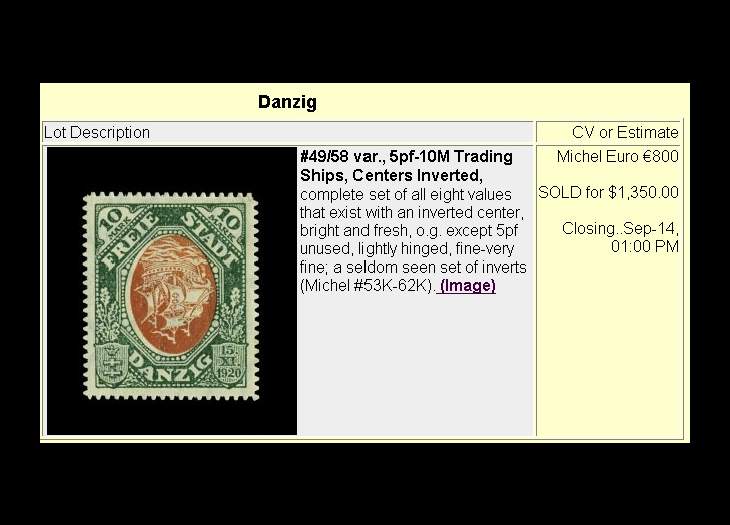
I'm a classic WW "generalist", and this is intended as an introduction to Danzig's incredible and lovely classic stamps.

What to do with Danzig?

After WWI, the League of Nations decided to create a "Free City", separated from Germany and the newly reconstituted Poland. For access, Poland was able to use the port on the Baltic Sea ( now Gdansk). But as Danzig was 95% ethnic German, it remained a separate City-State. The Capital naturally was Danzig, and the population was about 400,000 in 1939.
In the beginning, German stamps of 1906-20 were overprinted, but by 1921 Danzig had their own designs. This persisted until 1939, when Germany seized Danzig, and added it to the Reich. After WWII, the city and port became part of Poland.
So lets take a look at the Danzig stamp issues....
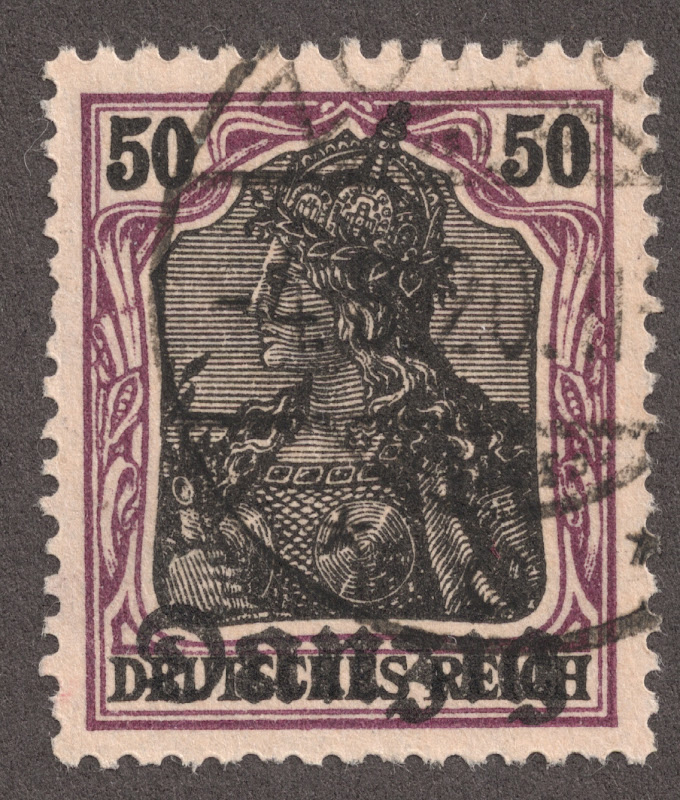
The "Germania" stamps of 1906-20 were overprinted "Danzig", and issued in 1920. Here is the 50pf purple & black/bluff, one of fifteen found for the issue. The design should have been very familiar to the Danzig population.

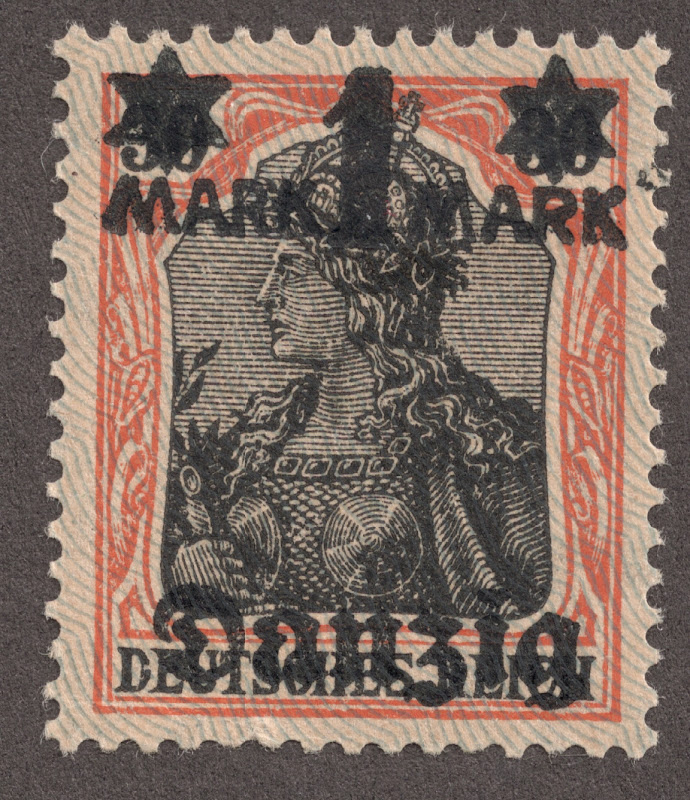
The same year, the "Danzig" overprinted issues were surcharged with various values. Here is a 30pf orange & black/buff with a 1m surcharge. There are some interesting printing techniques used on some higher valued (German) Danzig stamps, including this one, to prevent reuse. Note the thin wavy lines, called "burelage" on the paper?
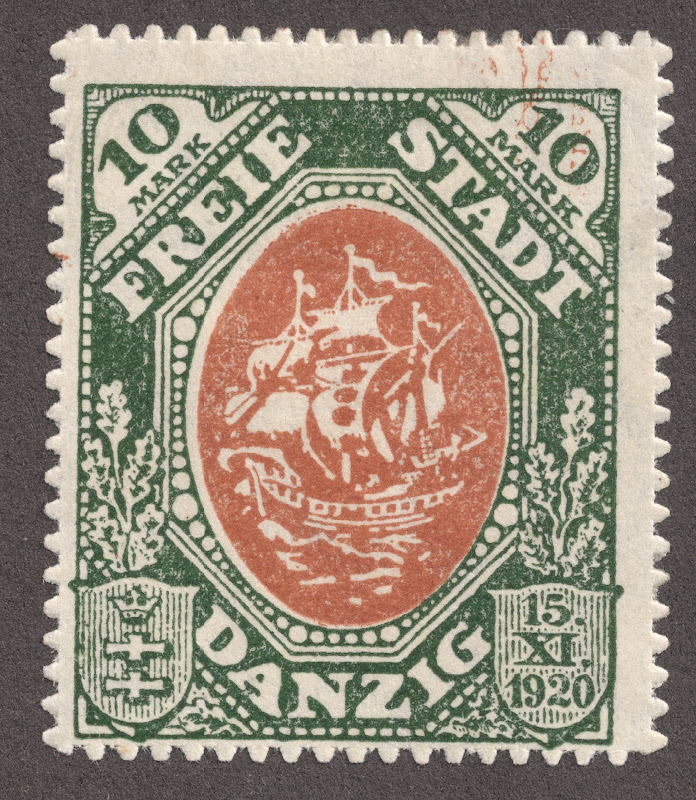
What better image for a port city such as Danzig to have as their own first stamp design than the "Hanseatic Trading Ship"? Here is a 1920 10m dark green & brown orange, one of ten stamps issued in honor of the Constitution.
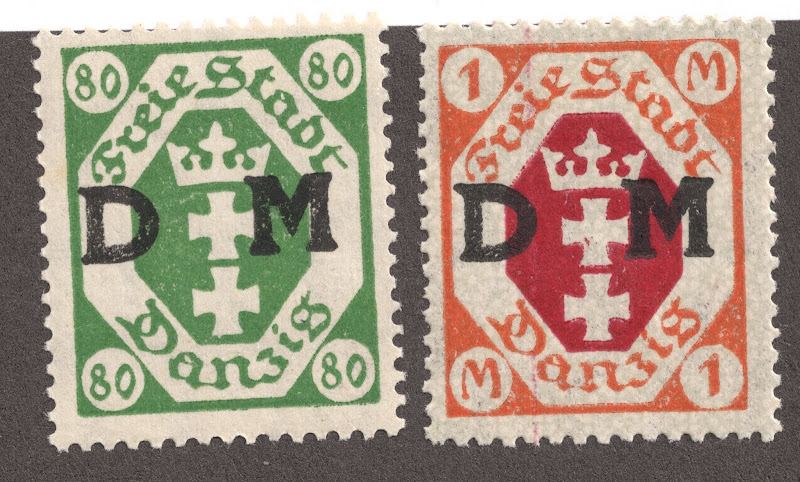
The 1921-23 "Arms" design issue had 27 stamps; 53 stamps if one includes the overprinted "Official" stamps, which are illustrated here. The 80 pf green is on white paper. But note the faint gray webbing on the 1m orange & carmine: another attempt to prevent reuse.
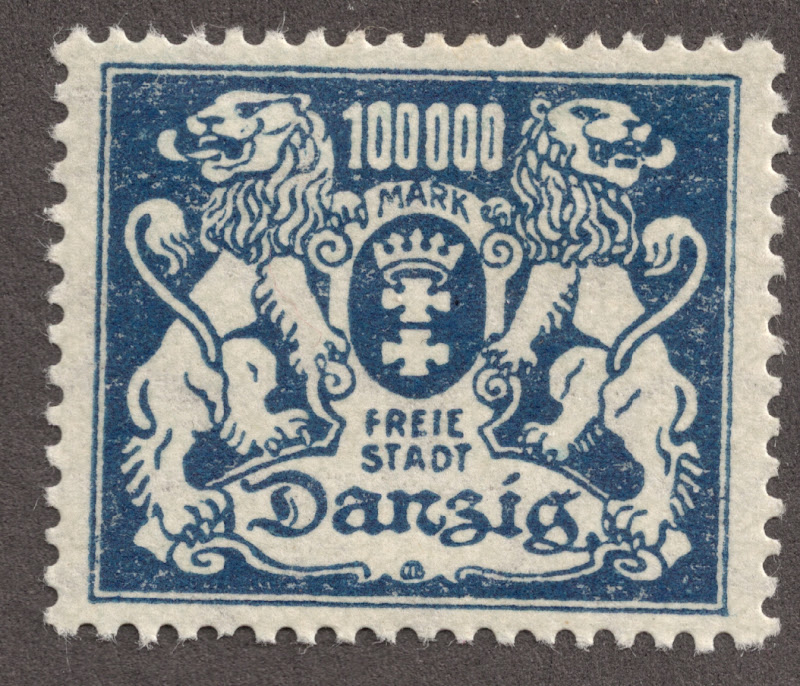
Another common design is the 1922-23 "Coat of Arms" stamp featuring two Lions that appear not to be in a good mood.
This 100,000 mark deep blue stamp betrays something else: the beginning of hyper inflation.
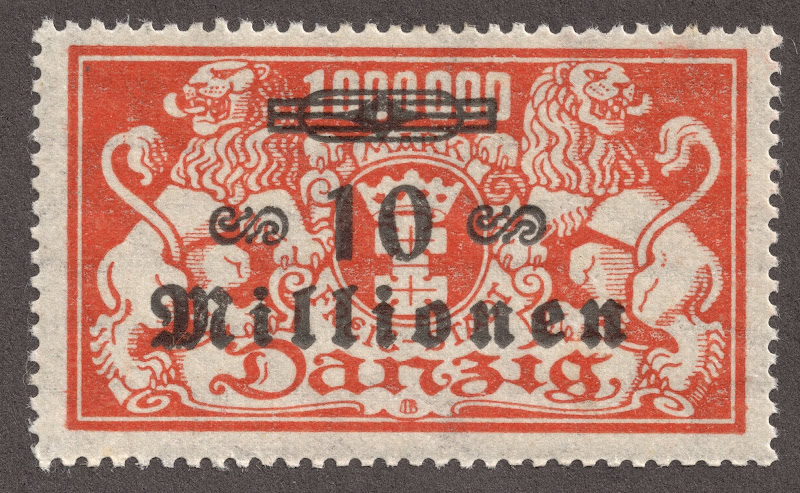
1,000,000 marks were not enough, how about 10 million? This lovely 1923 10mil m orange existed among horrible economic times.
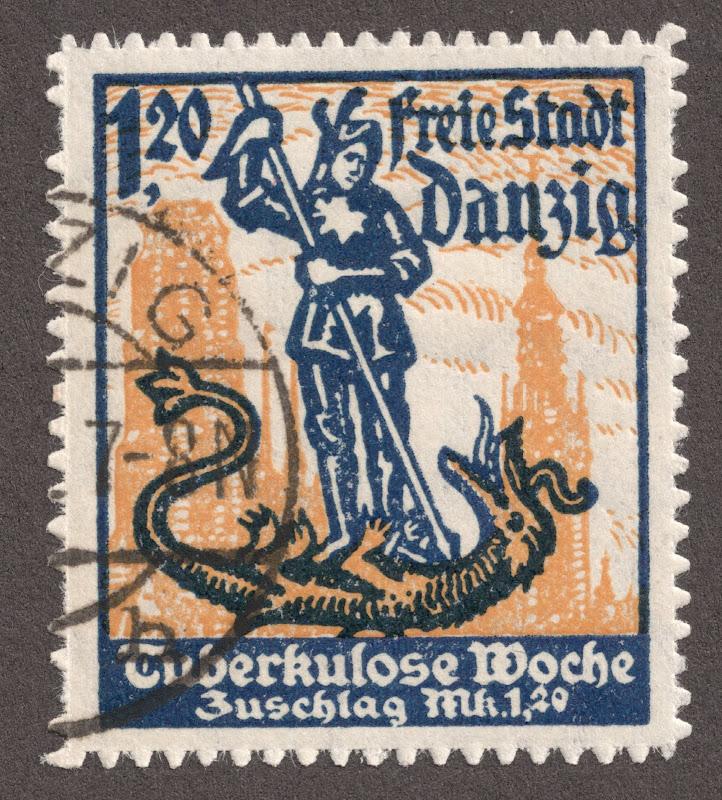
This 1921 1.20m + 1.20m dark blue & orange semipostal "St. George and Dragon" was intended for "Tuberculosis Week". Semipostals were commonly used to raise funds for charity or for a rebuilding project.
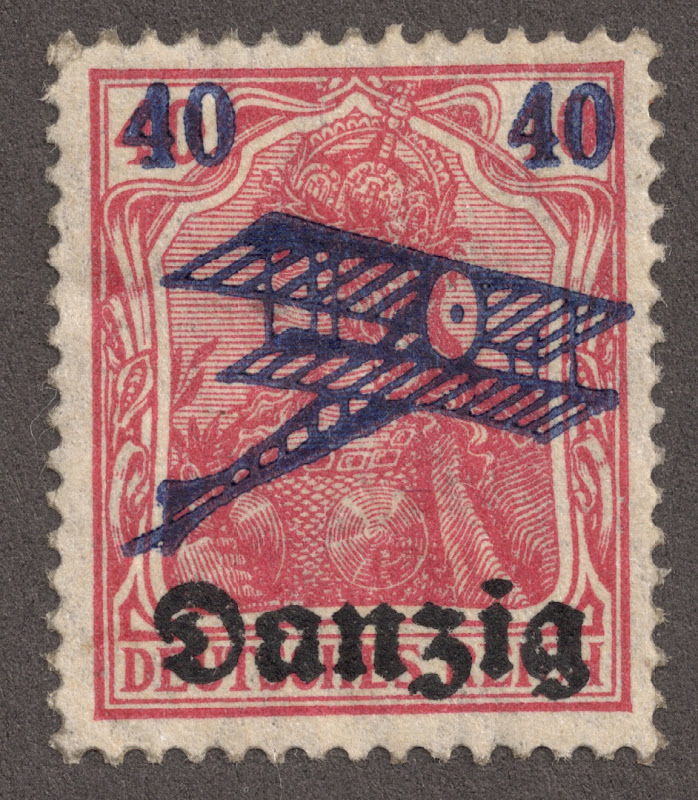
Finally, here is the first Air Post issue; a 1920 40pf on 40pf blue surcharged "airplane"

, what a great looking stamp!
Comments and elaborations appreciated!





 Posted 09/09/2011 02:06 am


 . First one has `ZOPPOT` cancellation (I have one with `TIEGENHOF`, a few `ZOPPOT`, but mostly just DANZIG). Here is the last set issued (1939):