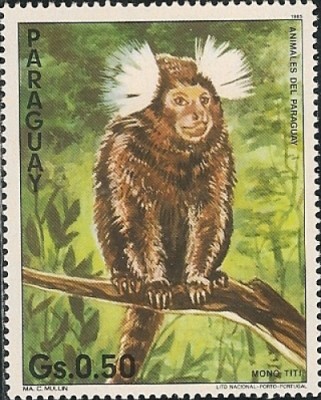
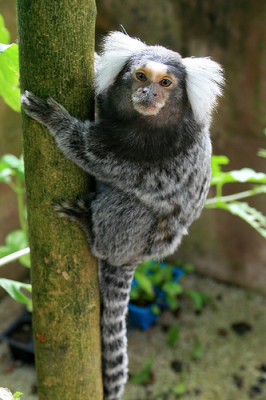
|
This page may contain links that result in small commissions to keep this free site up and running.

Welcome Guest! Registering and/or logging in will remove the anchor (bottom) ads. It's Free!
To participate in the forum you must log in or register.
| Author |
 Replies: 422 / Views: 107,332 Replies: 422 / Views: 107,332 |
|
|
|
Valued Member

Australia
206 Posts |
|
|
Hello Kris: Yes, let's look at New World monkeys - like your emperor tamarin, but I always link him in my mind to Emperor Franz-Joseph II, much loved and proud possessor of a fine mo: 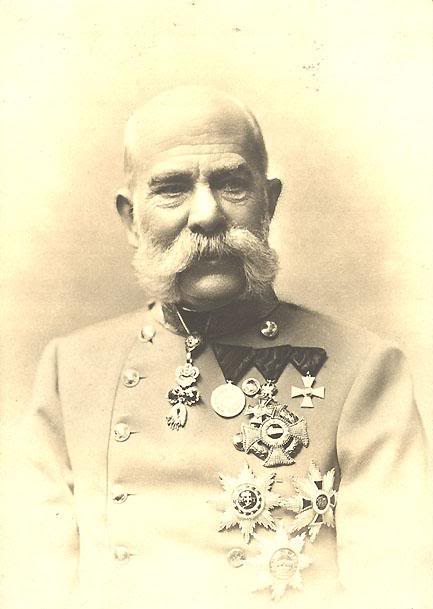 The German name is great "emperor's-moustache tamarin". Here'sanother South American species, the critically endangered cotton-top marmoset, from the New York office of the United Nations, as part of its "Endangered Species" annual issue:  An appropriate name, cotton-top (Note: The animal in the picture is male - male marmosets carry their (usually twin) offspring and youngsters only go to Mom to feed)?  The germans, though, have a better name for the species, calling it "Lisztaffe", Listz' monkey, after the composer Franz Liszt:  If it were discovered to-day, would they call it "Einstein's monkey"? Or maybe after a rock star I've never heard of.... |
Send note to Staff 
|
|
|
Pillar Of The Community
Germany
3028 Posts |
|
|
Hi Cobie, You are quite right, the other Kaiser fits the picture much better for the Kaiser Tamarin.   This time an endagered species of particular beauty: Leontopithecus rosalia chrysomelas of the southern Amazon basin. On the stamp rosalia is in the name but when you look him up it isn't. The manes of this genus do remind one of the mane of a lion, Leon. 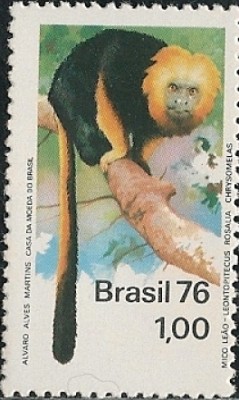 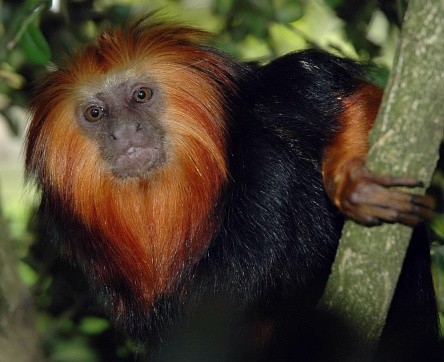 And a stamp of Liszt for good measure to accompany your beautiful cotton-top. By the way, if you should ever put together an exhibit of what you have, this kind of stamp adds to the fun. (Let me know if you want any) Kris  |
|
Send note to Staff
|
|
|
Valued Member
Australia
206 Posts |
|
|
Hello Kris: Thanks for the follow-up! Your tamarin above is the golden-headed tamarin (Leontopithecus chrysomelas),one of four species of lion tamrins which occur in the coastal rain forests of Brazil. Since these forests have not only almost disappeared, but humans have encraoched upon even the small remnants, all four species are endangered. I always think of this tamarin as "Rembrandt's tamarin", since the head seems to coming out into the light, just as faces do in Rembrandt's chiaroscuro:  This is a portrait of his mother as the prophetess Hannah. Here is a picture of the real Liontopithecus rosalia, the golden lion tamarin: 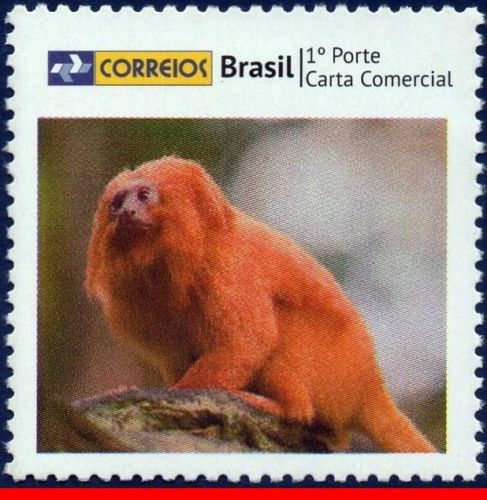 A local use only 2014 issue from Brazil. This species at one stage was critically endangered. Zoos have a studbook for the species and captive bred animals have been re-introduced to the wild, with some success. Below is one of my favourite stamps depicting this species, from a 2011 issue of the United Kingdom on the occasion of the 50th anniversary of the WWF.  The whole set of those is great because they are literally in your face: 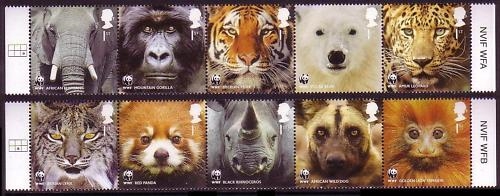 I have not really considered entering an exhibition but I may sometime - I always love looking at them at stamp shows. But I did once make a poster for a scientific meeting called "Phylatelic phylogeny - primates on stamps". I'll send it to you as an e-mail attachment. People liked it and the idea of using stamps as a conservation awareness raising method was also received well. |
|
Send note to Staff
|
|
|
Pillar Of The Community
Germany
3028 Posts |
|
|
Hi Cobie, That's a fascinating association with Rembrandt, but readily understandable. Again the Golden Tamarin is a stunning example of the colors in the world of monkeys. And Her Majesty's set of portraits is one of the few really good sets made of photographs. My contribution of the day is Callithrix geoffroyi on one of Jersey's stamps calling attention to threatened species (1988). Is white-faced identical to white-headed in this case? 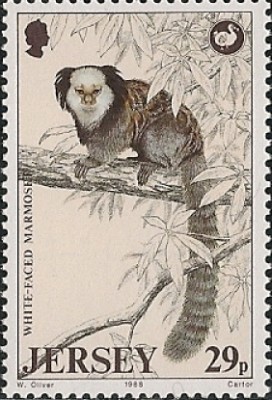 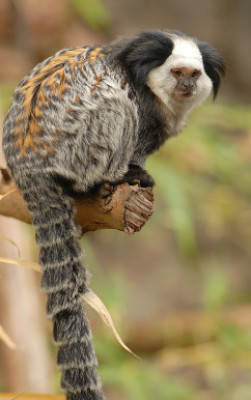 Note the Dodo in the logo for threatened species. 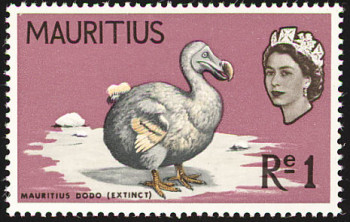 |
|
Send note to Staff
|
|
|
Valued Member
Australia
206 Posts |
|
|
Hi Kris: I don't think there is a separate speies called white-headed tamarin; rather, it is a kind of descriptive term for tamrins with lots of white on the head, like the cotton-top. The Jersey species is often called Geoffroy's tamarin - after Geoffroy de St Hilaire who first described the species at the end of the 18th century, as can be seen in its scientific name. The dodo is the emblem of the Jersey Wildlife Conservation Trust, and at least the stamp shows it as extinct - I have seen it in a series of endangered animals...! Almost as puzzling as a set of "underwater wildlife" that includes a vervet monkey (OK, on a branch above the water but still a separate stamp design. Here's my next New World primate contribution:  A 2014 issue from Peru showing the smallest monkey-type primate (some mouse lemurs are smaller), the pygmy marmoset (Cebuella pygmaea). These photos of an adult with a ping pong ball show its small size: 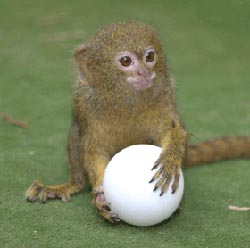 . The other is of a much larger monkey, the white-bellied spider monkey (Ateles belzebuth): 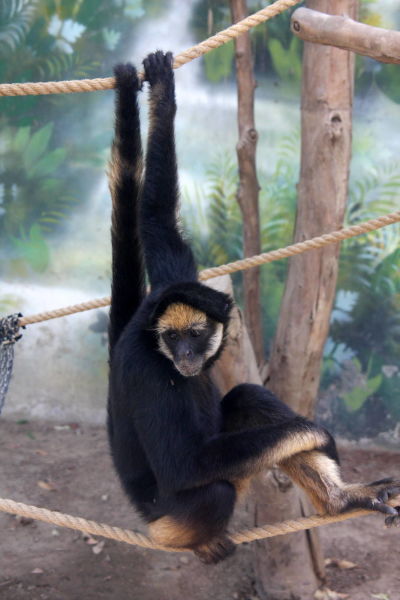 Pygmy marmosets are popular as pets, unfortunately... |
|
Send note to Staff
|
|
|
Pillar Of The Community
Germany
3028 Posts |
|
|
Valued Member
Australia
206 Posts |
|
|
HI Kris! Thanks for more marmosets. I'll add to the New World monkeys with these MSs from Mozambique, last year:  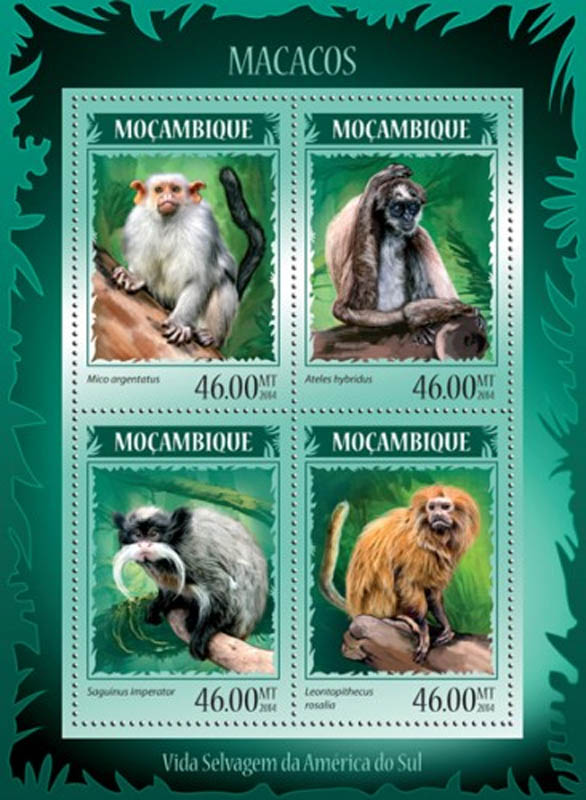 They show Geoffroy's tamarin on the SS one, with in the,surrounds one of the bigger (and loudest!) species, the Venezuelan red howler (Alouatta seniculus) and a golden lion tamrin; the second MS shows this species again, as well as the emperor tamarin; in addition, it has another spider monkey species, the brown spider monkey (Ateles hybridus) and the beautiful silvery marmoset (Mico argentatus). The howler male (in Belize they are referred to as "baboons"!)has a throat sac whch amplifies its loud calls: 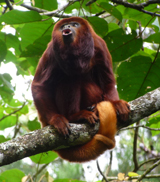 Silvery marmosets are sought after as pets, like other marmosets, and are not really suitable as such. In some zoos, they are allowed to roam. This picture is from Leipzig Zoo: 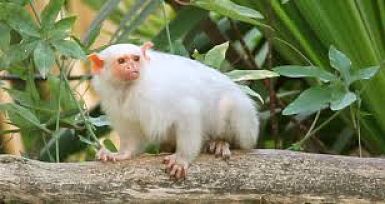 Spider monkeys are threatened in many areas. This picture: 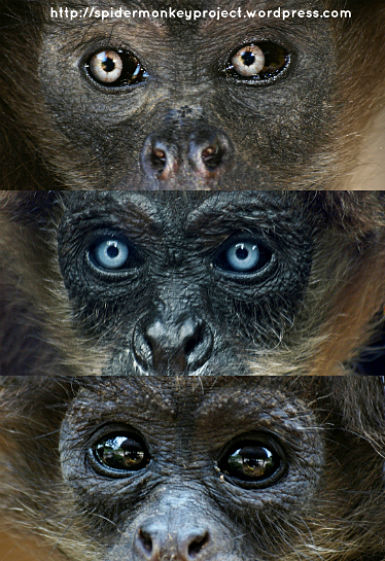 , from the web site of the Spider Monkey Conservation project, shows how the brown spider monkey can have a vriety fo eye colours, in cluding a rather bright blue. I remember first seeing an animal like that in Sydney's Tarango Zoo, many years ago. They are not "albino blue" eyes, the fur does not show any sign of albinism, not even of a dilute factor like Siamese cats have, with their blue eyes. There is a very much endangered species of lemur, in which the male is jet black but also has blue eyes: 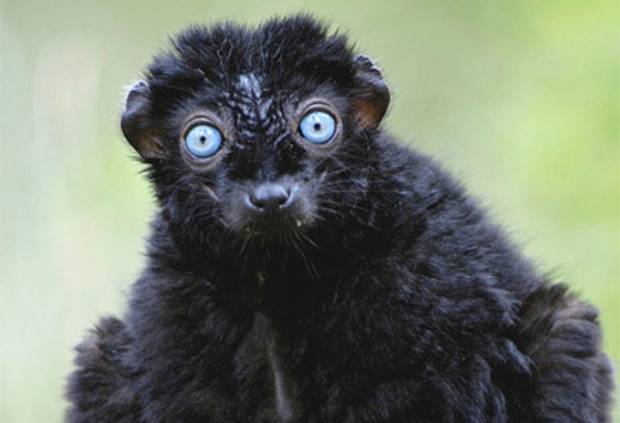 The female is light brown but with the same baby blues. I would like to know how the genetics of seemingly normal coat coloration and blue eyes is linked (or not). Ther si also a breed of cat called "Ojos azules" (blue eyes) and I think they can have any normal cat coat colour but their eyes are blue.  The foundation cat was found in the 1980s and when mated , the blue eyes wer dominant. |
|
Send note to Staff
|
|
|
Pillar Of The Community
7838 Posts |
|
|
Here is an image of a souvenir sheet containing a stamp depicting a leaping monkey, printed by lithography, and issued by (North) Korea on January 1, 1992, Scott No. 3055. - nethryk  |
|
Send note to Staff
|
|
|
Pillar Of The Community
Germany
3028 Posts |
|
|
Hi Cobie, Is this a Saki monkey from Argentina? Please help with the details. K. Isn't that a lovely painting on the North Korean stamp! 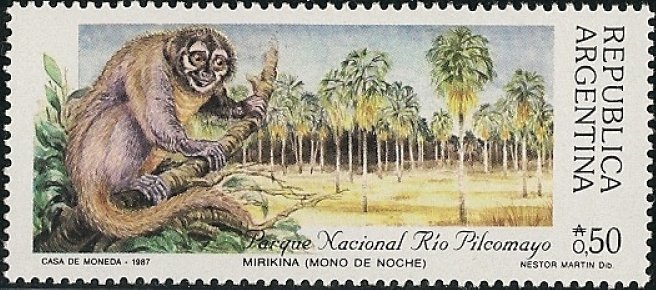 |
|
Send note to Staff
|
|
|
Valued Member
Australia
206 Posts |
|
|
Hi Kris: It is an owl monkey, also known as mirikina or douroucouli, or as night monkey - it is the only species of "monkey" type primate that is nocturnal. Therefore, it has large eyes giving it its "owl" face. Originally, it was thought to be a single species; now two groups are distinguished, "grey-necked" and "red-necked", each with a number of species, and DNA analysis and other behavioural studies keep uncovering more.  These are a set from Grenada in 1999, with a bonus orangutan (not to mention the black panther and the crocodile). Recnt stamps show different species of owl monkey, as shown here, in a 2002 issue from Peru: They are Nancy Ma's owl monkey (red-necked group), and the Spix' owl monkey (grey-necked group).  . Incidentally, this set also shows two saki species: the bald-faced saki, and the equatorial saki. |
|
Send note to Staff
|
|
|
Valued Member
Australia
206 Posts |
|
|
Here's the Peru 2002 picture: 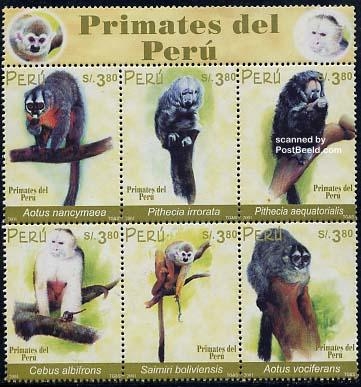 One day I'll get it right the first time... |
|
Send note to Staff
|
|
|
Pillar Of The Community
7838 Posts |
|
|
Kris Rascher - Thanks! Bushbabies, aka galagos, are small, nocturnal primates native to continental Africa. Here is an image of a stamp depicting a southern needle-clawed bushbaby ( Euoticus elegantulus), printed by photogravure, and issued for use in Fernando Po(o) on November 23, 1967 for Stamp Day, Scott No. 249. - nethryk  |
|
Send note to Staff
|
|
|
Pillar Of The Community
7838 Posts |
|
|
Grivets ( Chlorocebus aethiops, aka ( Cercopithecus aethiops), designed by Jean Van Noten, printed by photogravure (Courvoisier, S.A.), and issued by Congo Democratic Republic (Kinshasa) in August, 1971, Scott No. 735, plus a photo. - nethryk   |
|
Send note to Staff
|
|
|
Valued Member
Australia
206 Posts |
|
|
I have been a bit amiss not addi9ng much to the topic for ages... so let me make up for it. The monkey on the Korean MS, above, is meant to portray a woolly spider monkey (Brachyteles arachnoides): 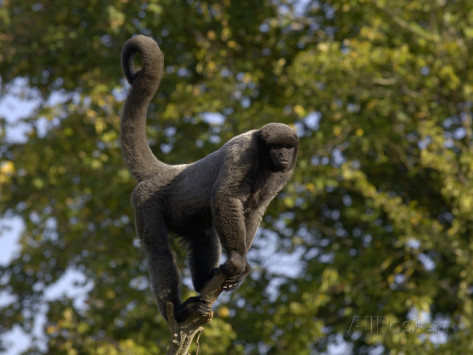 photographed by Dave Watts. North Korea has published stamps with monkeys a few times: 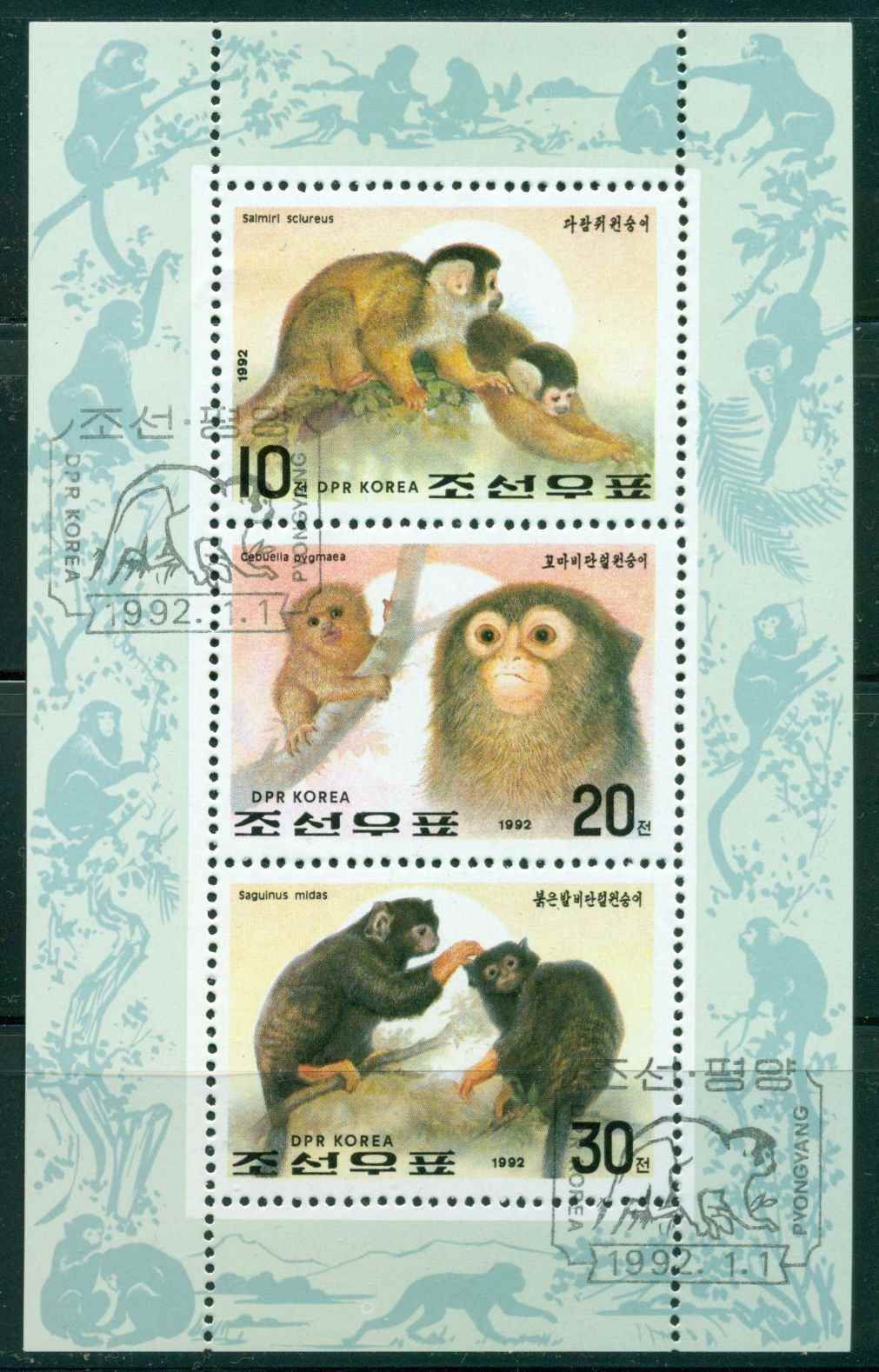 This is the 1992 set that goes with the above, showing the squirrel monkey, pygmy marmoset, and yellow- (or golden-) handed tamarin: 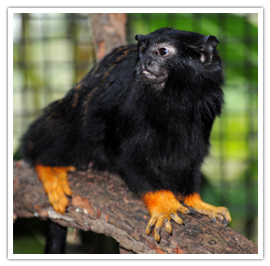 Here is a picture of one from the Alexandria Zoo. In 1996, there was a series of zoo animals that included a chimpanzee, and in 2000, a set of two, showing a tarsier and a patas monkey, and a MS with a single stamp showing a mona monkey. 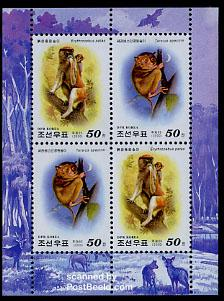 Rather a contrast, the tiny, nocturnal tarsier, jumping from branch to branch, and the patas monkey which lives in the steppe/savannah and has been called the greyhound among monkeys, as it tends to run when startled. 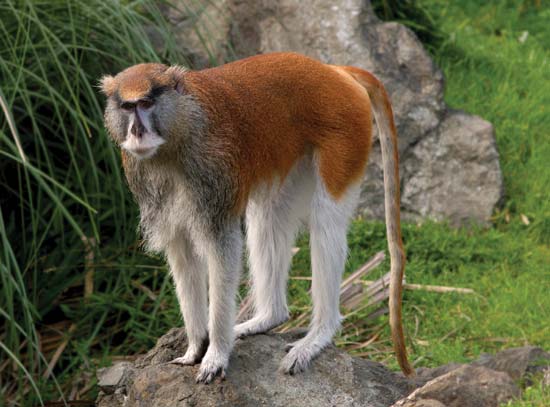 This is a picture from the Encyclopedia Brittanica, showing why the species, is also called military money or hussar monkey, thanks to the male's splendid moustache (for picture of tarsiers and mona monkeys see earlier posts). In the year of the Monkey, 2004, another set of 4 and a single stamp minisheet were issued: 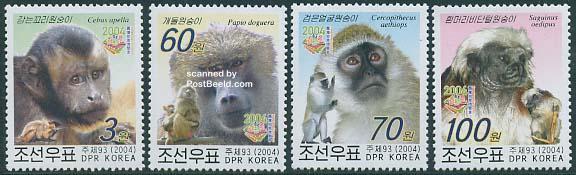 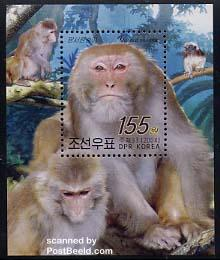 Thanks to the Postbeeld site for the MS. The set shows a capuchin monkey, a baboon, a green monkey, and a common marmoset. The MS a rather aged rhesus monkey. In 2011, another set of animal, including a green money and a pygmy marmoset: 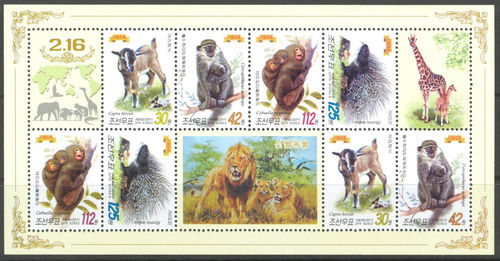 In 2015,a set was issued on the occasion of the birthday of the Dear Leader and shows some of his presents. Fancy a camel,a lynx or a baboon? Hard to wrap up, even a bow would be a challenge... and while I have seen footage of the Dear Leader riding a horse, a horeman he isn't... 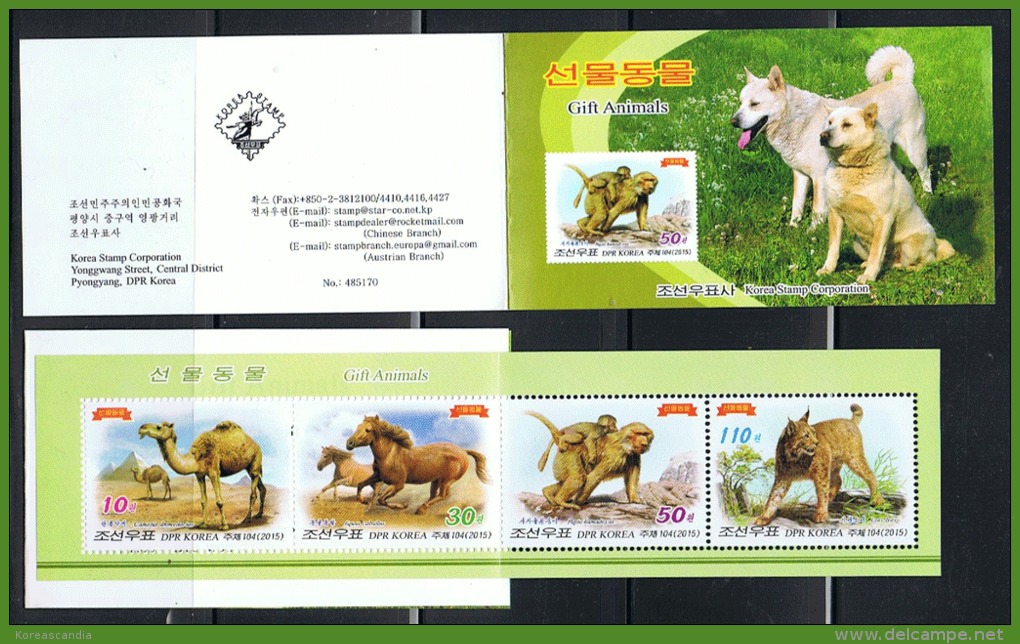 As you may have guessed, all these issues are from North Korea; South Korea, to my knowledge, never issued a stamp with a monkey, except for a singularly unattractive Year of the Monkey issue in 2004: 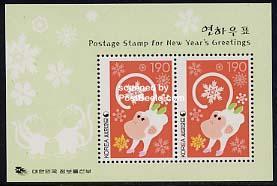 although some earlier issue for the same occasion some more appealing artwork. But I'll leave that to another time perhaps... |
|
Send note to Staff
|
|
|
Pillar Of The Community
Germany
3028 Posts |
|
|
Hi Cobie, Nice to see you back! Here's a great ape for Nethryk; I think it's a pretty good drawing (perhaps a young female?), but I don't know the name of the artist. 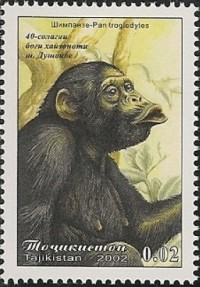 |
|
Send note to Staff
|
|
|
Replies: 422 / Views: 107,332 |
|
|
To participate in the forum you must log in or register. | |
 Transvaal Postal History Help Earliest Stamp With In-Design Date? My First Stamps Help Newbie.help With Stamp Identification (J29) Inherited These Stamps, Are They Genuine? APS Membership Discount Metropex Stamp Show: Roseville, Minnesota October 23-24 Weird Covers, 1885,1886, And 1982 For Users Of Two-Post Blue International Albums What Is Your Experience With Binders. New Member Posting Image Of Avatar, Front And Back Of U2 Cut Square, Market Value Or References? Working On An Offline Collection George Washington 3 Cent 1861 With Print On The Back Hello From The Netherlands - New Member Then And Now, From Old Postcards New Member Wanting To Add An Avatar Sparks Auction Fees? 163 VF Nyfm Vertically Ribbed 163 XF Quartered Cork, Labeled Jumbo 136 VF Quadruple Split H Grill Nashville Philatelic Society-Your Invitation To Our Auction Night Meeting Monday, October 26, 2026 Nashville Philatelic Society-Your Invitation To Our Meeting Monday, October 19, 2026 Christmas Around The World 2026 C.e. In The Large Queen Cancel A More Condensed Album Page Experiment. US Scott #3 Postmarked Or Fake? Transvaal Postal History Help Earliest Stamp With In-Design Date? My First Stamps Help Newbie.help With Stamp Identification (J29) Inherited These Stamps, Are They Genuine? APS Membership Discount Metropex Stamp Show: Roseville, Minnesota October 23-24 Weird Covers, 1885,1886, And 1982 For Users Of Two-Post Blue International Albums What Is Your Experience With Binders. New Member Posting Image Of Avatar, Front And Back Of U2 Cut Square, Market Value Or References? Working On An Offline Collection George Washington 3 Cent 1861 With Print On The Back Hello From The Netherlands - New Member Then And Now, From Old Postcards New Member Wanting To Add An Avatar Sparks Auction Fees? 163 VF Nyfm Vertically Ribbed 163 XF Quartered Cork, Labeled Jumbo 136 VF Quadruple Split H Grill Nashville Philatelic Society-Your Invitation To Our Auction Night Meeting Monday, October 26, 2026 Nashville Philatelic Society-Your Invitation To Our Meeting Monday, October 19, 2026 Christmas Around The World 2026 C.e. In The Large Queen Cancel A More Condensed Album Page Experiment. US Scott #3 Postmarked Or Fake?
Disclaimer: While a tremendous amount of effort goes into ensuring the accuracy of the information contained in this site, Stamp Community assumes no liability for errors. Copyright 2005 - 2026 Stamp Community Family - All rights reserved worldwide. Use of any images or content on this website without prior written permission of Stamp Community or the original lender is strictly prohibited.
Privacy Policy / Terms of Use Advertise Here |
| Stamp Community Forum |
© 2007 - 2026 Stamp Community Forums |
| It took 0.27 seconds to lick this stamp. |
 |
|
|
|


 Posted 02/11/2015 9:40 pm