|
This page may contain links that result in small commissions to keep this free site up and running.

Welcome Guest! Registering and/or logging in will remove the anchor (bottom) ads. It's Free!
To participate in the forum you must log in or register.
| Author |
 Replies: 422 / Views: 107,334 Replies: 422 / Views: 107,334 |
|
|
|
Valued Member

Australia
206 Posts |
|
|
Hello Kris: Yes, good to do something again, and nice to see another find of yours. There have been a few new issues from Africa, mainly apes. Here's one set, from Sierra Leone: 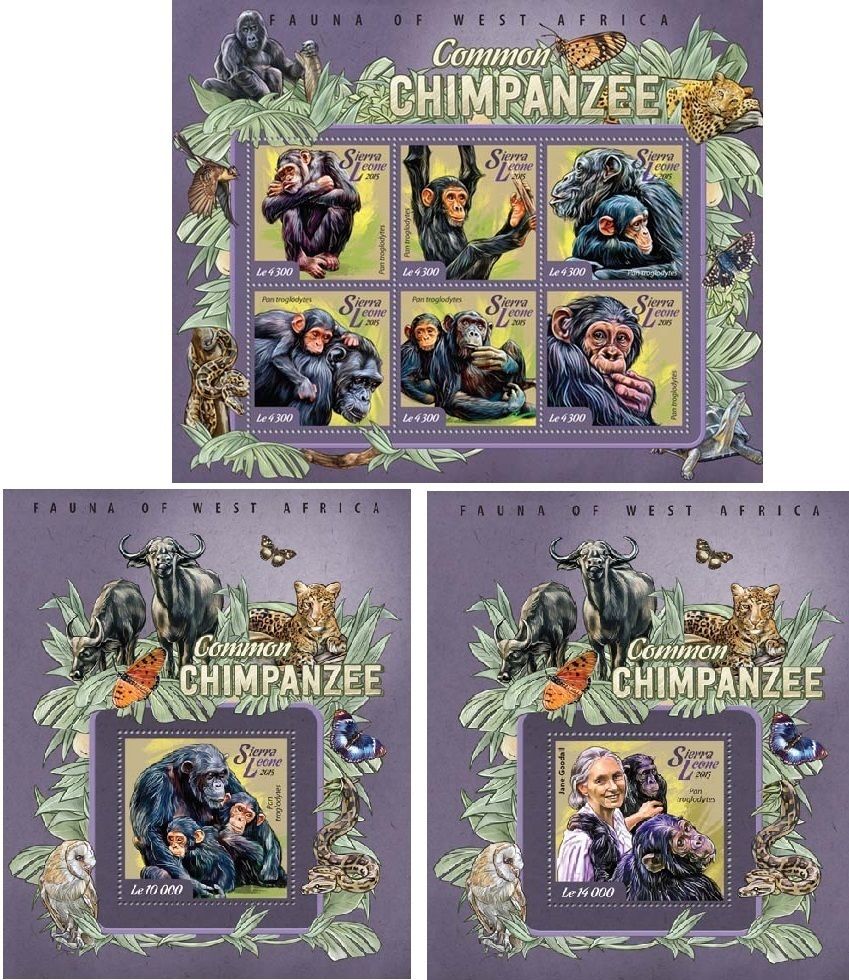 It features chimapnzees and also, on one stamp, Jane Goodall who many of us may know from her work with the chimpanzees of Gombe, about whom quite a few articles were published in the National Geographic magazine. The Gombe Reserve has celebrated its 50 year jubilee in 2012, and this has also led to stamps: 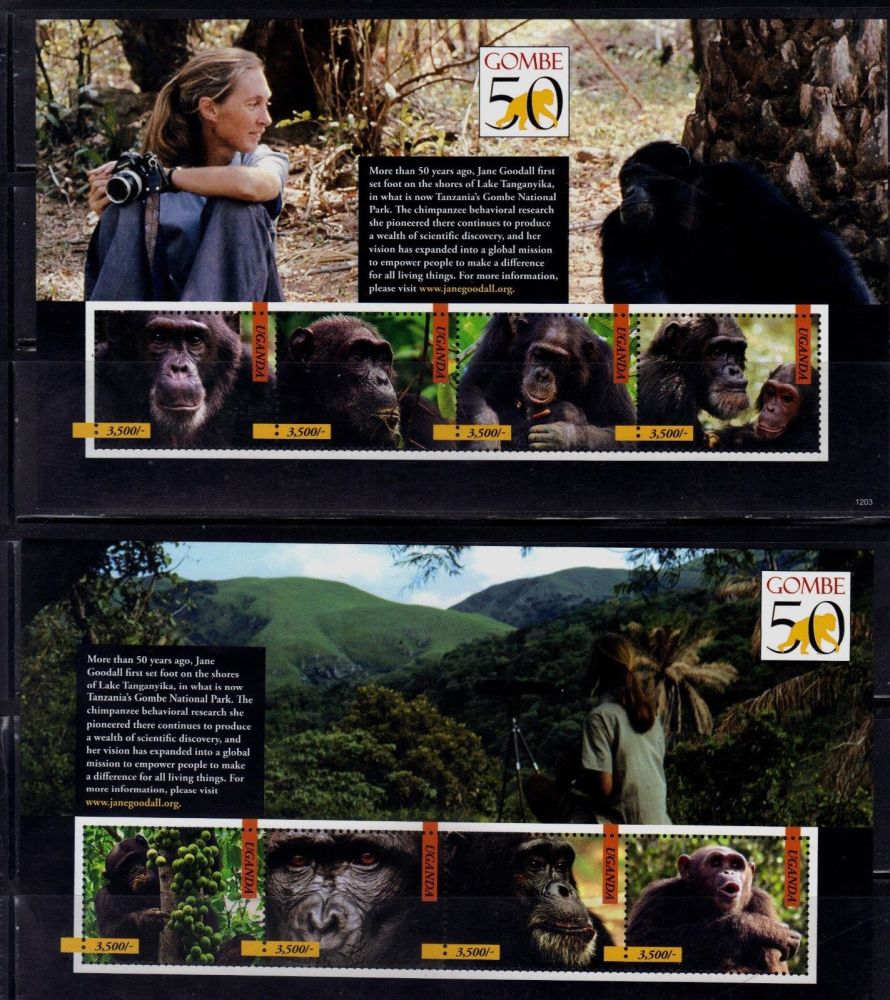  . Above are two examples. It is good to see these issues as they reflect and raise awareness. Some of the African issues, even if official and good-looking, are just pictures, Or,as a friend of mine calls them, philatelic wall paper... |
Send note to Staff 
|
|
|
Pillar Of The Community
7838 Posts |
|
|
Chimpanzee, printed by lithography, and issued by People's Republic of Congo on July 11, 1978 as one of a set of six stamps publicizing endangered animals and the World Wildlife Fund, Scott No. 456. - nethryk  |
|
Send note to Staff
|
|
|
Pillar Of The Community
7838 Posts |
|
|
Chacma baboons ( Papio ursinus), printed by lithography, and issued by Lesotho on April 25, 1977 as a World Wildlife Fund stamp, Scott No. 232, plus a "family photo." - nethryk   |
|
Send note to Staff
|
|
|
Valued Member
Australia
206 Posts |
|
|
Thanks for the new contributions, Nethryk. I am waiting for the first new Year of the Monkey (2016) issues but probably most of these will not appear until January next year. OTOH, already there are many YotM coins, and I am so disappointed in the Australian issue I saw recently which has a scratchy engraving which does not resemble any species - sigh.... Let's stick to 2015 and a new WWF issue from the Central African Republic: 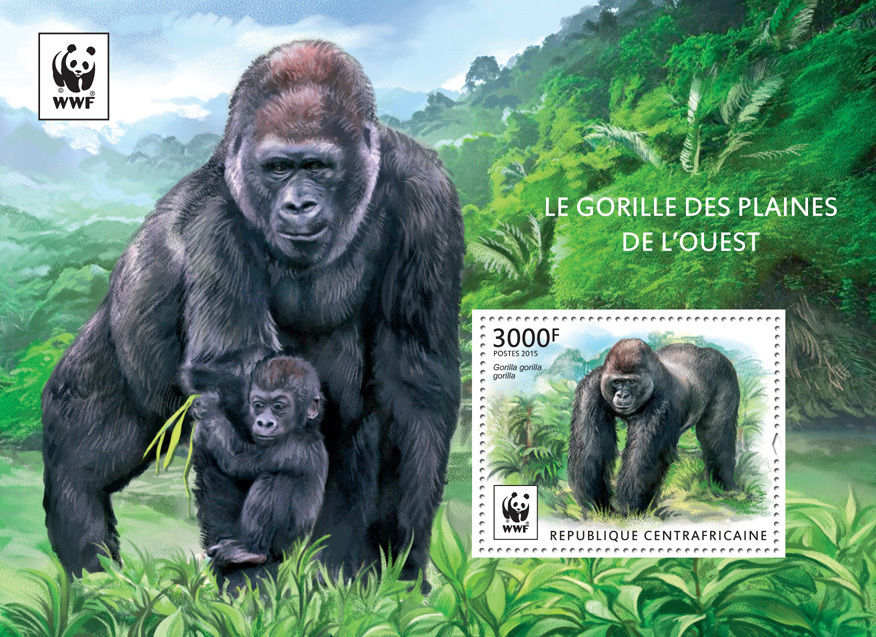 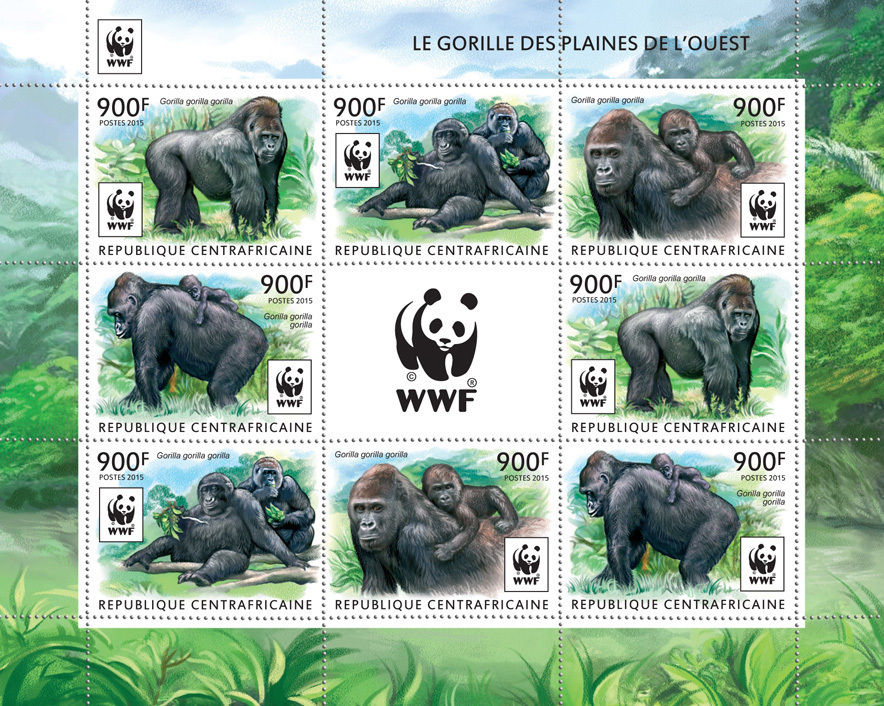 There are somenice FDCs as well, local issues I believe as I have not yet seen the usual WWF FDCs which show beautiful colour illustrations of the species as cachets, and also issues MCs; but not really minsheets, like the one above. But they are rather good pictures of the Western lowland gorilla ( G. g. gorilla). |
|
Send note to Staff
|
|
|
Valued Member
Australia
206 Posts |
|
|
And since I meant to post some other 2015 issues earlier and have not done so, let me make amends. Here is a 2015 issue from the Maldives: 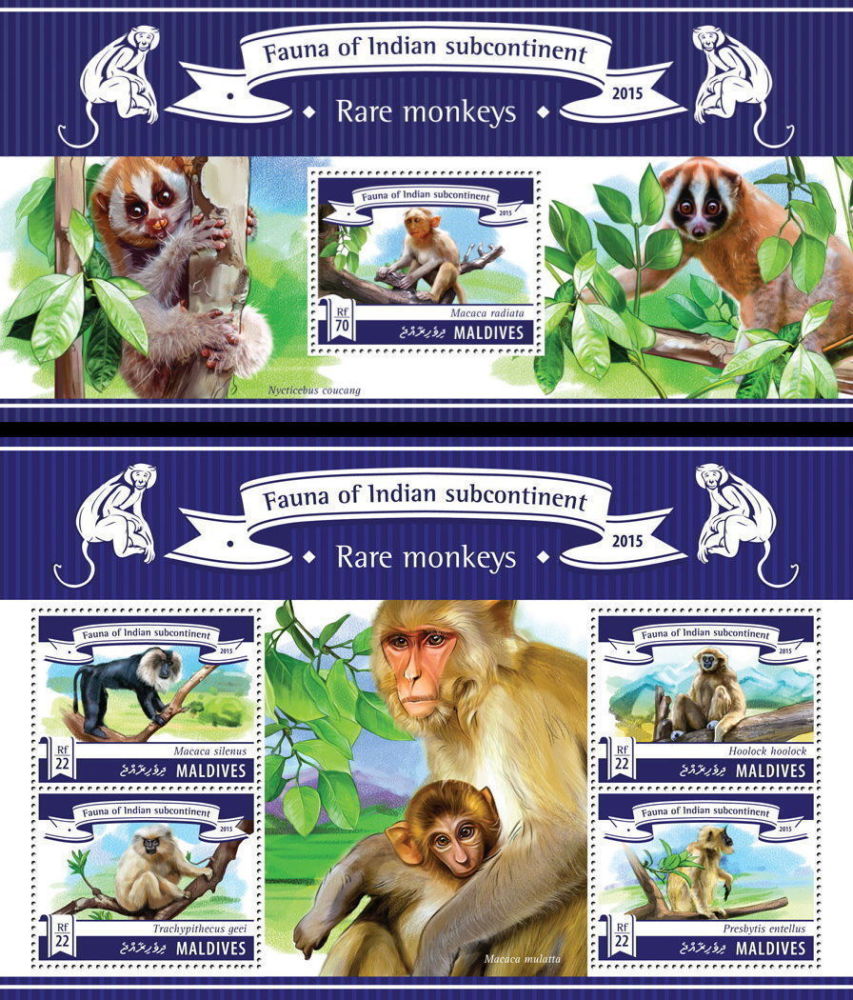 These are meant to be "Rare species" but the centre pieces, the bonnet macaque (Macaca radiata) and rhesus monkey (Macaca mulatta) can not relly be considered as such, both species are classified as Least concern in the CITES Red Book. So is the common, grey or bengal langur (Semnopithecus, not as stated: Presbytis, entellus). But the lion tailed macaque (Macaca silenus, the golden langur (Trachypithecus geii), the hoolock gibbon, and the slow loris (Nycticebus coucang) are rare or threatened. A better selection perhaps on this issue from Sao Tome e Principe: 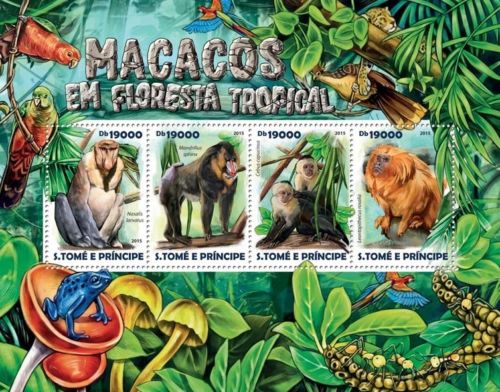 which shows the proboscis monkey, mandrill and golden lion tamarin, all endangered, and the capuchin monkey, Cebus capucinus. There is also a SS minisheet, not shown, with a cotton-top tamarin. The thre is this 2015 issue from Niger: 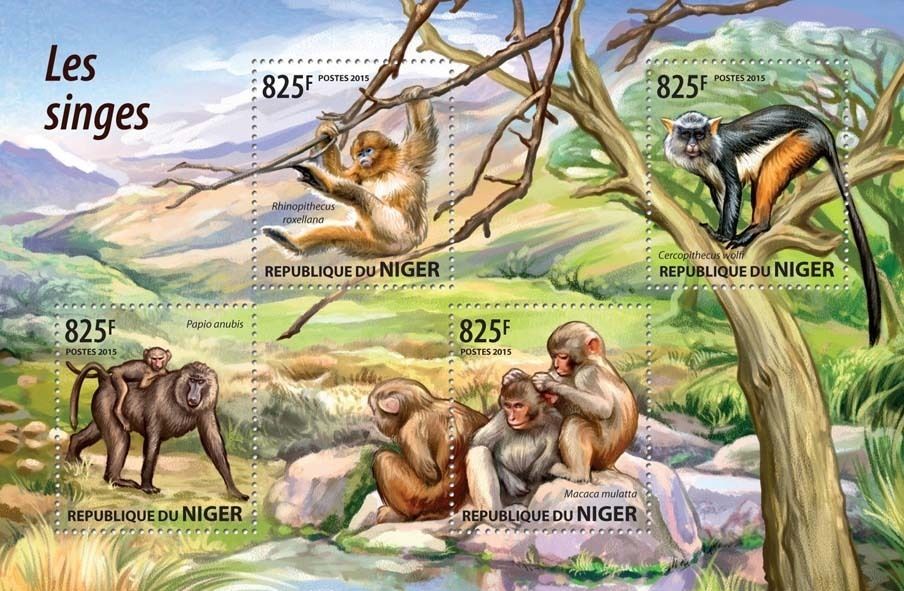 It shows the common olive baboon, and a cute picture of grooming rhesus monkeys. In the tree is a Wolf's guenon, Although not rare in Africa, it is not commonly seen in zoos, explaining the exceitement when a youngster was born at Sacramento Zoo: 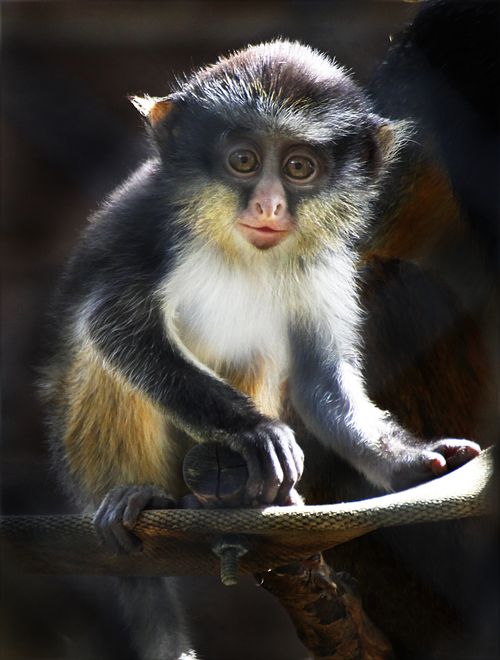 The picture is by Mike Owyang, of the Sacromento Zoo, and was published on the site 'Zooborns', great site with great pictures of young animals: http://www.zooborns.com/zooborns/According to the site, there are only 35 or so of this species in American zoos. Even rarer in zoos is the fourth species illustrated (also very rare in the wild), the snub-nosed golden monkey. Funnily enough, the stamp shows the monkey as if brachyating like a gibbon or chimpanzee, and like these, the animal here lacks a tail (which is very long and furry)!. Only a few zoos have these on display, not surprisingly, Chinese zoos: Beijing, Hongkong, and I think Canton, perhaps Shanghai. But to my delight I recently found out there is one non-Chinese zoo that has had a small breeding roup for a number of year now, Kumamoto Zoological and Botanical Garden in Kumamoto, on the island of Kyushu, Japan. 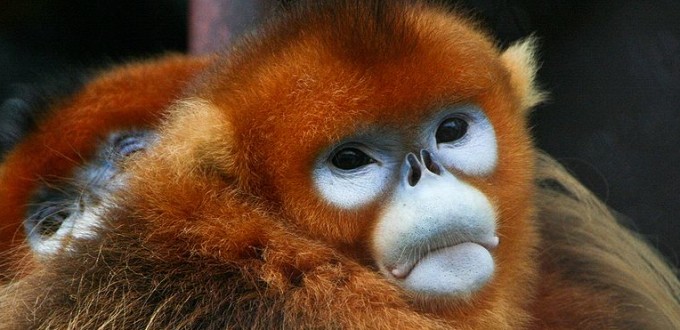 Seeing this species in the flesh is on my wish list - I may never see the wild ones but in the next two months, I'll be travelling in Japan and Kumamoto is definitely on the list. I may be able to post one of my own photos! |
|
Send note to Staff
|
|
|
Pillar Of The Community
Germany
3028 Posts |
|
|
Hi, Cobie, You sure have some wonderful drawings/paintings on your stamps and sheets! The Colobus has visited this thread earlier, but the panorama of the ecosystem in which he lives is nicely done. Colobus angolensis, in case one can't read the fine print. Have a great time on your travels! K. 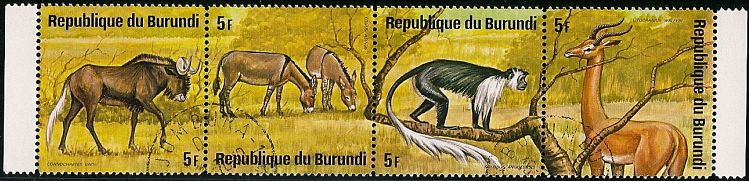 |
|
Send note to Staff
|
|
|
Valued Member
Australia
206 Posts |
|
|
Hi kris! Nice to 'meet' again. I like the Burundi animals since they are well drawn although it is a surprise to see the Somali wild ass on the above strip - an animal that occurs only, well, in Somalia where it by now is very rare. If I may bea llowed one non-primate picture here (actually, a thread on Donkeys and asses on stamps" could be interesting): 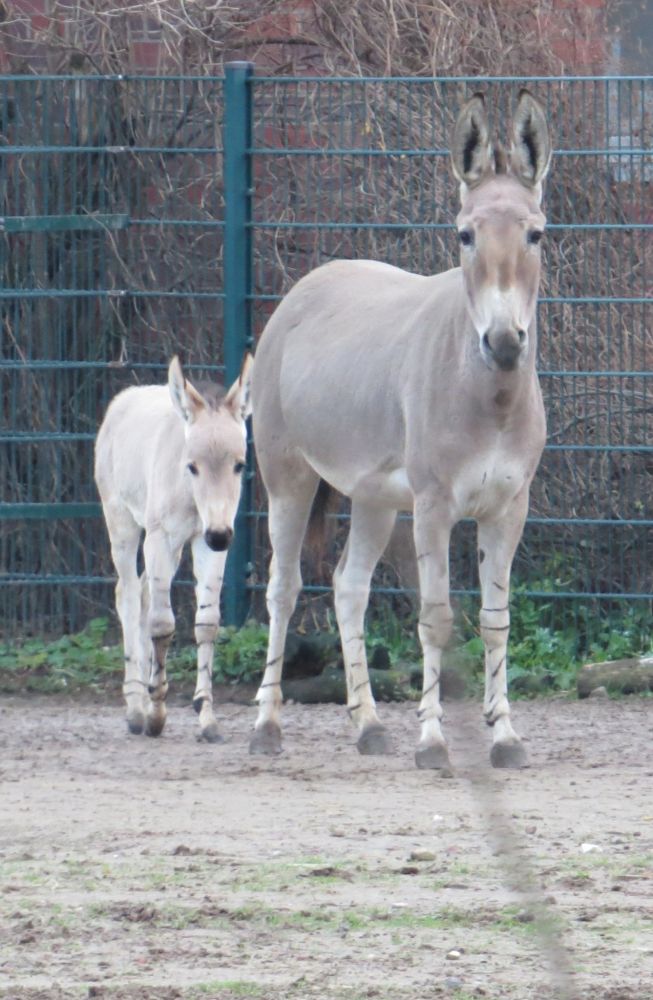 I took this picture in the former East Berlin zoo, the "Tierpark" less known than its more famous West Berlin counterpart, the Tiergarten. Established to eclipse that, it occupies the extensive grounds of a former country estate, and now houses large animals that need space to roam, many of them rare, such as the wils ass, Grevy zebra, African elephants, European bison, and musk oxen. Worth a visit if you go to Berlin. But back to Burundi with a 2011 set: 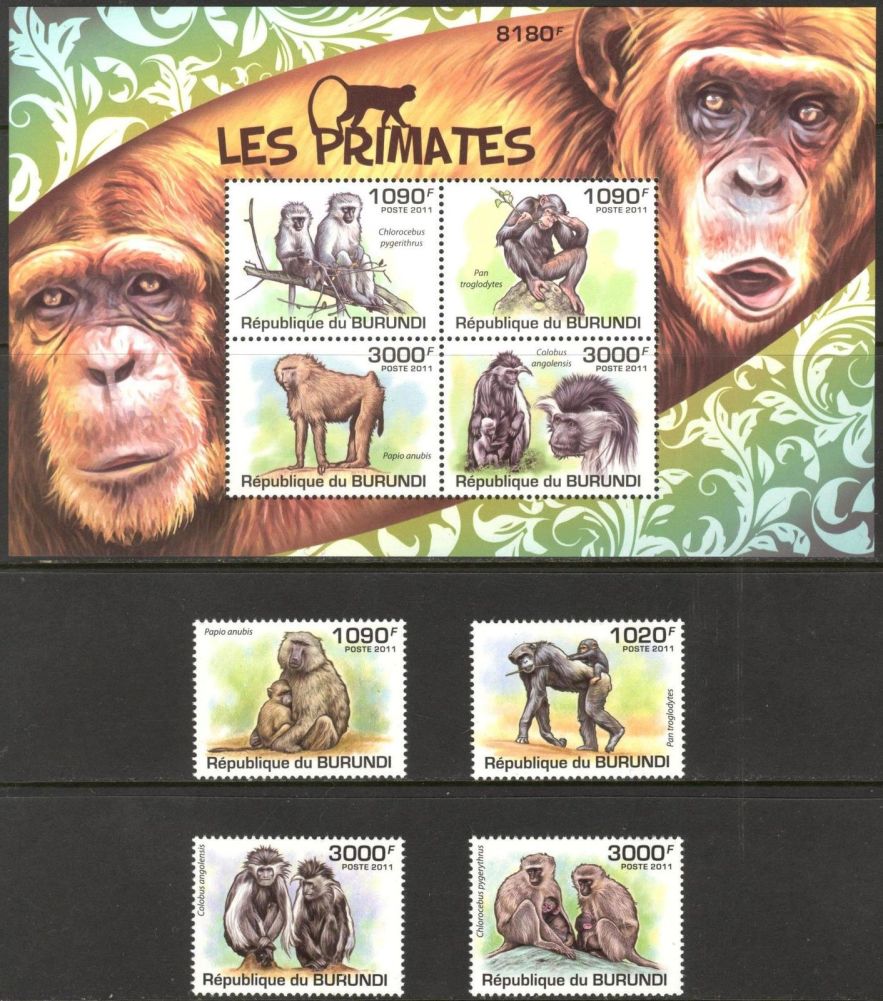 with two different desings showing the Angolan colobus: 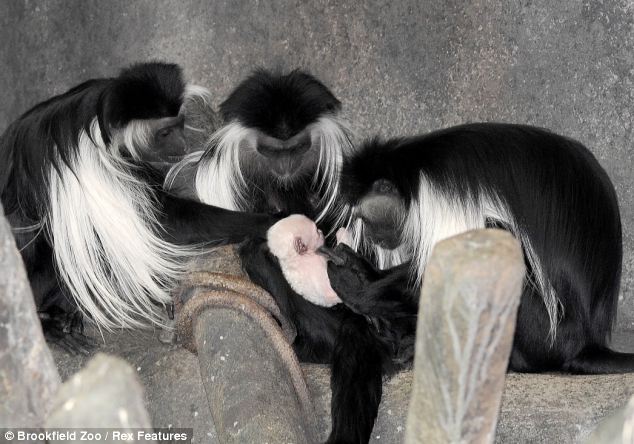 These are in the Brookfiled Zoo, inspecting the infnat with its distinctive colouring which, as is the case in number of species, inspires interest and immunity from aggression. Only when it loses its baby coat will life become more competitive! Baby coats can be spectacularly different as the below shows: 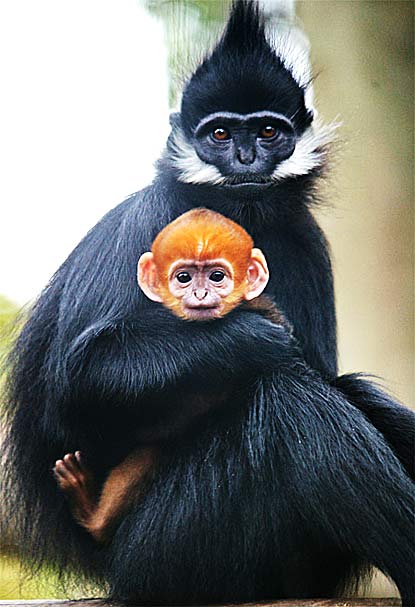 from factzoo.com , in the highly endangered fracois langur from Vietnam. Well, this time it really is god bye for a few weeks! Cobie |
|
Send note to Staff
|
|
|
Pillar Of The Community
7838 Posts |
|
|
Mexican Spider Monkey ( Ateles geoffroyi vellerosus, aka Ateles neglectus, printed by photogravure (Courvoisier, S.A.), and issued by El Salvador on June 22, 1963, Scott No. 739, plus a photo. - nethryk   |
|
Send note to Staff
|
|
|
Valued Member
Australia
206 Posts |
|
|
Back from my travels which were great and finding a new post from Nethryk ... back to apes and monkeys! Next year will be the Asian Year of the Monkey and I expect a number of issues. Some have already been offered but show Asian papercut like monkeys, cute but there should be some that show "real" species. In the mean time, here is a recent issue from Bequia, a part of the Caribbean islands of St Vincent and the Grenadines, issued for the Singapore Stamp Expo. They show the long-tailed, cynomolgus or crab-eating macaque (Macaca fascicularis). The species is widespread across south-east Asia, including Indonesia (the monkeys of Bali belong to this species) and often live in coastal areas, in the mangroves, where thye actively hunt for crabs and other aquatic morsels. They are good swimmers and readily enter the water. While the species certainly ocurs on the Malayan peninsula, it has become estabished on some islands, possibly introduced by sailors who had them as pets, such as on Mauritius. In the Caribbean, the same has happened but with African green monkeys, most notably on St Kitts (where they feature on two WWF stamp issues). 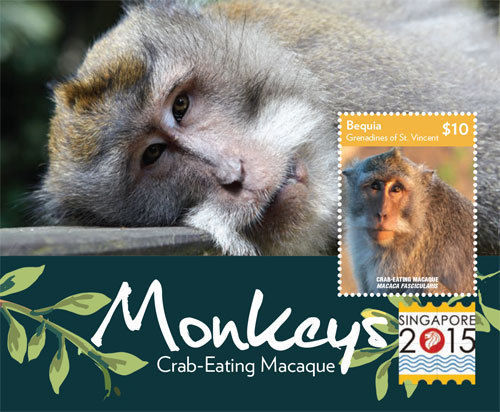 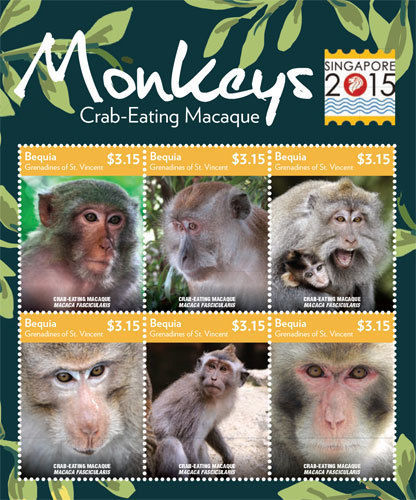 |
|
Send note to Staff
|
|
|
Valued Member
Australia
206 Posts |
|
|
I looked up the green monkeys - there is an issue from 1978 from St Cristopher-Nevis- Anguilla: 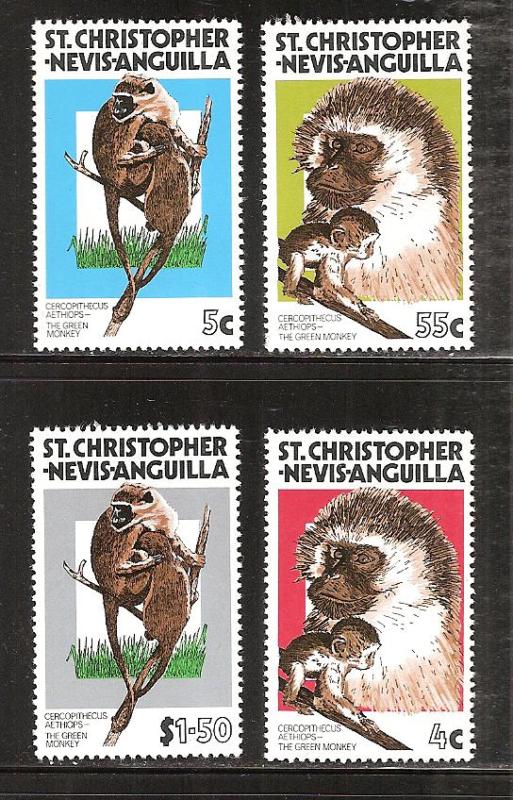 Not a WWF issue, I was wrong there... This was a unnion of caribbean islands, former British colonies; however, Anguilla sought separation and achieved this in 1980, becoming a British Overseas territory, with the other islands becoming St Kitts-Nevis; this issued, in 1986, the WWF stamps, sown here on a local FDC: 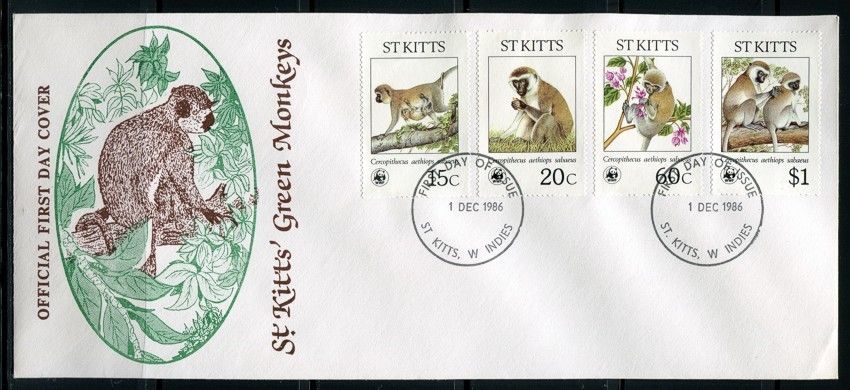 |
|
Send note to Staff
|
|
|
Pillar Of The Community
7838 Posts |
|
|
cobie - Welcome back! Common squirrel monkey ( Saimiri sciureus), printed by lithography, and issued by Surinam on August 20, 1969, Scott No. 363, plus a photo. - nethryk   |
|
Send note to Staff
|
|
|
Valued Member
Australia
206 Posts |
|
|
Further to my post above on the crab-eating macaques that have gone feral on several islands, here is a stamp from Palau, a Micronesian island where feral populatios exist, issued in 1993 and shown here on the FDC: 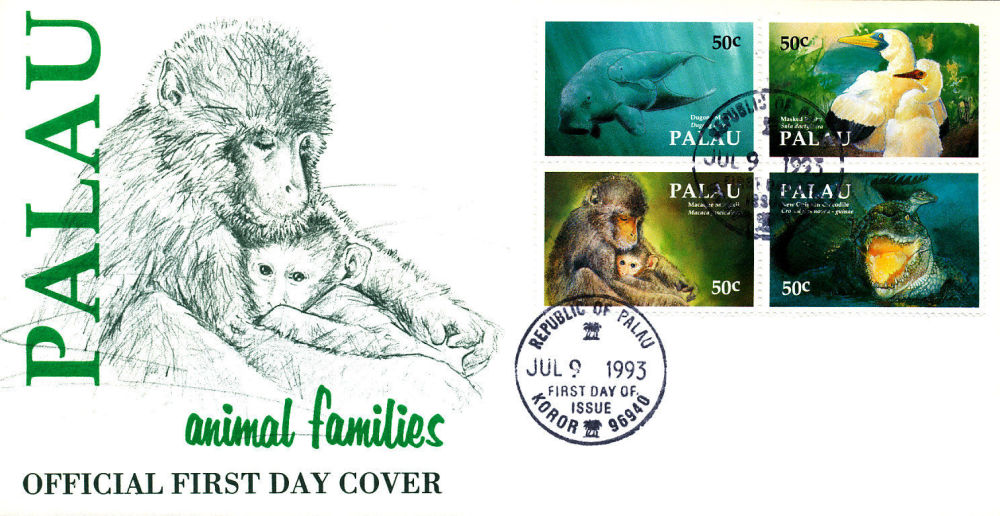 Another, earleir issue, is part of a ST sheetlet, at the bottom of the second column from the left: 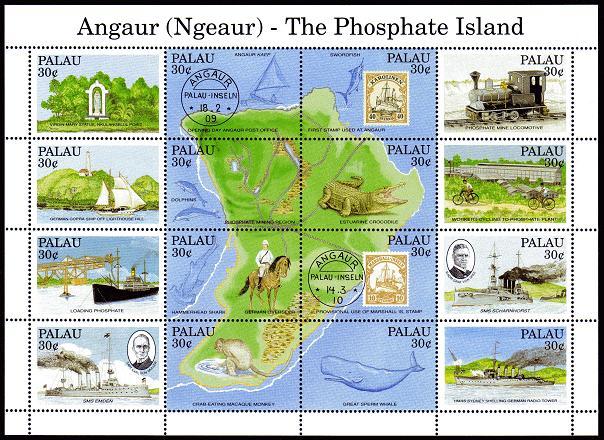 As the stamps show, Palau was one of the Pacific islands, like Nauru, that was a source of phosphate (from guano, animal droppings, accumulated over centuries) and I assume monkeys came with the transport ships. In 2014, there was a move to eradicate the monkeys from Angaur (where they came from the main island of Palau) because they caused major crop damge. By then, the island had become impoverished, but I have not headr whether it actually went ahead. Another island with feral crab-eating monkeys is Mauritius, in the Indian Ocean, east of Madgascar and major touris destination. 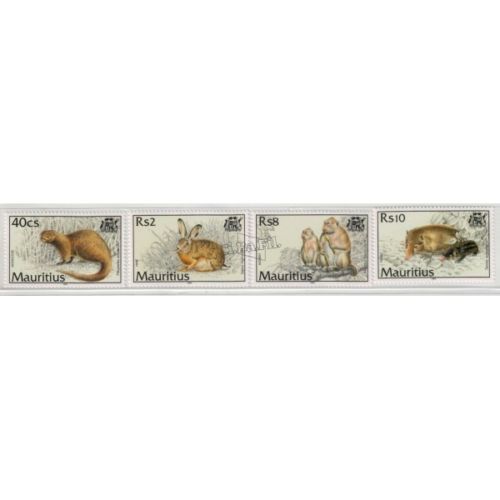 Not a very good scan but it shows the monkeys. The issue is from 1994. Mauritius monkeys are sought after for medical research since they are free of the Herpes B virus that has been lethal in humans. While some people may oppose such a use, one must also consider the effects monkeys may have (and may have had) on Mauritius native animals, especially its birds. The monkeys' big cousin, Homo sapiens, eradicate the dodo; its cousins, a flying pigeon species, is critically endangered, as is the Mauritius kestrel and parrot. |
|
Send note to Staff
|
|
|
Pillar Of The Community
7838 Posts |
|
|
The mandrill ( Mandrillus sphinx) is a primate of the Old World monkey ( Cercopithecidae) family. Here is an image of a stamp depicting the head of a male mandrill, printed by lithography, and issued by Cameroun in 1998, Scott No. 931, plus a photo. - nethryk  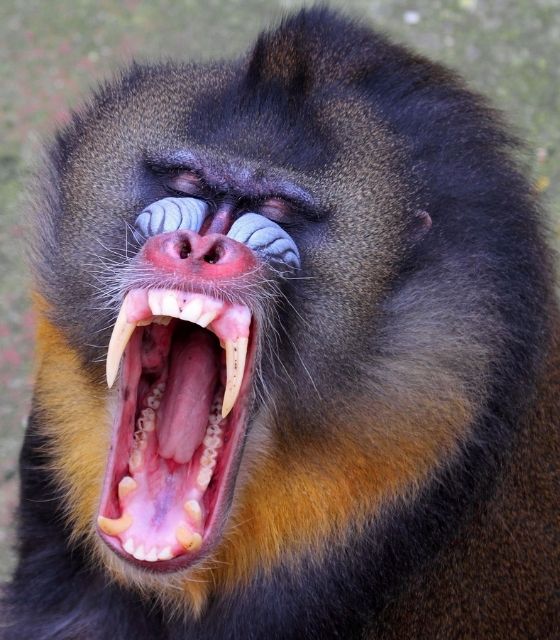 |
|
Send note to Staff
|
|
|
Valued Member
Australia
206 Posts |
|
|
Happy Chinese Year of the Monkey, everyone! As is usual, the new lunar animal has already been honoured by a swathe of new issues, both of stamps and coins. Unfortunately, for someone who wants their monkey stamps to reflect and portray recognisable species, quite a few issues show the intricate patterns of Chines papercut art, attractive, yes ... But there are some exceptions, the best of these probably being the second series of "Primates of Malaysia". 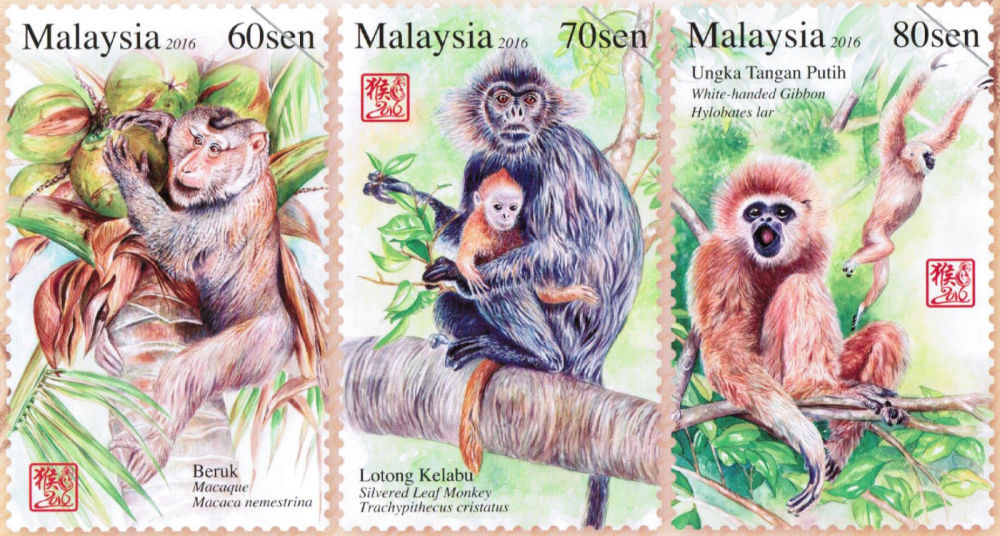 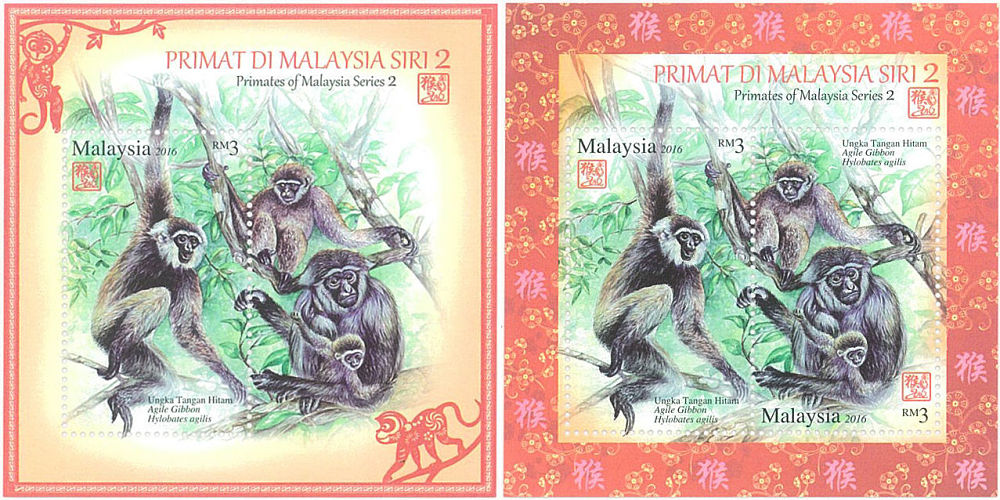 The series is not specifically labelled as Year of the Monkey - monkeys are unclean animals to moslem society, but Malaysia has a substantial non-moslem population of Chinese descent. The animals shown are two gibbon species, the white-handed gibbon and the agile gibbon; the pig-tailed macaque, which is trained to pick coconuts; and the crested langur, which like many langurs has infants that are bright orange. The single stamp minisheet is supposed to be a limited edition (although it bears no number) and to be fluorescent; not that I have looked in the dark! Some years ago, Malaysia issued stamps of nocturnal animals which includes a minisheet with nocturnal primates that had reflective eyes, as they do in real life. But the present set's gibbons are very much diurnal. I'll post some more "real" Year of the Monkey issues in the next few days. |
|
Send note to Staff
|
|
|
Pillar Of The Community
7838 Posts |
|
|
Male mandrill ( Mandrillus sphinx), printed by lithography, and issued by Benin on June 30, 1995, Scott No. 756. - nethryk  |
|
Send note to Staff
|
|
|
Replies: 422 / Views: 107,334 |
|
|
To participate in the forum you must log in or register. | |
 Transvaal Postal History Help Earliest Stamp With In-Design Date? My First Stamps Help Newbie.help With Stamp Identification (J29) Inherited These Stamps, Are They Genuine? APS Membership Discount Metropex Stamp Show: Roseville, Minnesota October 23-24 Weird Covers, 1885,1886, And 1982 For Users Of Two-Post Blue International Albums What Is Your Experience With Binders. New Member Posting Image Of Avatar, Front And Back Of U2 Cut Square, Market Value Or References? Working On An Offline Collection George Washington 3 Cent 1861 With Print On The Back Hello From The Netherlands - New Member Then And Now, From Old Postcards New Member Wanting To Add An Avatar Sparks Auction Fees? 163 VF Nyfm Vertically Ribbed 163 XF Quartered Cork, Labeled Jumbo 136 VF Quadruple Split H Grill Nashville Philatelic Society-Your Invitation To Our Auction Night Meeting Monday, October 26, 2026 Nashville Philatelic Society-Your Invitation To Our Meeting Monday, October 19, 2026 Christmas Around The World 2026 C.e. In The Large Queen Cancel A More Condensed Album Page Experiment. US Scott #3 Postmarked Or Fake? Transvaal Postal History Help Earliest Stamp With In-Design Date? My First Stamps Help Newbie.help With Stamp Identification (J29) Inherited These Stamps, Are They Genuine? APS Membership Discount Metropex Stamp Show: Roseville, Minnesota October 23-24 Weird Covers, 1885,1886, And 1982 For Users Of Two-Post Blue International Albums What Is Your Experience With Binders. New Member Posting Image Of Avatar, Front And Back Of U2 Cut Square, Market Value Or References? Working On An Offline Collection George Washington 3 Cent 1861 With Print On The Back Hello From The Netherlands - New Member Then And Now, From Old Postcards New Member Wanting To Add An Avatar Sparks Auction Fees? 163 VF Nyfm Vertically Ribbed 163 XF Quartered Cork, Labeled Jumbo 136 VF Quadruple Split H Grill Nashville Philatelic Society-Your Invitation To Our Auction Night Meeting Monday, October 26, 2026 Nashville Philatelic Society-Your Invitation To Our Meeting Monday, October 19, 2026 Christmas Around The World 2026 C.e. In The Large Queen Cancel A More Condensed Album Page Experiment. US Scott #3 Postmarked Or Fake?
Disclaimer: While a tremendous amount of effort goes into ensuring the accuracy of the information contained in this site, Stamp Community assumes no liability for errors. Copyright 2005 - 2026 Stamp Community Family - All rights reserved worldwide. Use of any images or content on this website without prior written permission of Stamp Community or the original lender is strictly prohibited.
Privacy Policy / Terms of Use Advertise Here |
| Stamp Community Forum |
© 2007 - 2026 Stamp Community Forums |
| It took 0.25 seconds to lick this stamp. |
 |
|
|
|


 Posted 06/30/2015 10:38 pm


