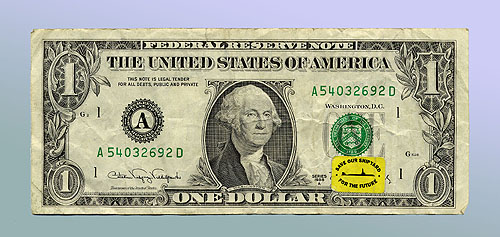
Believe it or not, it's not illegal. At least, technically, it's not as it applies to US currency ... US coins are another matter:
Quote:The U.S. Code
The only law against defacing currency is found in the United States Code, which contains the permanent laws of the federal government. U.S. Code Title 18 includes several specific sections that govern U.S. currency.
Sections 331 and 332 specify that it is illegal to alter coins. The Code mentions altering, scaling, mutilating, defacing, impairing, diminishing and lightening as the illegal forms of coin defacing. Individuals are liable if they create defaced coins, but also if they import, possess, sell or pass them.
Section 333 covers paper currency. It states that it is illegal to cut, deface, mutilate, disfigure, perforate or rejoin bills. Section 333 also pertains to any other activity that is intended to make a bill unfit to be reissued and remain in circulation.
Other Defacing
The language of the U.S. Code as it applies to defacing currency
restricts it to acts that individuals commit with an intention of defrauding others or making currency unfit for reissue. Other acts, such as writing notes on a bill or causing the kind of damage that occurs naturally, are not illegal. However, the U.S. Treasury discourages all types of currency manipulation.
The actual decision as to whether or not an individual has defaced currency with an intent to commit fraud is left to judges, who may consider additional evidence to determine guilt or innocence.
Penalties
The U.S. Code specifies penalties for individuals who are found to have committed a crime based on the provisions set out in Sections 331-333. These include unspecified fines, as well as prison time. Depending on the nature of the crime, the U.S. Code limits maximum prison terms to six months, one year or five years.
Read more: Defacing U.S. Currency Laws | eHow.com
http://www.ehow.com/list_6535889_de...xzz2C2mDOGs3 Hey, the Feds can't even keep track of the new $100 bills that haven't even been put into circulation yet ... so it's unlikely they are going to squawk about a few stickers or rubber stamps applied to a relatively few bills:
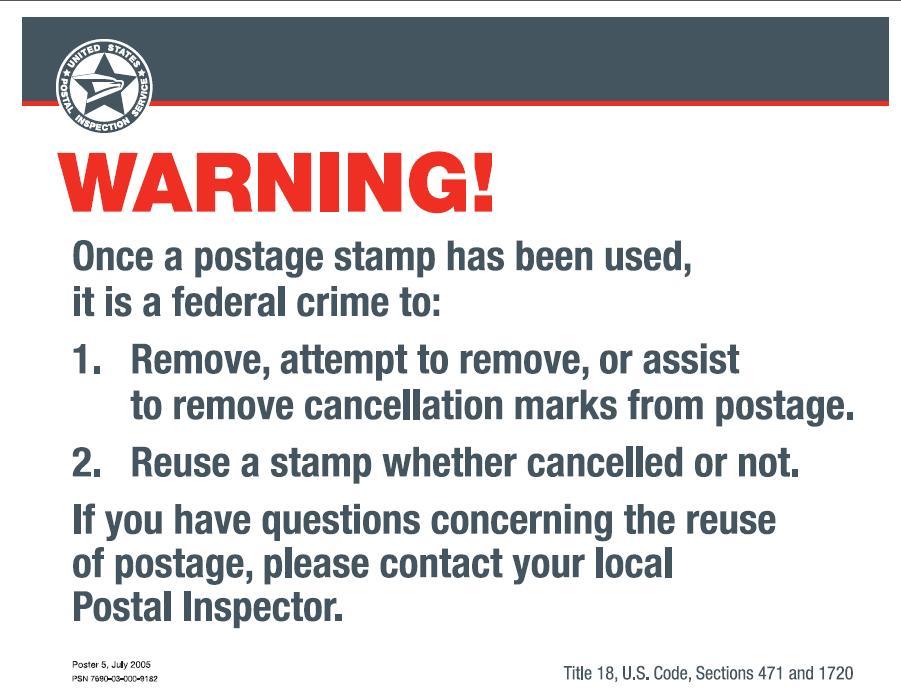
This is much the same thing as the US Postal Inspectors knocking on your door if you dared to re-use an uncancelled postage stamp or shortchanged the amount of postage on an envelope where stamps were affixed. It's just not worth the effort to prosecute anyone on such a small scale.





 Posted 11/10/2012 5:54 pm