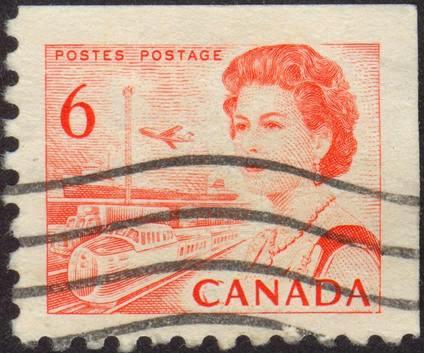
Well, here's a very basic question. I'm sure somewhere I've seen a description of how catalogues number stamps in a pane or plate, e.g "position 21." I can't find "position" in any philatelic glossary I've seen among my books or online - but please point me to one if you can. The next question: Does this numbering system apply in the same way to smaller panes or booklets, such as the 25-stamp booklets in Canada's Centennial definitives?
You need to know the plate layout to know where the stamp is. Typically position 1 is the upper left corner of the pane and they are counted along the horizontal row. In the U.S. position 21 would be first stamp in the third horizontal row for panes of 100, or the last stamp in the third horizontal row for panes of 70, first stamp in the fifth horizontal row on panes of 45.
Thanks, this all makes sense and is what I remember from the source I could not relocate: numbered left to right, top to bottom, which means 50 stamp panes and 100 stamp panes are different. The specific example that prompted me to write is a variety listed by Unitrade as Canada 459 iii, the 6 cent orange Centennial definitive with doubled "C" in "Canada", from booklet 459a, which has 9 rows of three "stamps", with the top row having two labels, left column and centre column, and one stamp in the right column or, in the case of an error, one stamp in the centre column and labels in the left and right positions of the top row. In this case, are the label spaces not counted in the numbering system? The Unitrade listed variety is "pos. 10" so is that fourth row down, right column?
Disclaimer: While a tremendous amount of effort goes into ensuring the accuracy of the information contained in this site, Stamp Community assumes no liability for errors. Copyright 2005 - 2026 Stamp Community Family - All rights reserved worldwide. Use of any images or content on this website without prior written permission of Stamp Community or the original lender is strictly prohibited. Privacy Policy / Terms of UseAdvertise Here





 Posted 11/30/2012 01:02 am