| Author |
 Replies: 10 / Views: 6,053 Replies: 10 / Views: 6,053 |
|
|
Valued Member
United States
102 Posts |
|
|
Hello SCF, So I need help identifying these Wurttemberg Issues on I assume postcards or prepaid envelopes? Sorry if I'm not using the correct terms. I do not know what these first four are and even what they are worth. Scotts guide I have doesn't mention these in any way. The next 3 I know the scotts number just wondering if they have any significance? Okay here is the scans. 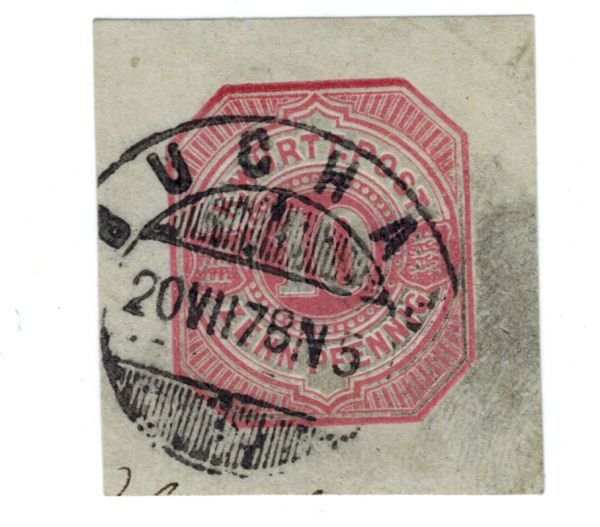 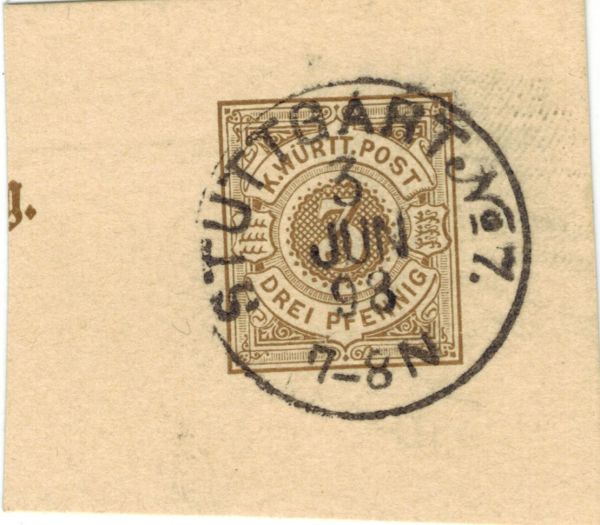 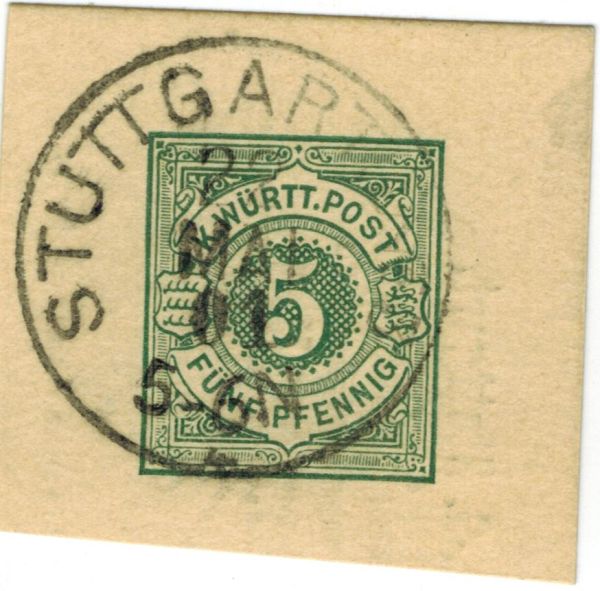 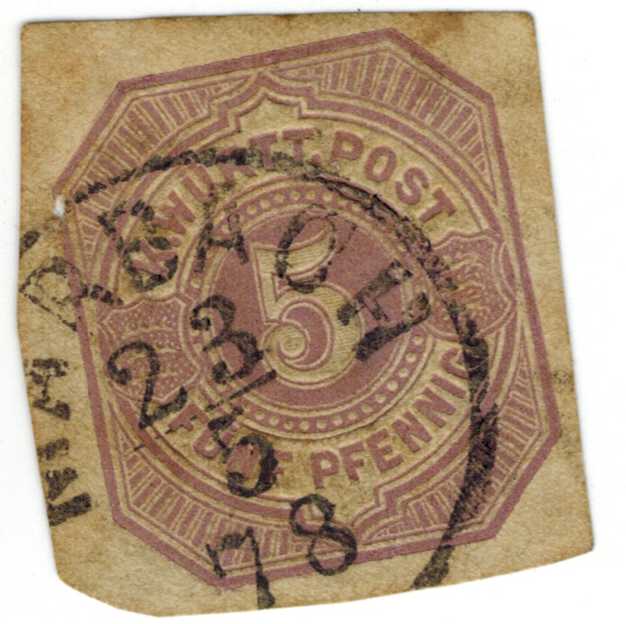 Now the next 3 I Know the SC# but was wanting to know a little information on these three I found when browsing my german stamps today. #O35 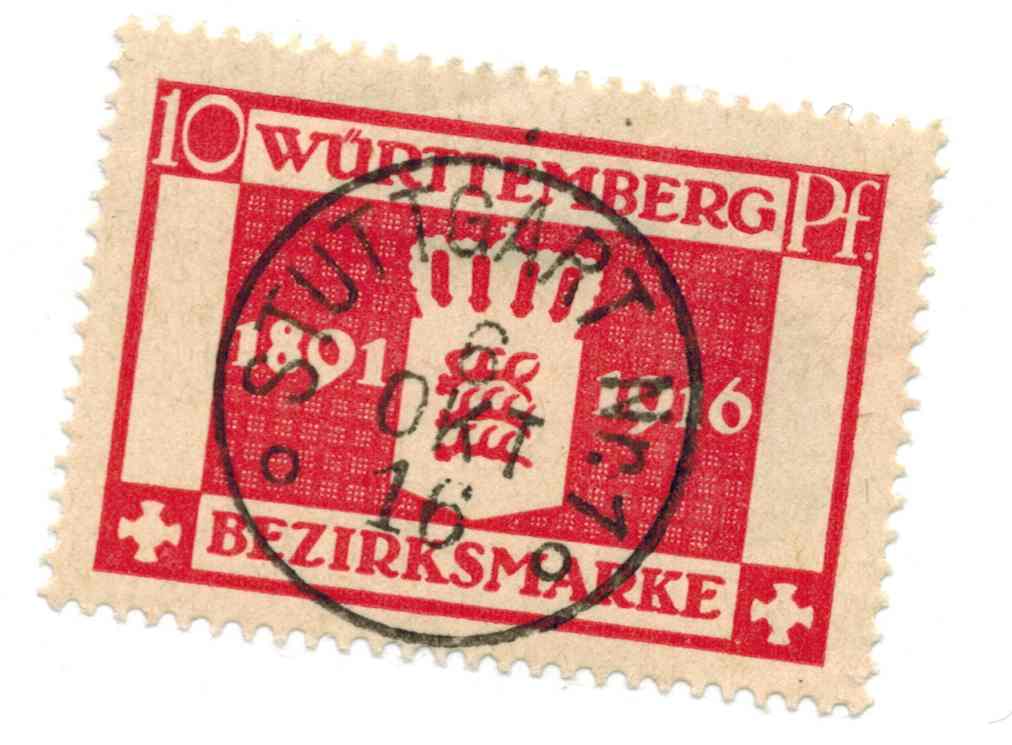 #56 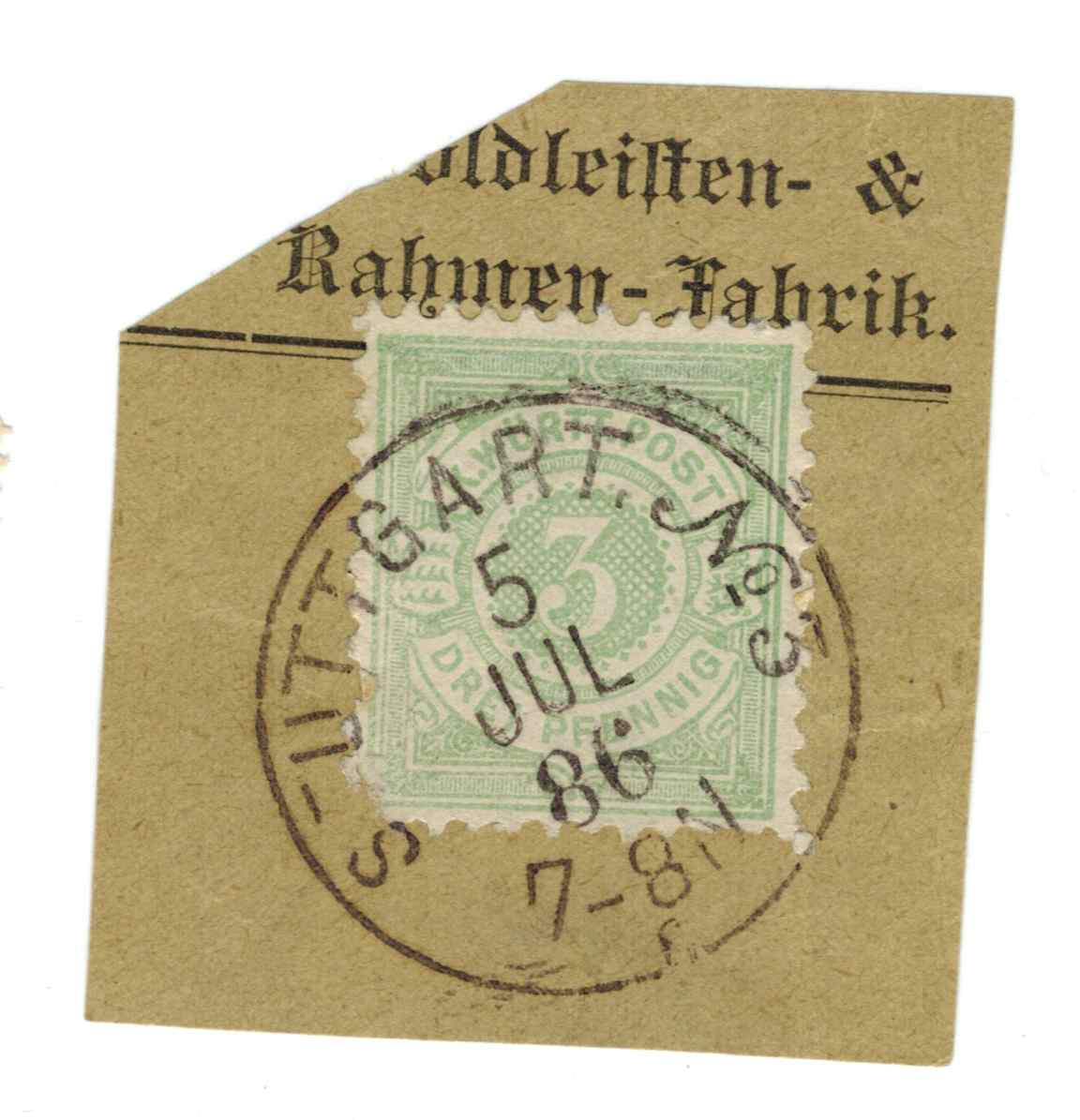 #60 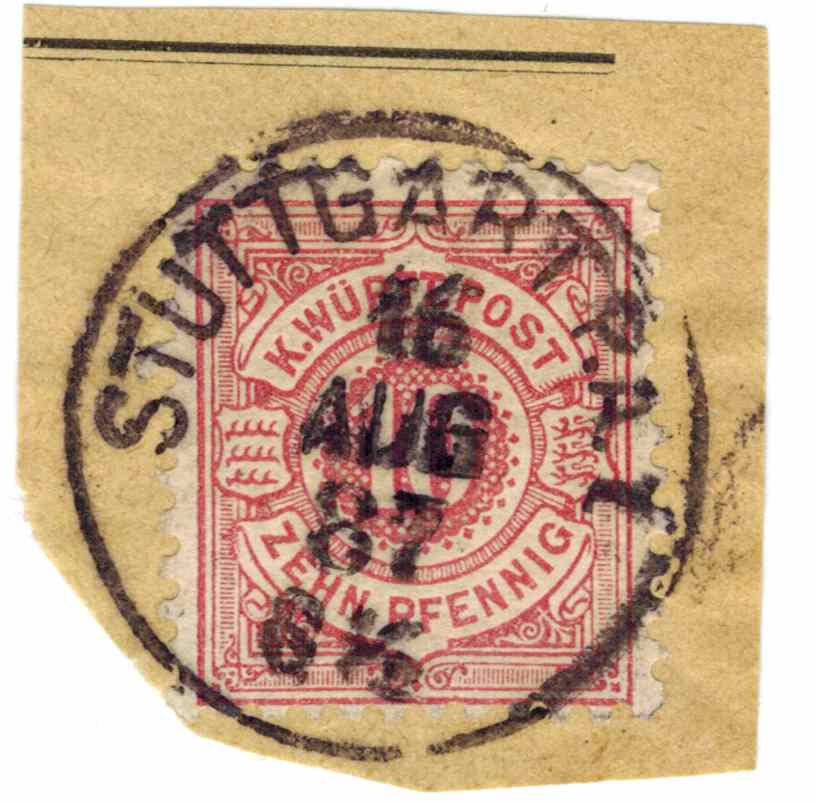 So please if someone can educate me a little on these fine German Empire State of Wurttemberg Stamps it would be most helpful and I would be very grateful. Thank you! Joe |
|
Send note to Staff
|
|
|
|
|
Valued Member
United States
102 Posts |
|
|
So after much research online I think these top 4 examples of stamps issued for Municipal Service. according to the description below it matches date, denomination and color.
Can any German Empire stamp expert please help confirm these for me.
Descriptions and history I found:
In addition to its stamps for ordinary use, Württemberg has issued Municipal Service and Official stamps, both these special series still continuing in use.
The Municipal Service stamps were first issued in July 1875, there being two denominations, 5 and 10 pfennige. The first of these was for use on the official correspondence of municipalities, irrespective of weight, and the 10pf was for use on money orders and parcels.
In 1880 the colour of the 5pf was changed from mauve to green. In 1897 a change in the postal rates led to the issue of a 3pf stamp and in 1900 other regulations led to the issue of 2 and 25 pfennige values. In 1906 all five values were overprinted with the dates '1806-1906,' surmounted by a crown in commemoration of the centenary of Württemberg's being raised to a Kingdom. In 1906-7 all five values were printed on paper watermarked with a design of crosses and circles and at the same time 20 and 50 pfennige values were added to the set.
Until April 1st 1881 the correspondence of the ministerial offices was conveyed free of charge, but on the suppression of this privilege a series of stamps of special design was issued for use on official correspondence. The values at first issued were 3, 5, 10, 20, 25 and 50 pfennige, but in 1882 a 1 mark stamp was added. In 1890 the colours of the 3, 5 and 25pf and 1 mark were changed to conform with those of the regular series. The colour of the 50pf was also changed shortly afterwards and in 1900 a 2pf stamp was added to the set. In 1903 30 and 40 pfennige stamps were issued in colours corresponding to those of the ordinary stamps of 1900, while in 1906 all denominations were overprinted in a similar manner to the Municipal Service stamps. During 1906-7 all denominations appeared on the new paper watermarked with circles and crosses.
Thanks!
Joe |
Send note to Staff 
|
|
|
Valued Member
United States
102 Posts |
|
|
Still wondering if any German experts know anything about these pre-paid postage stamps? |
|
Send note to Staff
|
|
|
Pillar Of The Community
United Kingdom
544 Posts |
|
|
As far as I can see, they are straightforward PS cutouts from:
1) PS envelope issued July 1875/Feb 1876 Michel U24/U30
2) PS Card issued Jan 1894 Michel P39
3) PS card issued 1893/1898 Michel P37/40
4) PS envelope issued July 1875/Feb 1876 Michel U23/U29
In most cases it is impossible to tell which without the rest of the card/envelope |
|
Send note to Staff
|
|
|
Valued Member
United States
102 Posts |
|
|
Thank you Bamra1. Are these common? Sadly I received them already cut out. IF I had to guess based on the postmark dates I would guess the later of each since each was post marked a few years after the second release date. Here is another cool link I found in my research of these stamps maybe the board would enjoy. http://www.stampdomain.com/country/...ttemberg.htmThank you again. |
|
Send note to Staff
|
|
|
Pillar Of The Community
United Kingdom
544 Posts |
|
|
The cards are reaonably common.And they would have be super-mega-ultra rare to make a cutout of them worth anything. Noone has any use for cutouts these days; we all want the full card/envelope from what survives of those massacres in which they were cut up to satisfy the early collectors' desire to have something that would fit into the stamp-sized spaces in their pre-printed albums.  |
|
Send note to Staff
|
|
|
Pillar Of The Community
United States
8615 Posts |
|
|
I agree with BAMRA 1 they have no value and are common . Just a note here ,that the old Scott albums did provide spaces with pictures for Postal stationary cut-outs but that was 80 to 100 years ago. |
|
Send note to Staff
|
|
|
Valued Member
United States
102 Posts |
|
|
I feel bad for these now. It feels like the collector before me cut up a piece of history. |
|
Send note to Staff
|
|
|
Valued Member
United States
10 Posts |
|
|
I would take issue with bamra1's comment that no one has use for these. First of all, they are "cut squares" not "cutouts" and yes, collectors do collect them and I am one. Cut squares are very collectable in the U.S. but not very popular anywhere else. I have foreign cut squares in my album that I like because of the neat cds's. Also, some collectors collect unused cut squares in which no postal history was destroyed. Sure it would be better if all the cut squares were kept as entires but that is no reason to be disdainful of cut squares. Send your unwanted 19th century cut squares to me and I will pay the postage! |
|
Send note to Staff
|
|
|
Pillar Of The Community
United States
1565 Posts |
|
|
I agree with phil49 as to value of these cut squares. "Value" is subjective. I don't openly seek out non-US cut squares from either envelopes or postcards. But when they have shown up in world wide collections I've purchased, I keep them and mount them in the rear of the country in my Scott Big Blue international albums. I think they make nice additions to the country collections. I even have one cut square from Britain's Bechuanaland Protectorate
By the way, the red stamp with the 1891 to 1916 date is Wurttemberg Scott #O35, issued in 1916. Retail catalog value in the 2012 edition of the Scott Classic catalog is $1.25, in italics. Use of italics means that the price is fluctuating or there is not enough information to provide an accurate amount. |
|
Send note to Staff
|
|
|
Pillar Of The Community
United States
845 Posts |
|
|
I also collect cut squares in US collection and agree with phil49's statements. They certainly have value to me. Though, I would probably not create a cut square unless the envelope/card was common. Nor would I likely cut a stamp from a cover unless the cover was common/uninteresting.
One reason I collect stamps is because the footprint is small. I know someone that collects old phonographs and another that collects clocks. I couldn't deal with the space issue required for these items. Now, covers, cards, and postal stationary don't take up all that much space, but they do have a larger footprint. So I "collect" entire covers/cards/envelopes sparingly and for a distinct purpose - well sort of - I'm really just getting started in this area in one or two countries. |
|
Send note to Staff
|
|
| |
Replies: 10 / Views: 6,053 |
|




 Posted 10/14/2013 11:58 am


