| Author |
 Replies: 18 / Views: 7,237 Replies: 18 / Views: 7,237 |
|
Valued Member
51 Posts |
|
|
|
|
Rest in Peace
Canada
6750 Posts |
|
|
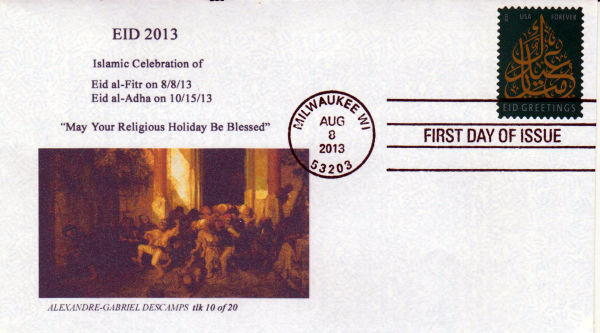
Try for a diferent cachet (picture) on the cover (envelope) than that of the stamp. And a pretty cancel if available taht matches. Otherwise I like to see an ordinary cancel, clearly printed and readable.
If I did it myself, just happening to be there at the right time and place, then I am happt with just any cancel / postmark that is readable and legible.
The stamp should be placed downwards from the top edge and leftwards of the right edge so as to allow for some extra space around it and a nice placement of the word Canada from the spray\-on cancels if those are used, and to protect the stamp as much as possible from machine handling and future collector handling.
If a POCON cancel is used then, after a couple trials by me, I have ended up, so far, liking the cancel being readable and off to the direct side or bottom of the stamp, and Not at an angle. Sooo, when the stamp is viewed, the cancel can be read and seen without twisting your head all around.
Looking at German cancels you can see the care they take to achieve a nice blend of stamp, viewable design on teh stamp, and a nice matching postmark, preferably with a complementary picture in the cancel. |
Send note to Staff 
|
|
|
Pillar Of The Community
United States
1624 Posts |
|
|
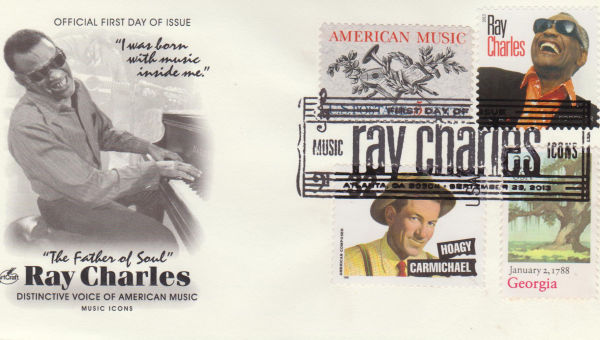 One of the things that I do with my covers is to try and find other stamps that might be related. In this case Ray Charles is from Georgia, sings American music, and the lyricist of his famous hit Georgia on My Mind was Hoagy Carmichael. Another thing I do is to send in a plain envelope (no cachet) and get a FDC. You can add the artwork on later. I've used this for double cancellations etc. Tom |
|
Send note to Staff
|
|
|
Rest in Peace
Canada
6750 Posts |
|
|
Pillar Of The Community
United States
1624 Posts |
|
|
Pillar Of The Community
1213 Posts |
|
|
If you have artistic ability, try drawing/painting your cachet. If you are not so talented, make your cachet using ordinary printing methods of some appropriate image but do it in black and white and then use watercolor paint to add some color. Watercolor paint is what has been traditionally used for centuries to make black and white printed images really pop since it is relatively transparent when it dries. Before you start with watercolors, you need to practice on at least a couple of dozen practice images. The trick is to not dissolve so much watercolor paint in the water as to make it too thick and thus no longer transparent. You want a wash of light color, not heavy paint. Also, you want to develop a technique where you are painting on only a thin layer of color and not blobs of water which will soak into the paper and cause puckering. And you will want to use envelops that do well with watercolors and not ones that have absorbent paper. With a little practice you can get beautiful results that make each FDC unique. You can then number each FDC, either by hand, or with a stamper so each cover has a unique number such as 2 of 5, or 4 of 30, or 12 of 50 or whatever. And you can also sign them - but do that in very small letters at the edge of the cachet. That way, future collectors will be able to know how rare FDCs made by you are. |
|
Send note to Staff
|
|
|
Pillar Of The Community
United States
796 Posts |
|
|
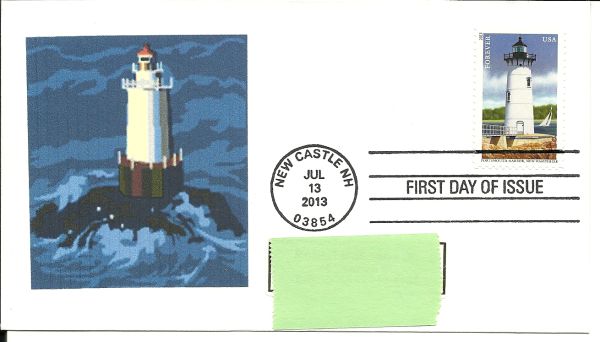 This is a sample of what was produced out of WORD. I did 3 different lighthouses (and 1-multiple)and they all came out pretty good. |
|
Send note to Staff
|
|
|
Pillar Of The Community
United States
1624 Posts |
|
|
Pillar Of The Community

United States
890 Posts |
|
|
I guess the biggest tip would be to not use Copyrighted or Trademarked images, phrases, etc. without permission in your cachets. Big no no. If you want to use these types of things, you'll have to
get permission, or a license first. If you have drawing/painting talent, hand painted cachets are
really neat, as has been already mentioned. I have experimented with using public domain images (Library of Congress, the Armed Services, NASA, etc.). Quality of color printer is important, too. |
|
Send note to Staff
|
|
|
Pillar Of The Community
United States
1624 Posts |
|
|
The picture came from Naxos and I was not only given permission but encouraged to do so.
Tom |
|
Send note to Staff
|
|
|
Pillar Of The Community
United States
890 Posts |
|
|
Hi Tom, I was not suggesting that anyone in this thread was doing anything wrong at all. Just meant what I wrote as a general caution. BTW, very nice FDC! John |
|
Send note to Staff
|
|
|
Pillar Of The Community
United States
1624 Posts |
|
|
A good suggestion to be adhered to by all. This is an ongoing project that I'm working on with Naxos. As time permits for me I'll show more.
Tom |
|
Send note to Staff
|
|
|
Pillar Of The Community
United States
890 Posts |
|
|
Tom's Ray Charles cover (and explanation above) is a great example of the combination first day cover. All other things being equal, in addition to the obvious visual and creative appeal of the "combination" usage of the various stamps, it does give the cover more intrinsic value on resale, IMHO, as collectors love combination FDCs, and also FDCs with dual cancels. Or, FDC combination covers with dual or triple cancels. That is, if eventual resale is part of the equation for you, down the road. Another tip I would like to add is to clearly identify the cachet maker, either as part of the cachet design, or on the reverse of the envelope. These creations will probably outlive you and you will being doing the future collector (and/or cataloger!) a favor... John |
|
Send note to Staff
|
|
|
Pillar Of The Community
United States
1624 Posts |
|
|
Good idea about the cachetmaker. In the case of the Ray Charles cover we can see it is an artcraft cachet but I have a few in my collection I can't identify. Glad we have similiar interests john.
Tom |
|
Send note to Staff
|
|
|
Pillar Of The Community
United States
890 Posts |
|
|
Hi Tom, I cannot tell you how many times I have had to research cachet makers on ebay or other web sites, in order to figure out who the cachet maker was. If you don't have several hundred dollars to spend on the final Mellone catalog, you have to do the research yourself. The hand painted FDCs are usually a lot easier to identify, as the artist usually leaves his or her mark, or signs the limited editions. But, after awhile, you get to know the styles. Every once and awhile I get completely stumped, especially with the add-on cachet makers (those who add hand painted cachets to already existing covers). The AFDCS (American First Day Cover Society) has a handy PDF file for current cachet makers on the AFDCS web site. Sometimes it takes quite a bit of research to ID a cachet... John |
|
Send note to Staff
|
|
|
Pillar Of The Community
United States
1624 Posts |
|
|
John, I'm guilty also of producing cachets and not signing them, something I need to correct.
Tom |
|
Send note to Staff
|
|
|
Replies: 18 / Views: 7,237 |
|



 Posted 12/24/2013 03:52 am