| Author |
 Replies: 69 / Views: 24,801 Replies: 69 / Views: 24,801 |
|
|
|
Pillar Of The Community
Canada
5821 Posts |
|
|
Tony
The 2 Rupees center oval portrait has the appearance of typography.
So the printers hadn't quite figured out that with offset one had
more leeway in using shading to produce more realistic
features. |
Send note to Staff 
|
|
|
Pillar Of The Community
Australia
3547 Posts |
|
|
Lithograving, AFAIK, the Jaipur set were all printed purely offset. The Indian Security Printing Press certainly did have typo presses, but these were early days for the Press. Their later efforts were more sophisticated - but the less said about recent India Post efforts the better. In fact, Nasik did produce some values of the George V and VI definitives by both offset and typo, for both India and the Convention States. I don't really collect either, but one example I happen to have on file from my collection is the Indian 3 Anna George VI (overprinted for Gwalior). This is the original offset version  [/URL] and the later typo version:  |
|
Send note to Staff
|
|
|
Valued Member
United Kingdom
314 Posts |
|
|
Lithograving: QUOTE - "Was this stochastic screening achieved by the printers using a new process with the existing (older) printing presses or were new presses required ?"As with normal, or traditional screening, stochastic screening is a part of the pre-press work undertaken before the cylinder is even etched. So, existing presses can be used and there is no requirement for new presses. And the presses do not have to be lithographic ones either, as gravure and flexo can also use this method. Advancements in flexographic technology mean that stochastic screening now performs well with great print contrast, but with a minimum dot size of 38 microns, i.e. almost four times that of the 10 micron fineness used on stamps it's use in philatelic products seems unlikely at this time. (A personal, not industry, opinion.) Note that stochastic screening is also referred to by some printers as FM or frequency-modulated screening. It is said that stochastic screening produces stamp images over three times more detailed than conventional print techniques. Australia's first issue using this process is understood to be the Cocos Keeling Butterflies issue of 2012.  I have not created records of the printers now using the process, but know that there must be others aside from printers in Australia and Canada. My article was written in 1997 after all. Lowe Martin states: "On all of our postal products, we use high-resolution 10-micron stochastic screening. This represents the finest quality being produced for any philatelic community in the world, and is the closest process possible to representing photographic quality." GLENN |
|
Send note to Staff
|
|
|
Pillar Of The Community
Canada
5821 Posts |
|
|
Quote:
As with normal, or traditional screening, stochastic screening is a part of the pre-press work undertaken before the cylinder is even etched. So, existing presses can be used and there is no requirement for new presses.
Therefore this process could be used basically by any printer after a short learning curve. Correct? If so why don't they? |
|
Send note to Staff
|
|
|
Pillar Of The Community
Canada
5821 Posts |
|
|
Here are a few more Austrian offset/litho stamps I am curious about. I don't see any rows of rosettes, random or uniform nor any dots at all. So are these printed via normal offset? Stochastic ? Fake stochastic ? Austria 2008 Scott 2176 Austria Netto Katalog 2802  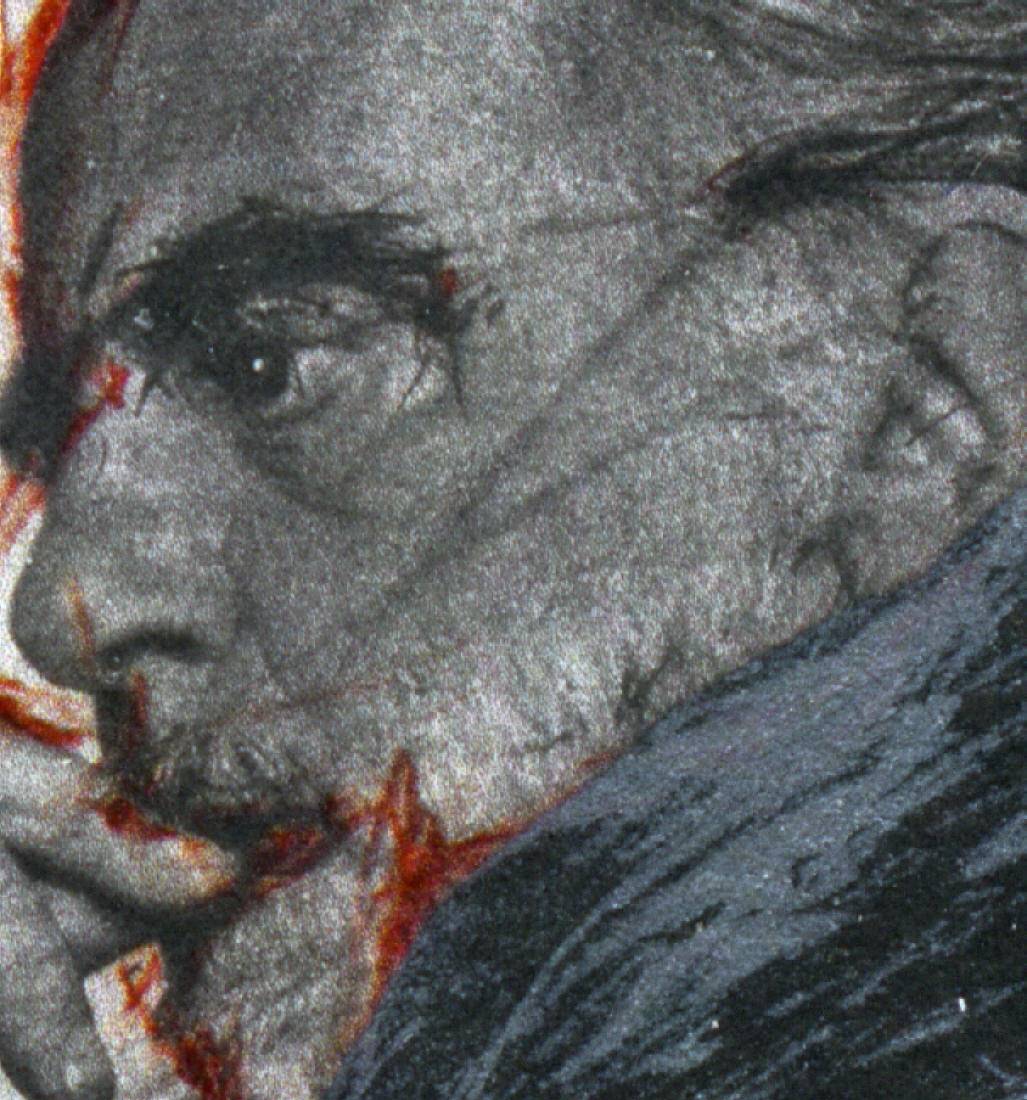 Austria Austria 2008 Scott 2180 ANK 2804   In my opinion they have the appearance of stochastic screening. Perhaps not as sharp in detail as some of the Canadian ones but if not what are they? |
|
Send note to Staff
|
| Edited by lithograving - 03/24/2018 2:22 pm |
|
|
Pillar Of The Community
Canada
5821 Posts |
|
|
Here is one from 2012 which looks to me to be not as sharp in detail as the previous two. Would this one be fake stochastic ? Austria Scott 2388   |
|
Send note to Staff
|
| Edited by lithograving - 03/24/2018 2:27 pm |
|
|
Pillar Of The Community
Canada
5821 Posts |
|
|
When I compare this Austrian photogravure stamp from 2004 with any of the last three offset issues above I prefer the latter. Did the Österreichische Staatsdruckerei (Austrian State Printer) scrap photogravure because of costs ? Apparently the total preparation process for photogravure is more time consuming and costly than offset and is only economical for long print runs especially definitives. Austrian print quantities are way down from three or four million per commemorative issue to sometimes now as low as less than two hundred thousand. Plus Austria Post ever since it was morphed into a public limited company now frequently uses foreign printers to safe a few bucks. Austria 2004Scott 1947 ANK 2493   |
|
Send note to Staff
|
| Edited by lithograving - 03/24/2018 2:31 pm |
|
|
Rest in Peace
Netherlands
963 Posts |
|
|
Lithograving, Austria does not only let their stamps print by Cartor or JESSP, they recently placed their orders in Budapest! Állami Nyomda [the former state Printers] are now ANY Security Printing Company PLC : http://www.any.hu/en/company/historygroetjes, Rein |
|
Send note to Staff
|
|
|
Pillar Of The Community
Canada
5821 Posts |
|
|
Quote:
Austria does not only let their stamps print by Cartor or JESSP, they recently placed their orders in Budapest! Állami Nyomda [the former state Printers] are now ANY Security Printing Company PLC : True and this one was printed by the Bundesdruckerei, Berlin. The stamp printing business is a dog eat dog industry now and it's all about who can print them cheaper.  |
|
Send note to Staff
|
|
|
Valued Member
United Kingdom
314 Posts |
|
|
Lithograving: Quote "Therefore this process could be used basically by any printer after a short learning curve. Correct? If so why don't they?"
I disagree with sentence one, purely based on comments by a major US printer... "Despite its advantages, stochastic screening has not captured more than a narrow niche of the market since its introduction to electronic pre-press in the mid-1990s. One reason: its steep learning curve. "We recommend stochastic screening to our customers where it makes sense — but it requires a ton of education," says Bill Peterson, process technical manager for catalog printer Banta Direct Marketing in Minneapolis."
GLENN |
|
Send note to Staff
|
| Edited by 65170 - 02/28/2014 04:03 am |
|
|
Valued Member
United Kingdom
314 Posts |
|
|
Lithograving, you discuss and show Austria 2008 Scott 2176 Austria Netto Katalog 2802 and question if it is stochastic.
You focus on the dark area of the man, rather than the background wash, which does show signs of stochastic dots when I blow-up your stamp on screen.
Stochastic screening is all about the placement of the uniform sized dots. The more dots in a small area, the darker and more continuous tone the area will be, as the dots start to touch each other and form a solid mass.
With fewer and more spaced-out dots, the more the white background paper will show through, giving a lighter look, and the dots will be more evident as there are more instances of single dots not touching other dots.
GLENN
|
|
Send note to Staff
|
|
|
Pillar Of The Community
Canada
5821 Posts |
|
|
Glenn you said previously on page 3 : Quote:
Stochastic screening varies the pattern of dots rather than placing the dots in a straight row.
Here is the light area of the stamp mentioned in your last post.  I don't see any uniformity in the dot structures at all, therefore wouldn't these random dots be indicative of stochastic screening ? |
|
Send note to Staff
|
| Edited by lithograving - 03/24/2018 2:33 pm |
|
|
Rest in Peace
Netherlands
963 Posts |
|
|
Lithograving,
stochastic means random!
So you are right!
You can NOT see a pattern in these dots [just limit yourself to dots of the same colour :) ]
groetjes, Rein |
|
Send note to Staff
|
|
|
Pillar Of The Community
Canada
5821 Posts |
|
|
Austria issued this stamp in 1998 to commemorate the 200th anniversary of the invention of Lithography (Steindruck) Wikipedia (as do most other online sources ) says: It was invented in 1796 by German author and actor
Alois Senefelder as a cheap method of publishing
theatrical works.The West German stamp shown on the first post of this thread shows a 1972 stamp commemorating the 175th anniversary of the invention in 1797Anyway, here is the stamp which I believe shows Alois Senefelder Austria Scott 1749  |
|
Send note to Staff
|
| Edited by lithograving - 03/24/2018 2:38 pm |
|
|
Pillar Of The Community
United States
7239 Posts |
|
|
The Bavarian limestone is being inked! This large (79mm x 54mm, perf tip to perf tip) old Dutch cinderella celebrates the invention of lithography by Senefelder.  |
|
Send note to Staff
|
|
|
Replies: 69 / Views: 24,801 |
|




 Posted 02/26/2014 4:30 pm


