I recently joined the British North American Philatelic Society which
gave me access to the Elizabethan II study group and their newsletter
Corgi Times.In the May – June 2019 of the
Corgi Times there is an article by Leopold Beaudet and Robin Harris
of their tour to the Lowe-Martin printing plant located in Ottawa.
The article mentions that Lowe – Martin has several lithographic
printing presses.
It uses a ten-colour Heidelberg Speedmaster sheet-fed press to print
sheet and booklet stamps.
Also a seven-colour narrow web-fed 10" wide press specially for
printing coil stamps.
The article has an excellent description of the lithographic process,
explaining how the printer uses 10-micron stochastic screening for
colour shading and that each colour needs a separate plate which are
made from thin 1/16th inch aluminum sheets.
One image in the article shows the 1995 45c definitive and using
it to compare half-tone screening and stochastic screening.
That definitive was first printed by Leigh-Mardon of Australia, then
by Canadian Bank Note after L-M stopped printing postage stamps.
In 1998 CBN printed the same design in a smaller size format
and in the same year Ashton - Potter Canada Limited printed booklets of 30.
There is a noticeable difference in the stamps, they have different perforations and the Leigh-Mardon ones have deeper/darker blues and reds compared to the CBN stamps.
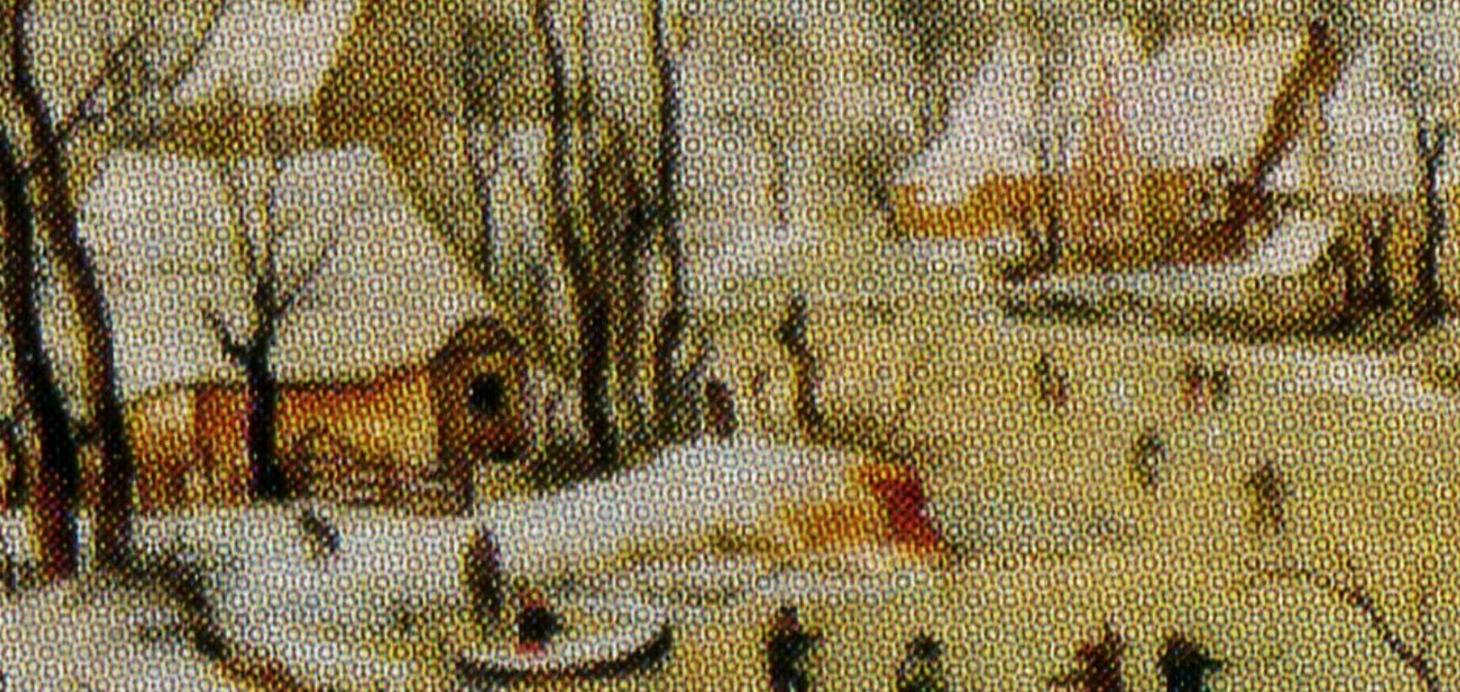
But what I didn't notice was that Leigh-Mardon used half-tone
whereas Canadian Bank Note used stochastic screening in their
printing process.


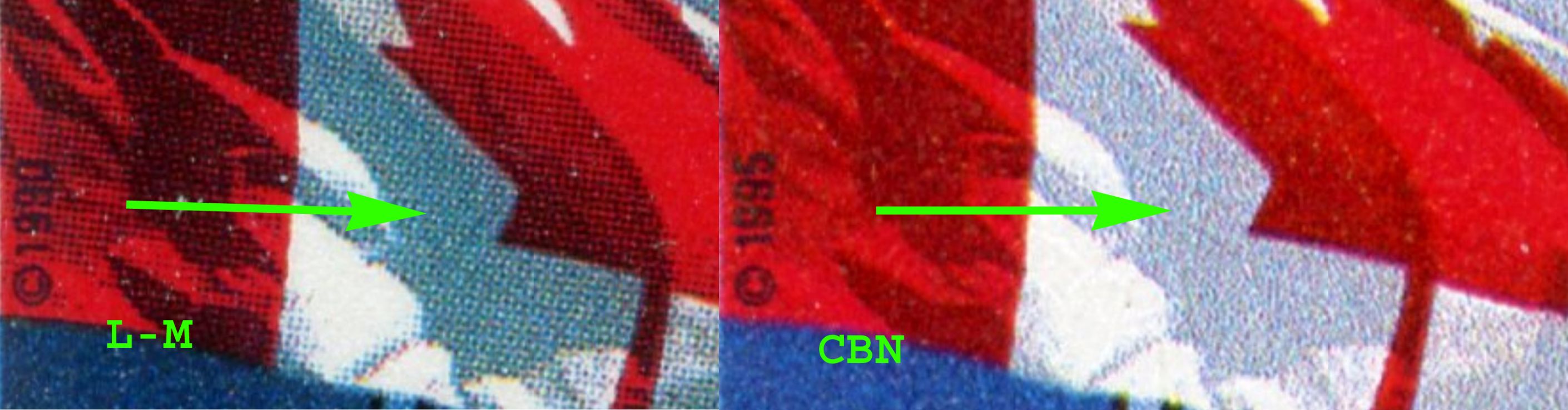 Leigh-Mardon half-tone screen
 *******************
Canadian Bank Note stochastic screen





 Posted 03/30/2021 5:00 pm